
Beautiful Plants For Your Interior
Beautiful Plants For Your Interior
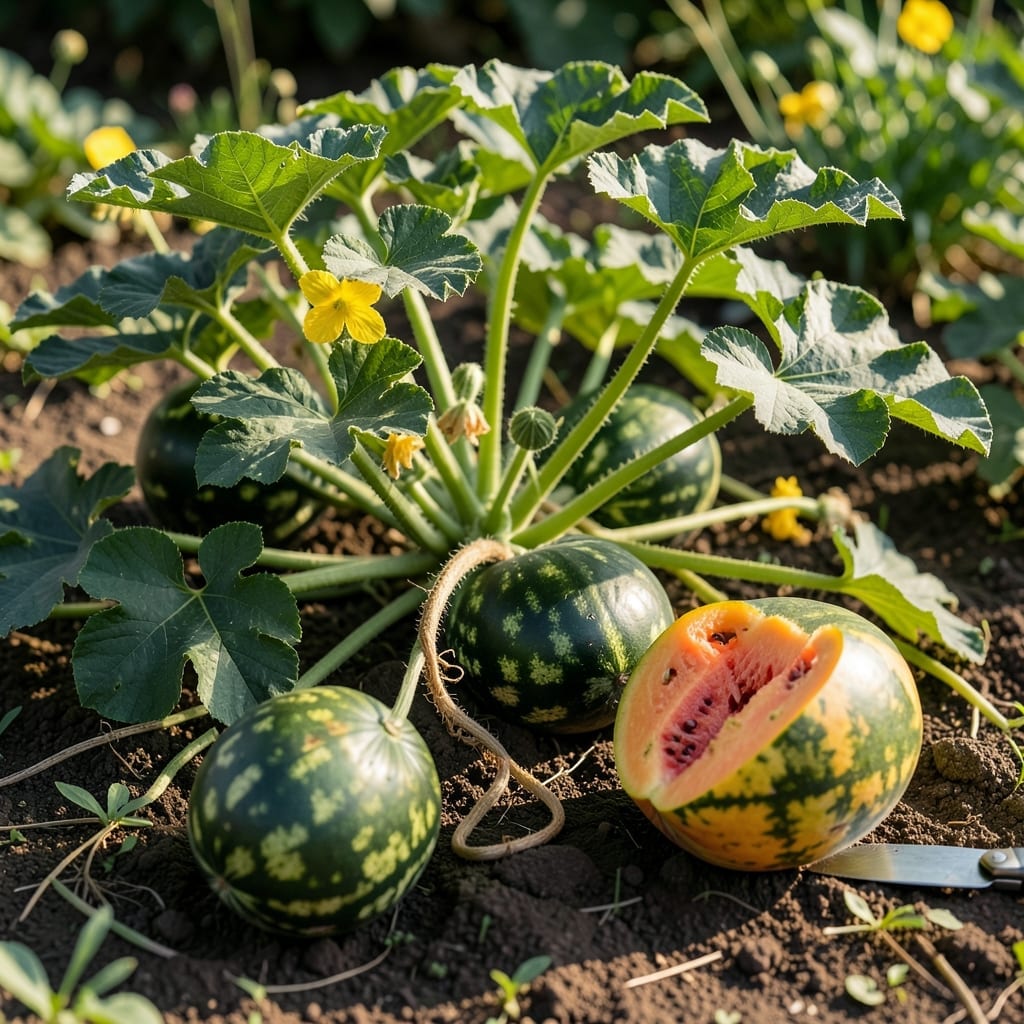
There’s nothing quite like biting into a perfectly ripe Sugar Baby Watermelon 🍉 at the height of summer. But knowing when to harvest these compact, sweet melons can be tricky for even experienced gardeners.
Unlike some fruits that scream “I’m ready!”, watermelons offer subtle clues that are easy to overlook. Missing these signs can mean the difference between a perfect harvest and a disappointing one.
Let me walk you through the most important visual cues and timing tips to ensure you pick your Sugar Babies at their peak sweetness and juiciness.


I always tell gardeners that Sugar Baby watermelons reveal their ripeness through subtle but reliable visual changes. These compact melons typically mature in 75-85 days, but the calendar alone won’t tell you when they’re perfect.
The most reliable indicator is the tendril nearest the stem. When it turns from green to brown and dry, your melon is likely ready. This change signals the plant has stopped sending nutrients to the fruit.
| Ripeness Sign | What to Look For |
|---|---|
| Stem Tendril | Turns brown and dry |
| Ground Spot | Changes from green to cream or yellow |
| Rind Appearance | Becomes dull and hard to scratch |
| Weight | Feels heavy for size |
Another key sign is the ground spot, where the melon rests on the soil. As it ripens, this spot changes from pale green to creamy yellow. The more pronounced this color change, the riper your watermelon.
The rind’s appearance also transforms. Immature melons have a shiny, smooth surface that’s easy to scratch with a fingernail. A ripe Sugar Baby develops a dull, matte finish that resists penetration.
I recommend checking these signs in the early morning when the garden is cool. The contrast between ripe and unripe melons is most visible then. Also, compare melons of similar size – the heavier one is usually riper.
Don’t overlook the vine connection. A ripe melon will often have a slightly cracked stem where it attaches to the vine. This is nature’s way of saying the fruit is ready to separate from its lifeline.
Remember that Sugar Baby watermelons won’t continue ripening after harvest like some fruits. Once picked, their sugar content won’t increase. That’s why these visual cues are so important for timing your harvest perfectly.
In my experience, the combination of a brown tendril, creamy ground spot, and dull rind is the most reliable indicator. When all three align, you can be confident your melon is at peak ripeness.
I always carry a small knife to do a final thumbnail test on the rind. If it resists scratching and feels hard, it’s ready for harvest 🌱
Once you’ve spotted the visual cues of ripening, I recommend confirming with these simple tests. The classic tap test is my go-to method. Gently tap the melon – a ripe one will produce a deep, hollow sound.
An unripe melon sounds more high-pitched and metallic. This difference is subtle, so I suggest practicing on a few melons to train your ear. The sound changes as the internal structure becomes more hollow and juicy.
Another reliable method is the stem check. If the stem is still green and supple, the melon isn’t ready. When it turns brown and brittle, that’s a strong indicator of ripeness. Be careful not to damage the vine while checking.
I always compare melons of similar size. The heavier one is typically riper, as the sugar content increases the weight. This is especially useful when you have multiple melons maturing at slightly different times.
The thumbnail test works well too. Try scratching the rind with your thumbnail. If it resists and doesn’t leave a mark, the melon is likely ripe. This test works best on the underside of the melon.
Avoid harvesting after heavy rain or irrigation. The extra water can temporarily affect the sound and weight, leading to inaccurate readings. Wait until the foliage is dry for the most reliable results.
In my garden, I use a combination of the tap test and ground spot color. When both indicate ripeness, I’m confident it’s time to harvest those sweet Sugar Babies 🌱