
Beautiful Plants For Your Interior
Beautiful Plants For Your Interior
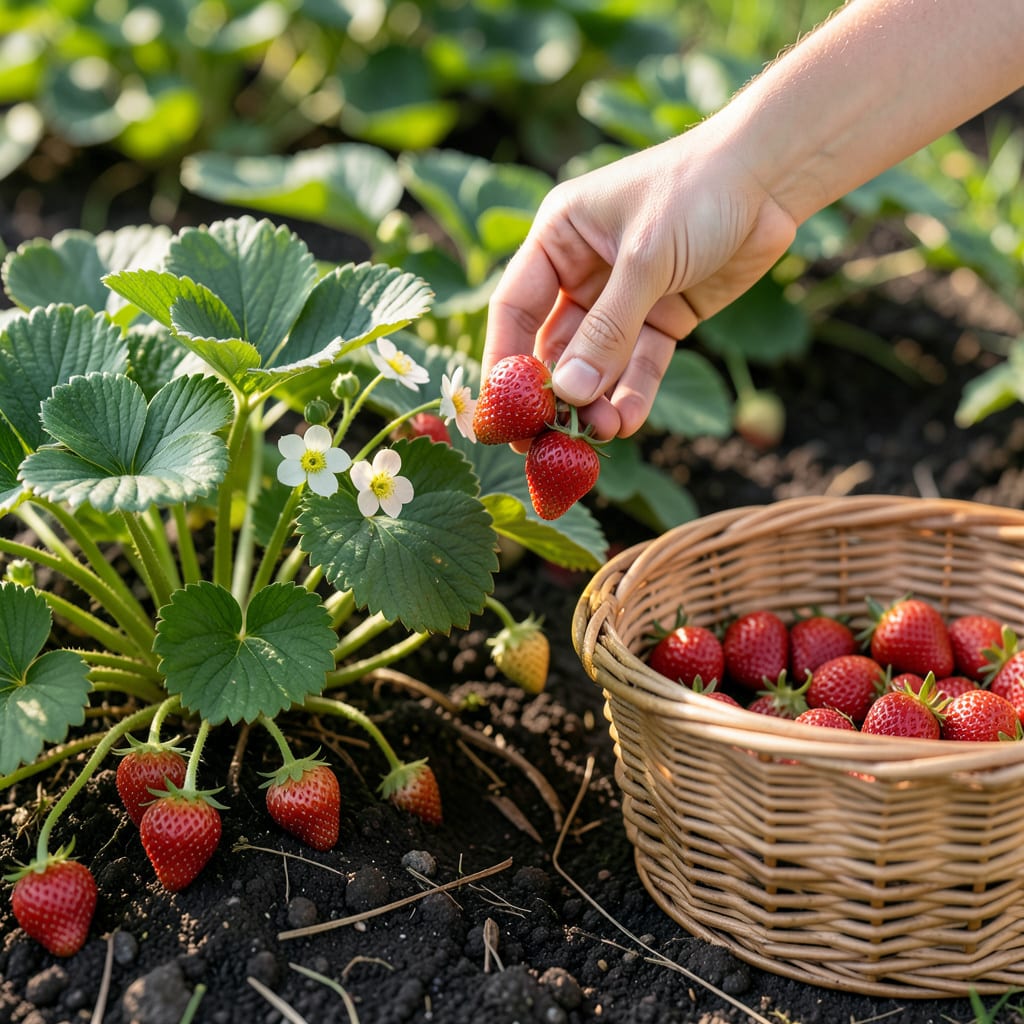
Nothing beats the taste of a perfectly ripe 🍓 strawberry, but picking too soon can ruin the experience. You want that deep red color and sweet aroma that signals it’s ready.
Discover the 3 foolproof signs to spot peak ripeness and avoid the common mistakes that lead to tart, underripe berries every time.


I’ve learned that perfectly ripe strawberries reveal themselves through color and texture. The first sign is a deep, uniform red covering the entire berry—no green or white patches allowed. This signals the sugars have fully developed inside.
Next, I check the seeds and cap. Ripe strawberries have Golden-brown seeds and a green cap that’s still firmly attached. If the cap looks dry or brown, the berry may be past its prime.
| Sign | What to Look For |
|---|---|
| Color | Full red with no green/white |
| Texture | Slightly soft to gentle pressure |
| Seeds | Golden brown and plump |
| Aroma | Sweet smell at the stem |
The texture test is my go-to method. Gently press the berry—if it yields slightly but isn’t mushy, it’s ready. Overripe strawberries feel too soft, while underripe ones are hard as a marble.
I always check the stem area too. A ripe strawberry will detach easily with a light twist, leaving the green cap intact. If I have to pull hard, it’s not ready yet. This protects the plant from damage.
The aroma test never fails me. Ripe strawberries emit a strong, sweet smell at the stem end. If there’s no scent, the berry lacks flavor. I compare several berries to train my nose for this subtle sign.
I’ve noticed variety matters. June-bearing strawberries ripen all at once, while everbearing types produce in waves. I check my garden journal to track which varieties I’m growing and their typical ripening windows.
For container-grown strawberries, I pay extra attention to sun exposure. Berries on the sunny side often ripen 1-2 days faster than those in shade. I rotate my pots weekly for even ripening.
I avoid picking after heavy rain. Wet berries can split or mold quickly. Instead, I wait for dry, sunny mornings when the flavor is most concentrated. This simple timing trick improves both taste and storage life.
Remember, strawberries don’t ripen after picking like some fruits. Once picked, they won’t get sweeter. That’s why I’m meticulous about timing—every berry I harvest is at its peak of perfection.
🌿Timing your strawberry harvest can make all the difference in flavor and texture. I always aim for early morning when temperatures are cool, as this helps preserve the berries’ natural sweetness and firmness. Picking in the heat of midday can lead to softer, less flavorful fruit.
The ideal season for most regions is late spring through early summer, typically May to July. However, this can vary based on your local climate and strawberry variety. Ever-bearing types may produce multiple harvests throughout the growing season.
Best Time of Day: Early morning
Peak Season: Late spring to early summer
Ideal Temperature: 60-75°F
I’ve found that strawberries harvested on sunny days tend to be sweeter than those picked during cloudy or rainy weather. The sugar content is higher when plants receive ample sunlight in the days leading up to harvest.
For the best results, check your plants daily once they start ripening. Strawberries can go from perfectly ripe to overripe in just 24-48 hours. I make it a habit to do a quick sweep of my patch each morning during peak season.
Remember that June-bearing varieties typically produce one large harvest over 2-3 weeks, while day-neutral types will produce smaller, continuous harvests throughout the growing season. Plan your picking schedule accordingly.
Finally, always use clean, sharp tools or your fingers to gently twist the berry from the stem. This prevents damage to both the fruit and the plant, ensuring healthy regrowth for future harvests.☀️
I’ve seen many gardeners make simple errors that ruin their strawberry harvest. The most common is picking too early when green patches still show. This leads to tart, underripe berries that lack sweetness.
Another frequent mistake is pulling berries instead of gently twisting. This can damage the plant and leave the green cap behind, which protects the fruit from rot.
❌ Pulling berries – Damages plants
❌ Ignoring the cap – Leaves fruit exposed
❌ Harvesting wet berries – Risk of mold
I always check for overripe berries too. If they’re too soft or have a fermented smell, they’re past their prime. These should be composted rather than eaten.
Many forget that strawberries don’t ripen after picking. Unlike tomatoes, they won’t get sweeter on your counter. This means timing is everything when harvesting.
Finally, avoid picking during rainy weather. Wet berries can split or mold quickly. I wait for dry conditions to ensure the best quality and storage life.✂️
Check that the entire berry is a deep red with no green or white patches near the stem. Even small light spots mean it needs more time on the plant.
Underripe berries feel hard as a marble. If it’s fully red but firm, it may lack sweetness. True ripeness includes slight softness when gently pressed.
Harvest in the early morning when temperatures are cool. This preserves sweetness and firmness better than midday heat.
Always gently twist while holding the stem. Pulling can damage the plant and leave the protective cap behind.
