
Beautiful Plants For Your Interior
Beautiful Plants For Your Interior
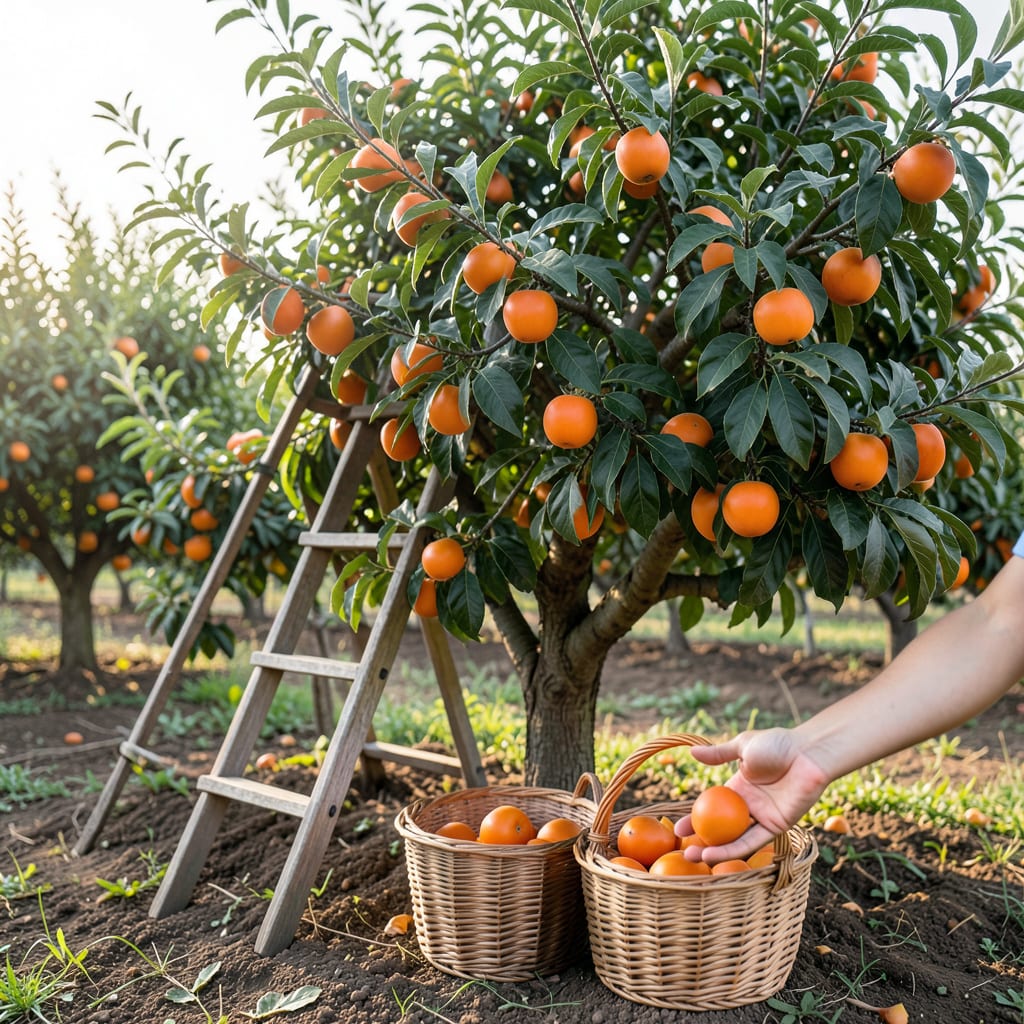
Knowing exactly when your 🍅 Persimmon is ready to pick can mean the difference between astringent disappointment and sweet, perfect flavor. Timing is everything with this unique fruit.
I’ll show you the key signs to watch for and when to expect harvest time in Zone 6. Let’s make sure you get it right the first time.


I’ve found that color change is the first clue your persimmons are nearing readiness. For most varieties, the fruit transitions from green to deep orange or red as it ripens. This visual cue is especially reliable for Fuyu and Hachiya types.
Another telltale sign is texture. Ripe persimmons should feel slightly soft when gently pressed, similar to a ripe avocado. The skin may also develop a slightly translucent appearance, indicating sugar development inside.
| Ripeness Indicator | Description |
|---|---|
| Color Change | Deep orange or red hue |
| Texture | Slightly soft to touch |
| Stem Condition | Easily separates from fruit |
| Aroma | Sweet, fruity scent |
The stem condition is another critical indicator. When persimmons are ready, the stem should easily separate from the fruit with a gentle twist. If it resists, the fruit likely needs more time on the tree.
For astringent varieties like Hachiya, I recommend waiting until the fruit is fully soft to avoid that unpleasant puckering taste. Non-astringent types like Fuyu can be picked when firm but fully colored.
I always check for a sweet aroma near the stem end. Ripe persimmons emit a distinct fruity fragrance that’s hard to miss. This is especially noticeable on warm, sunny days.
In my experience, leaf drop can signal harvest time. When persimmon trees start shedding leaves in fall, it’s often a sign the fruit is ready. However, this varies by variety and climate.
Don’t forget to consider weather conditions. A light frost can actually enhance sweetness in some persimmon varieties, but a hard freeze can damage the fruit. I typically harvest before the first hard frost.
The time from bloom is another useful gauge. Most persimmon varieties take 120-180 days from flower to harvest. Counting from your tree’s bloom date can help estimate when to start checking for ripeness.
Finally, I always do a taste test with one fruit before harvesting the whole crop. This is the most reliable way to confirm ripeness, especially if you’re new to growing persimmons. Just remember that astringent varieties must be fully soft for the best flavor. 🌳
I’ve learned that harvest timing varies significantly between persimmon varieties. In Zone 6, most types ripen in late fall, but the exact window depends on whether you’re growing astringent or non-astringent cultivars.
The most popular Fuyu persimmons typically mature in mid-October to November. I find they’re ready when their orange color deepens and they feel firm but yield slightly to pressure.
| Variety | Harvest Window | Key Trait |
|---|---|---|
| Fuyu | Mid-October to November | Non-astringent, firm when ripe |
| Hachiya | Late October to December | Astringent until fully soft |
| American | September to November | Cold-hardy, early ripener |
Hachiya persimmons need more patience, as they’re usually ready from late October through December. I wait until they’re completely soft to the touch to avoid that mouth-puckering astringency.
For American persimmons, the window is earlier, typically September to November. These wild-type persimmons often ripen faster and can handle colder temperatures better than Asian varieties.
I always adjust my harvest timing based on local weather. A warm fall might speed up ripening, while a cool, wet season could delay it. I start checking for ripeness 2-3 weeks before the expected window.
In my garden, I’ve noticed that south-facing trees often ripen 1-2 weeks earlier than those in shadier spots. Keep this in mind when planning your harvest schedule. ☀️
I’ve seen many gardeners rush the process and pick their persimmons too early. This is a surefire way to end up with astringent fruit that’s unpleasant to eat. Always wait for the full color change and proper texture.
Another common error is using the wrong tools. Never pull persimmons from the tree, as this can damage the fruit and the branches. Instead, I use pruning shears or a gentle twist to remove them.
I’ve also learned that harvesting in wet conditions can lead to issues. Wet fruit is more prone to rot and mold, so I always wait for dry weather to pick my persimmons.
Many people don’t realize that overripe persimmons can be just as problematic as underripe ones. Fruit left too long on the tree may become mushy or split, attracting pests. Regular checking is key.
Finally, I recommend against shaking the tree to harvest. This can cause unripe fruit to fall and damage the tree. Take the time to harvest each persimmon individually for the best results.
Ripe persimmons should feel slightly soft when gently pressed, like a ripe avocado. For Hachiya types, wait until they’re completely squishy to avoid astringency. Fuyu can be picked when firm but fully colored.
Color change to deep orange or red is a good start, but combine it with other signs. The skin may also become slightly translucent when fully ripe. Always check texture too.
Yes, but only for non-astringent types like Fuyu. They’ll ripen off the tree at room temperature. Astringent varieties like Hachiya must ripen fully on the tree to avoid bitterness.
Pick in the morning when temperatures are cool. This helps preserve fruit quality and reduces stress on the tree. Avoid harvesting when fruit is wet from rain or dew.
