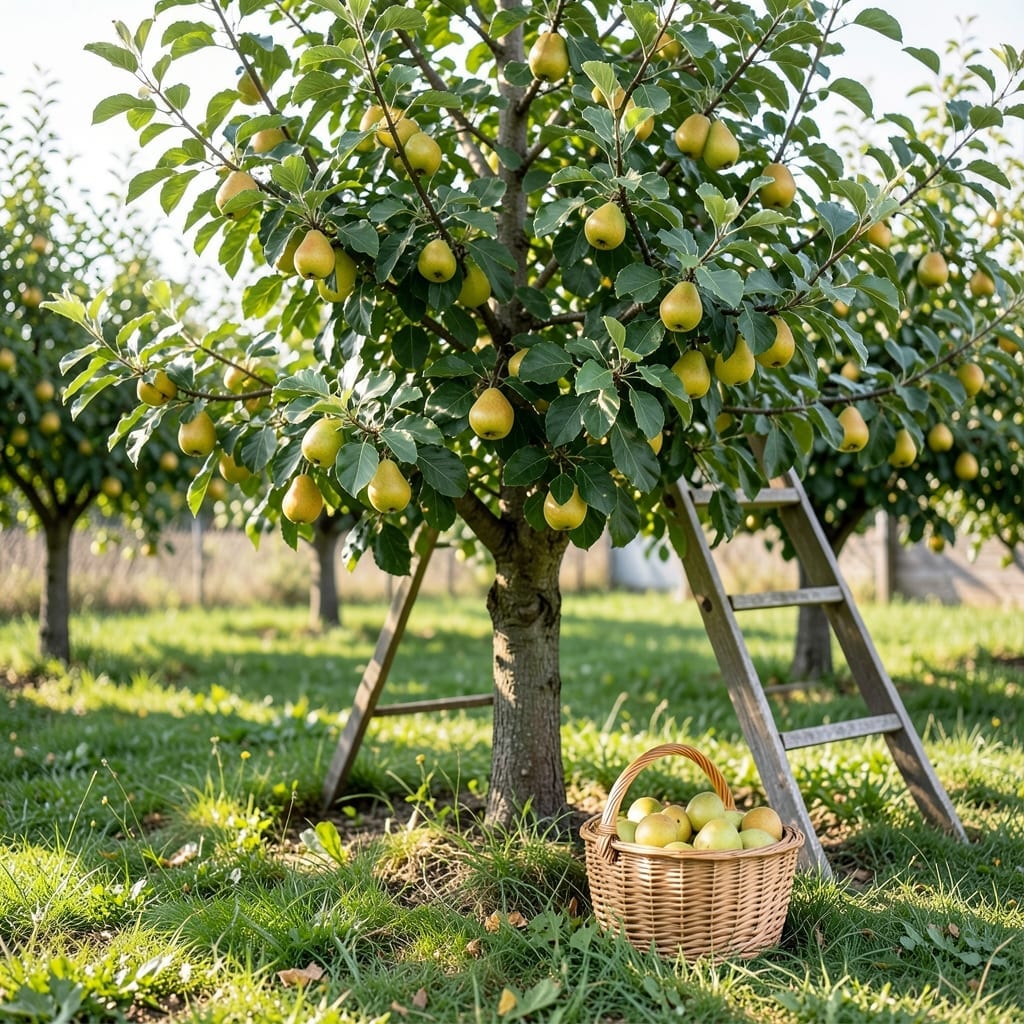
When Are Pears Ready: Visual Cues For Sweetest Harvest Time

When Are Pears Ready: Visual Cues For Sweetest Harvest Time

Knowing exactly when pears are ready to pick can make the difference between a mediocre harvest and the sweetest, juiciest 🍐 of the season.

Unlike some fruits, pears don’t ripen well on the tree, so timing your harvest is critical. The window is narrow, and missing it can leave you with hard, flavorless fruit.

I’ve learned through experience that visual cues and a few simple tests can reveal the perfect moment. The signs are subtle, but once you know what to look for, you’ll never guess again.

Discover the key indicators that signal your pears are at peak ripeness and ready to enjoy. Let’s make this your best harvest yet.

Style 16: Quick Tips – General
πŸŒ…
Morning
Pick early for best flavor & crunch
βœ‚οΈ
Clean Cut
Use scissors, don’t pull or twist
πŸ”„
Check Daily
Ripeness can change overnight!

Key Visual Signs That Pears Are Ready to Harvest

Timing your pear harvest perfectly ensures the best flavor and texture. Unlike apples, pears don’t ripen well on the tree, so you’ll need to watch for specific cues. I always look for subtle changes in color and texture first.

Different pear varieties like Bartlett, Anjou, and Bosc show unique signs. For example, Bartlett pears turn from green to yellow as they mature, while Bosc pears develop a golden-brown hue.

table”> cell” style=”background-color: #6fd544; color: #fff;”>Variety cell” style=”background-color: #6fd544; color: #fff;”>Texture Clue cell”>Bartlett cell”>Slight give at stem cell”>Anjou cell”>Firm but smooth cell”>Bosc cell”>Rough skin, firm

The stem separation test is another reliable method. Gently lift a pear and twist it slightly. If it separates easily from the branch, it’s likely ready. I’ve found this works best for European pears like Bosc and Comice.

For Asian pears, which are crisp like apples, look for a fuller shape and a slight softening near the stem. They often retain their green color even when ripe, so texture is key. Always check a few fruits from different parts of the pear tree.

A sweet aroma near the stem is a great indicator of ripeness. If you smell a fragrant scent, especially with Bartletts, the pears are probably ready. This is one of my favorite signs because it’s so easy to detect.

Size matters too. Mature pears reach their full size before ripening. Compare the fruit to the average size for its variety. If they’re consistently large, it’s a good sign they’re nearing harvest time.

Weather plays a role as well. A warm summer can speed up ripening, while cool temperatures may delay it. I always adjust my harvest timing based on the season’s conditions. In cooler climates, pears might need an extra week or two.

Don’t forget to check the seed color. When you cut open a pear, the seeds should be dark brown or black if the fruit is ripe. Green seeds usually mean the pear isn’t ready yet. This is a foolproof method I use every year.

Finally, taste-testing a sample pear is one of the best ways to confirm ripeness. Pick one and let it sit at room temperature for a day or two. If it ripens to your liking, the rest are likely ready to harvest. This simple test saves me from picking too early every time.

With these visual and sensory cues, you’ll never wonder when pears are ready again. Happy harvesting! 🌳

Common Mistakes to Avoid When Harvesting Pears

Harvesting pears at the wrong time can ruin your fruit quality and storage life. I’ve seen gardeners pick too early, only to get hard, flavorless pears that never ripen properly.

Another common error is waiting too long, which leads to overripe fruit that falls prematurely or develops a mealy texture. Weather also plays a roleβ€”avoid harvesting during or after heavy rain.

⚠️ Harvesting Too Early or Late

Picking unripe pears leads to poor texture, while overripe fruit bruises easily. Always check for color change and stem separation first.

Mishandling the fruit during harvest is another mistake. I always use gentle twisting motions to avoid bruising. Also, never pull pears directly from the branchβ€”this can damage the spur wood and reduce next year’s yield.

Ignoring the variety-specific signs can also lead to errors. For example, Bartlett pears turn yellow when ripe, while Anjou pears develop a slight give near the stem. Know your variety’s cues.

Lastly, don’t forget to harvest in dry conditions. Wet fruit is more prone to rot and disease during storage. Early morning is ideal, as pears are firmer after a cool night.

By avoiding these mistakes, you’ll ensure your pears are sweet, juicy, and ready for storage or immediate enjoyment. A little patience and attention go a long way in pear harvesting. βœ‚οΈ

β˜…β˜…β˜…β˜…β˜…4.5(13 reviews)