
Beautiful Plants For Your Interior
Beautiful Plants For Your Interior
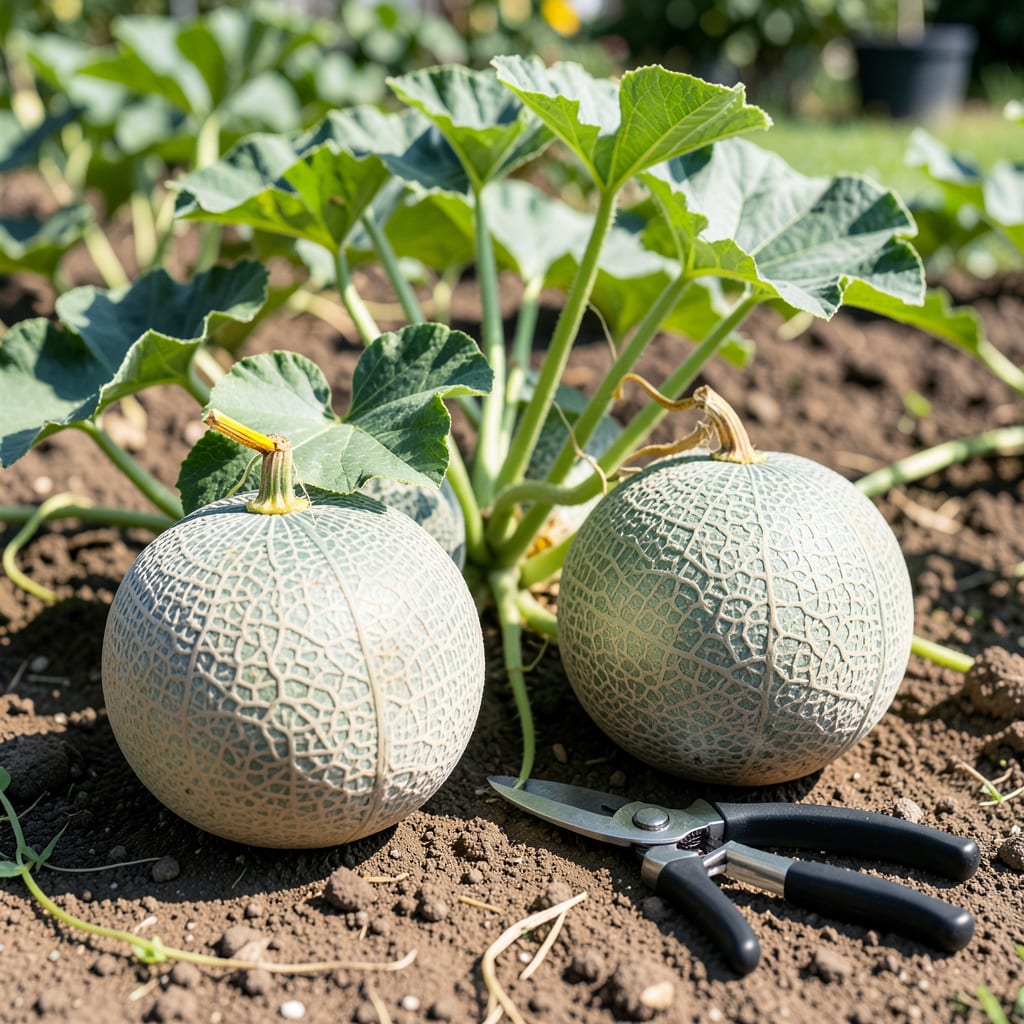
Knowing exactly when to harvest your 🍈 Cantaloupe can be the difference between a perfectly sweet bite and a dull one. The secret lies in subtle signs most gardeners overlook.
I’ve learned that watching for the right netting pattern and stem changes makes all the difference. These simple clues will help you pick at peak ripeness every time.


I always check the netting pattern first when determining cantaloupe ripeness. A ripe cantaloupe will have a well-defined beige netting that stands out against the rind. This netting becomes more pronounced as the fruit matures.
The color change is another clear indicator. As your cantaloupe ripens, the green rind will transition to a beige or tan color beneath the netting. This transformation typically starts at the blossom end of the fruit.
| Sign | Description |
|---|---|
| Netting | Beige, raised webbing |
| Color | Green to beige/tan |
| Stem | Easily detaches (“full slip”) |
The “full slip” method is my go-to test. When the cantaloupe is ready, the stem will detach easily from the vine with just a gentle pull. If it doesn’t come off easily, it’s not ready yet.
Another reliable sign is the sweet, musky aroma at the stem end. Ripe cantaloupes will have a strong, pleasant smell that you can detect even before picking. If there’s no aroma, the fruit likely needs more time.
I’ve found that the veins on the rind also become more pronounced as the fruit ripens. These green veins will stand out more clearly against the changing background color of the rind.
Remember that size alone isn’t a reliable indicator. A cantaloupe can reach its full size before it’s ripe. That’s why these visual and tactile clues are so important for determining the perfect harvest time.
The blossom end of the cantaloupe (opposite the stem) may also soften slightly when ripe. You can test this by applying gentle pressure with your thumb – it should give just a little.
For the best flavor, I recommend harvesting your cantaloupes in the morning when the fruit is cool. This helps preserve the sweetness and crispness that we all love in a perfectly ripe melon.
If you’re still unsure, you can also tap the cantaloupe gently. A ripe one will produce a hollow sound, while an unripe melon will sound more solid. This takes a bit of practice to master.
With these tips, you’ll never have to guess about cantaloupe ripeness again. The combination of visual, tactile, and olfactory clues makes it easy to pick at the perfect moment every time 🌱
The stem tells the story of cantaloupe ripeness in ways many gardeners miss. I look for a cracked stem near the fruit, which often appears as the final ripening stage approaches.
A hollow sound when tapped is another stem-related clue. As the cantaloupe matures, the internal structure changes, creating that distinctive hollow echo that signals it’s time to harvest.
The “full slip” method is my favorite test. When the cantaloupe is truly ripe, the stem separates cleanly from the vine with just a gentle twist. If it resists, wait another day or two.
I’ve noticed that the stem end often develops a sweet, musky aroma when the fruit is ready. This scent is strongest in the morning, which is also the best time to harvest for peak flavor.
Another subtle sign is the stem’s color change. As ripeness approaches, the stem may transition from green to brown, especially where it connects to the fruit. This isn’t as reliable as other signs but can confirm your assessment.
Remember that stem clues work together with the netting and color changes we discussed earlier. The most reliable harvest comes when multiple signs align, giving you confidence in your timing 🌱
I’ve seen many gardeners make the same cantaloupe harvesting mistakes year after year. The most common is picking based on size alone. Just because your melon looks big doesn’t mean it’s ready.
Another frequent error is ignoring stem clues. The stem tells you more than any other indicator. If it doesn’t detach easily, the fruit isn’t ripe, no matter how good it looks.
⚠️ Warning: Don’t wait too long after the netting fully develops. Overripe cantaloupes can split on the vine or develop an off flavor.
Many gardeners also harvest at the wrong time of day. Picking in the afternoon heat can affect flavor. I always recommend harvesting in the cool morning hours for best results.
Some folks rely too much on the tap test without considering other signs. While a hollow sound is helpful, it should be combined with netting development and stem detachment for accuracy.
Lastly, don’t overlook the aroma test. A ripe cantaloupe will have a sweet, musky smell at the stem end. If you can’t smell it, it’s likely not ready for picking.
Avoiding these common mistakes will help you harvest perfectly ripe cantaloupes every time. The key is patience and using multiple indicators together 🌱
A ripe melon has well-defined beige netting that stands out against the rind. If it’s still faint or green, wait a few more days. The netting should look raised and distinct
Not always. Combine the tap test with other signs like stem detachment and color change. A hollow sound is more reliable when the netting is fully developed and the stem slips easily
If the stem resists, the fruit isn’t ripe yet. Wait 1-2 days and check again. Forcing it off can damage the vine and result in an unripe melon
Harvest in the cool morning hours for best flavor and texture. Evening picking can work but may affect sweetness. Always handle gently to avoid bruising
