
Beautiful Plants For Your Interior
Beautiful Plants For Your Interior
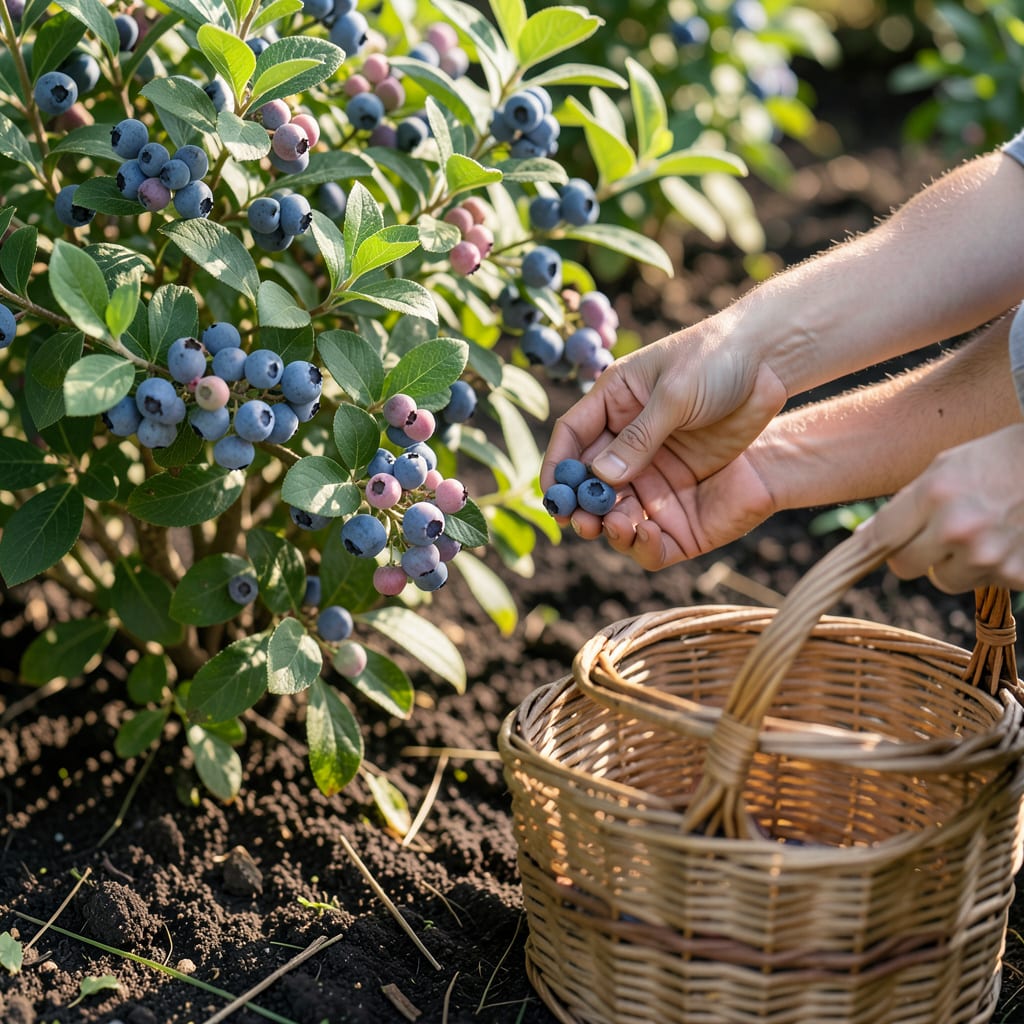
Nothing beats the taste of a perfectly ripe 🫐 blueberry plucked straight from the bush. But how do you know when they’re at their peak?
I’ll show you the easy visual and feel tests to pick them at just the right moment. No more guessing if they’re ready.


I always look for that perfect deep blue-purple hue first—it’s the surest sign. A ripe blueberry will have a powdery white coating, called bloom, which is natural and protects the fruit. This color change happens as chlorophyll breaks down during ripening.
Next, I check the firmness with a gentle squeeze. Ripe berries yield slightly but aren’t mushy. If it’s hard as a marble, it’s not ready. The cluster test helps too—most berries in a group ripen around the same time.
| Ripeness Sign | What to Look For |
| Color | Uniform deep blue with no red |
| Coating | Powdery white bloom present |
| Texture | Slightly soft but not mushy |
| Stem | Easily detaches with gentle tug |
The stem detachment test is my go-to. A ripe blueberry will come off the bush with just a light pull, leaving the calyx (crown) intact. If you have to yank, it’s not ready. This is because the fruit’s abscission layer develops as it matures.
I also pay attention to size, but it’s not the only indicator. Some varieties naturally produce smaller berries, while others are plumper. Northern highbush types, for example, can reach 1/2 inch in diameter when fully ripe. Size varies by blueberry variety, so don’t rely on it alone.
Another trick I use is the taste test—if you’re allowed to sample. A ripe berry will be sweet with balanced acidity. Tartness means it needs more time. Remember, sugar content increases as the berry ripens, so patience pays off with a sweeter harvest.
The cluster inspection is crucial too. Blueberries ripen in stages, so I look for 70-80% blue color in the cluster. If most are blue with a few red, I’ll wait 2-3 days and check again. This ensures I’m not harvesting too early.
For early season varieties like Duke, ripening starts in early June, while late varieties like Elliott may not be ready until August. I always check the expected harvest window for my specific plants to time my picking perfectly.
I’ve found that morning harvesting gives the best results. The berries are firmer and fresher after a cool night. Avoid picking after heavy rain, as the berries can absorb excess water and become diluted in flavor. Always use a gentle touch to prevent bruising.
Finally, I watch for bird activity—they’re often the first to notice ripe berries. If I see birds hovering around my blueberry bushes, I know it’s time to start checking for ripeness. A bird net can help protect your harvest if they start feasting before you do.
🌿I always harvest my blueberries in the morning when the fruit is at its firmest and freshest. After a cool night, the berries retain their natural sweetness and won’t be as prone to bruising during picking.
The ideal weather conditions are dry and sunny. Wet berries can absorb excess moisture, which dilutes their flavor and makes them more susceptible to mold or splitting. I avoid picking after rain or heavy dew.
I’ve noticed that late afternoon harvesting can work if the day hasn’t been too hot. However, the berries may be softer and warmer, which can lead to quicker spoilage. If I must pick later, I refrigerate immediately to preserve freshness.
Wind can also affect your harvest. On breezy days, I’m extra careful not to shake the bushes too much, as this can cause unripe berries to drop. A calm day makes for easier, more precise picking.
For the best flavor concentration, I wait until the berries have had a few warm, sunny days to fully develop their sugars. This is especially important for late-season varieties that need that extra time to sweeten up.
The temperature of the berries matters too. If it’s been particularly hot, I’ll pick in the early morning before the heat sets in. This keeps the fruit cool and crisp, making them more enjoyable to eat fresh.
🌿I’ve seen many gardeners make the mistake of picking blueberries too early. Those red or purple berries might look tempting, but they’ll be tart and firm. Patience is key—wait for that uniform deep blue color.
Another common error is using the wrong container. I always use shallow trays or buckets to prevent crushing. Deep containers can damage the lower berries under the weight of those on top.
⚠️ Warning: Never pull berries off the bush—this can damage the plant and ruin next year’s crop. Always use a gentle twisting motion to detach ripe fruit.
I also avoid harvesting wet berries. Picking after rain or in the morning dew can lead to mold growth and shorter storage life. Wait for dry conditions for the best results.
Many people forget to check the entire bush. Blueberries don’t all ripen at once, so I inspect each cluster carefully. The top and outer berries often ripen first, while the inner ones need more time.
Finally, don’t overlook bird protection. If you notice birds eyeing your crop, install netting early. Nothing’s more disappointing than losing your harvest to hungry birds just as it ripens. 🌿
Look for a uniform deep blue-purple with no red or purple patches. The powdery white bloom on the surface is another key indicator of ripeness. Shiny skin means it’s not ready yet.
Ripe berries detach with a gentle tug because the abscission layer forms as they mature. If you have to pull hard, the fruit isn’t ripe. This natural process prevents damage to the plant.
Avoid harvesting wet berries, as they absorb excess moisture. This can dilute flavor and promote mold. Wait for dry conditions for the best quality and storage life.
Inspect every 2-3 days once berries start turning blue. They ripen in stages, so frequent checks ensure you don’t miss the perfect window. Morning is the best time to pick.
