
Beautiful Plants For Your Interior
Beautiful Plants For Your Interior
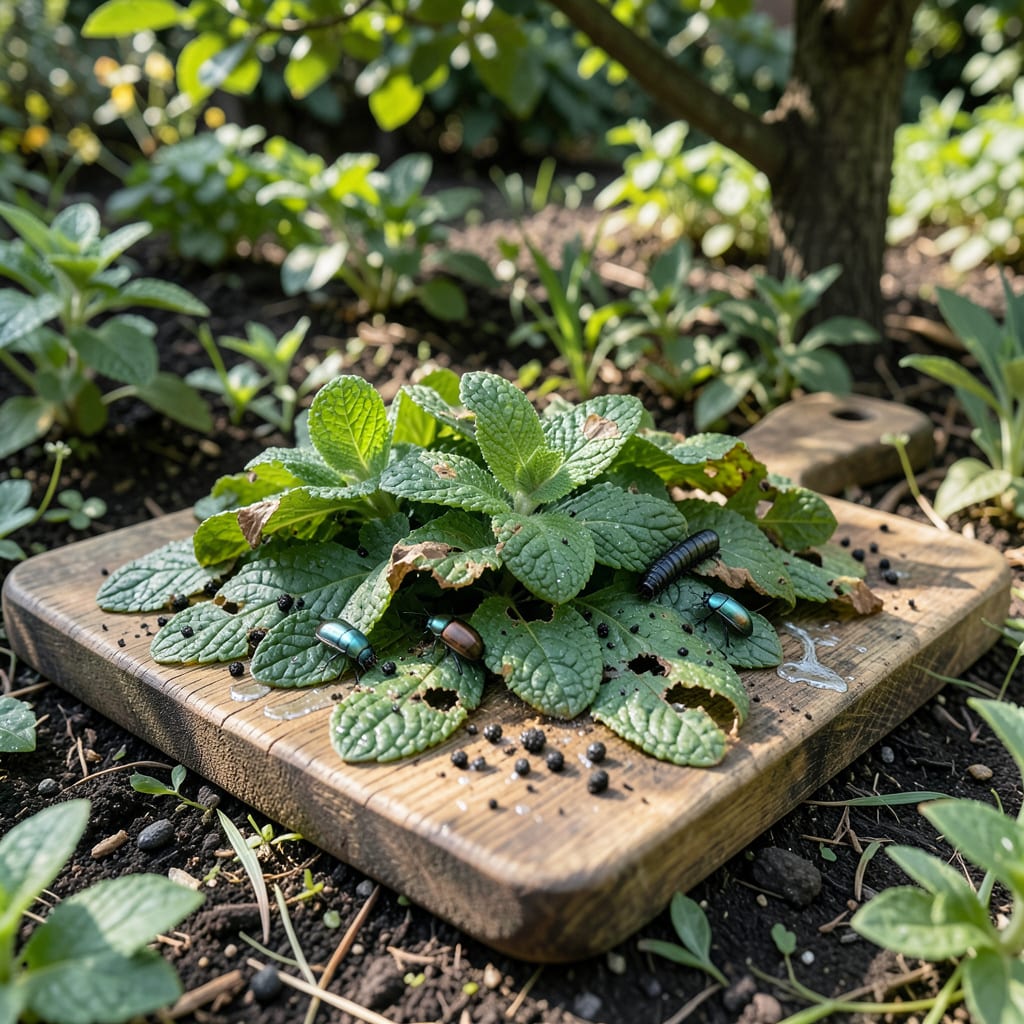
Waking up to shredded mint leaves is frustrating. I’ve lost entire patches overnight to unseen pests, and I know how discouraging it feels when your fragrant plants become a buffet.
Most mint damage comes from a few usual suspects: aphids clustering on new growth, slugs leaving silvery trails, or earwigs hiding in the soil. Each leaves distinct clues if you know where to look.
Here’s the thing—identifying the culprit is half the battle. Once you spot the signs, organic solutions like neem oil, beer traps, or diatomaceous earth can turn the tide in 24-48 hours.
Your mint can bounce back stronger with the right approach. Let’s figure out what’s happening in your garden.
Mint leaves are a favorite snack for many pests due to their aromatic compounds and tender texture. Here’s why your mint might be under attack:
Small holes or jagged edges on mint leaves often signal insect activity. Common culprits include aphids, which suck sap from leaves, and flea beetles, which chew tiny holes. Spodoptera caterpillars (armyworms) can also devour entire leaves overnight. These pests are drawn to mint’s strong scent and soft foliage.
Slime trails near your mint plant? Slugs and snails are likely the offenders. They rasp away at leaves, leaving large, irregular holes and a glossy residue. These mollusks thrive in damp, shaded conditions—perfect for mint’s typical growing environment.
Deer, rabbits, and even groundhogs may munch on mint if it’s within reach. Unlike insects, these animals leave clean, torn edges on leaves and stems. Mint’s strong aroma doesn’t always deter larger herbivores, especially in rural or garden-adjacent areas.
While not “eating” leaves in the traditional sense, fungal diseases like rust or bacterial leaf spot can cause discoloration and holes as tissue dies. Overwatering or poor air circulation creates ideal conditions for these pathogens to thrive.
Mint plants are hardy, but even the toughest herbs can fall victim to pests. Here’s how to tackle each culprit and keep your mint thriving.
Spray a strong stream of water from a hose to dislodge aphids from the leaves. For stubborn infestations, mix 1 teaspoon of mild dish soap with 1 quart of water and spray the solution directly onto the pests. Repeat every few days until they’re gone.
Prevention tip: 💡 Attract natural predators like ladybugs by planting companion flowers such as marigolds or alyssum nearby.
Lay down copper tape around the base of your mint plant or use organic slug pellets (iron phosphate-based) for a pet-safe solution. Alternatively, set up a beer trap—bury a shallow dish filled with beer near the plant. Slugs and snails are attracted to it and will drown.
Prevention tip: 🌿 Remove hiding spots like leaf litter or mulch where these pests thrive. Water your mint in the morning so the soil is dry by nightfall, as slugs prefer damp conditions.
Wipe leaves with a damp cloth to remove mites and their webs. For larger infestations, mix 1 tablespoon of neem oil and 1 teaspoon of dish soap with 1 quart of water, then spray the undersides of leaves. Reapply every 5-7 days.
Prevention tip: ✨ Increase humidity around your mint by misting the leaves regularly, as spider mites thrive in dry conditions.
Pick off beetles by hand (drop them into soapy water to kill them) or use pheromone traps placed away from your garden to lure them elsewhere. For a natural repellent, spray leaves with garlic or hot pepper spray.
Prevention tip: 🎯 Cover young plants with floating row covers to physically block beetles from reaching the leaves.
Remove affected leaves immediately to prevent spread. Space plants 12-18 inches apart to improve airflow, and avoid overhead watering. Water at the base of the plant to keep leaves dry.
Prevention tip: 🌱 Apply a layer of mulch to reduce soil splashing onto leaves, which can spread fungal spores.
Look for irregular holes in leaves and silvery slime trails nearby. Slugs typically feed at night, so check for damage in the morning.
No, when mixed correctly (1 tablespoon per quart of water), neem oil is safe for mint. Always spray in the evening to avoid leaf burn from sunlight.
Remove damaged leaves immediately and spray with soapy water. For severe cases, use diatomaceous earth around the base—it works within 24 hours.
