
Beautiful Plants For Your Interior
Beautiful Plants For Your Interior
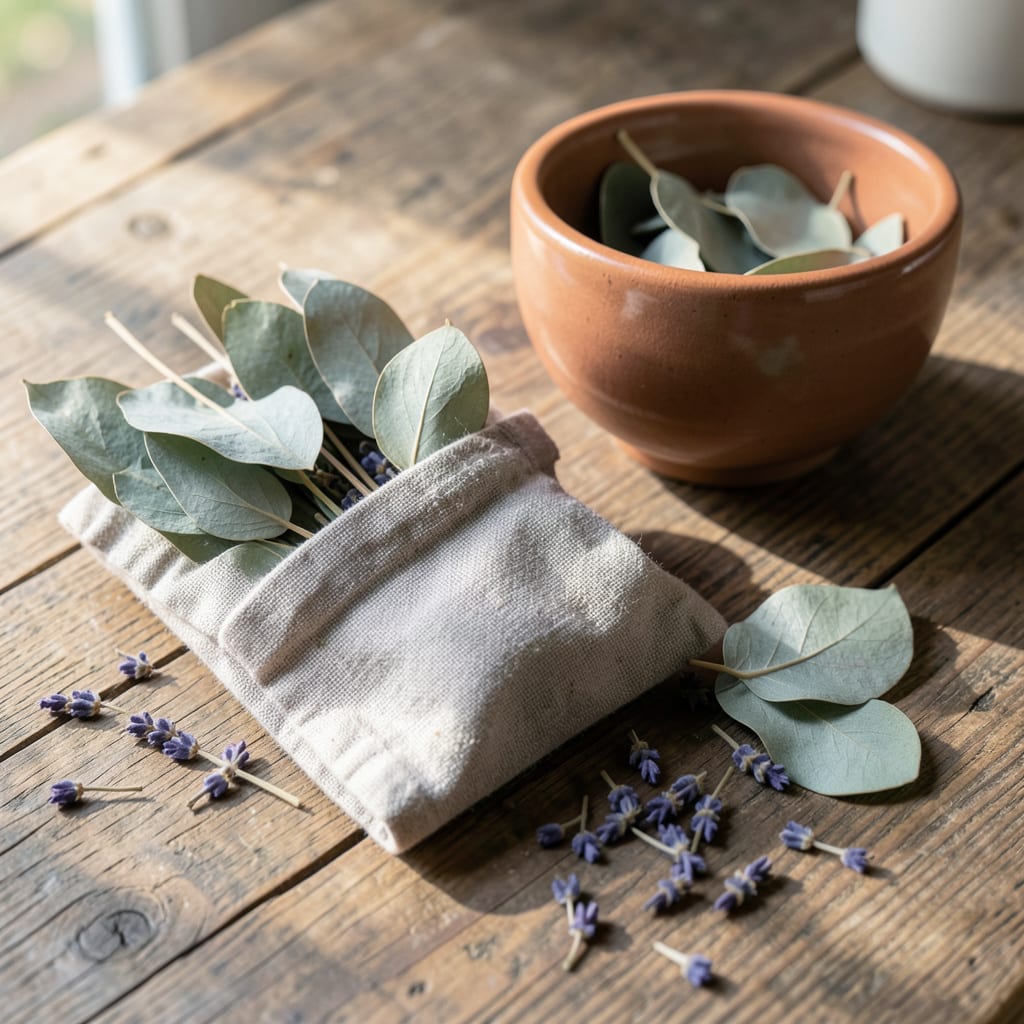
Those dried eucalyptus leaves piling up aren’t trash—they’re garden gold. I used to toss them until I discovered their hidden potential in the yard and home.
Crushed leaves make a fragrant mulch that repels pests while slowly enriching soil. Whole leaves work as natural sachets in drawers. Best part? It costs nothing and takes minutes to put to use.
📚 In This Guide
Here’s how I transform these fragrant leaves into beautiful, functional home projects.
Begin by inspecting each dried leaf for any remaining moisture or mold. Even slightly damp leaves will develop mold when stored. I lay them out on a clean paper towel in a single layer and let them air-dry for an additional 24 hours if there’s any doubt about their condition.
Once fully dry, gently remove any stems or debris. The leaves should feel brittle but not crumble when handled. This ensures they’ll maintain their shape and color in your finished projects. Store prepared leaves in a paper bag until ready to use.
For sachets, place 5-7 leaves in small fabric pouches and add a few drops of essential oil to intensify the scent. I use unbleached cotton or linen for the best fragrance diffusion. Tuck these in drawers or under pillows for a subtle, long-lasting aroma.
To make a simmer pot, combine leaves with citrus peels and cinnamon sticks in a saucepan. Simmer on low for 30-60 minutes, adding water as needed. The steam will fill your home with a fresh, invigorating scent that lasts for hours.
For wreaths, attach leaves to a grapevine or wire base using hot glue or floral wire. I work in small sections, layering leaves to create depth. The natural silver-green color pairs beautifully with dried flowers or pinecones for seasonal arrangements.
When making garlands, string leaves onto thin twine with small gaps between each. Hang these in doorways or along walls for a rustic, aromatic touch. The leaves will maintain their shape for 3-6 months in dry indoor conditions.
Press leaves between heavy books for 1-2 weeks to flatten them completely. These make excellent bookmarks or framed botanical art. I’ve found that placing a weight on top of the books speeds up the process without damaging the leaves.
For potpourri, mix crushed eucalyptus leaves with other dried botanicals like roses or lavender. Add a few drops of essential oil and a fixative like orris root to make the scent last longer. Refresh with oil every 2-3 weeks to maintain the fragrance.
Small details make a big difference when working with these delicate leaves.
Drying Precision: That additional 24 hours of air-drying in Step 1 isn’t optional if you spot any moisture. I learned the hard way that even slightly damp leaves will mold in storage, ruining your entire batch. Trust me, the extra day is worth the peace of mind.
Scent Longevity: For your sachets in Step 2, using 5-7 leaves per pouch creates the perfect balance of fragrance without overwhelming the space. Real talk: I initially overstuffed mine and the scent was too intense for drawers.
Simmer Pot Strategy: When making the simmer pot, keep the heat on low for the full 30-60 minutes. Higher heat will evaporate the water too quickly and may scorch the leaves. Add water gradually to maintain a gentle simmer that releases the aroma steadily.
Pressing Patience: The 1-2 weeks pressing time in Step 4 can’t be rushed. I tried speeding it up with heavier weights, which only crushed the leaves. Let time do the work for perfectly flat, intact leaves ideal for bookmarks or art.
Dried eucalyptus leaves typically retain their fragrance and color for 1-2 years if stored properly in a cool, dry place away from direct sunlight. Over time, their scent may fade, but they can still be used for decorative purposes.
Yes! Dried eucalyptus leaves can be steeped in hot water to make a soothing herbal tea. Ensure they are free from pesticides or chemicals. Start with 1-2 leaves per cup and steep for 5-10 minutes. Avoid if you’re pregnant or have respiratory issues.
Old, brittle leaves are perfect for DIY potpourri, sachets, or crushed into homemade candles. You can also use them as natural confetti or compost them to enrich your garden soil.
Absolutely! Air-drying is the easiest method—hang bundles upside down in a dark, well-ventilated area for 2-3 weeks. For faster results, use a dehydrator on low heat or microwave them in short bursts between paper towels.
Weak scent usually means they weren’t fully dried or were exposed to moisture. Try re-drying them in a warm, dry place for a few days. If the scent is still faint, use them in larger quantities or pair them with stronger herbs like rosemary.
