
Beautiful Plants For Your Interior
Beautiful Plants For Your Interior
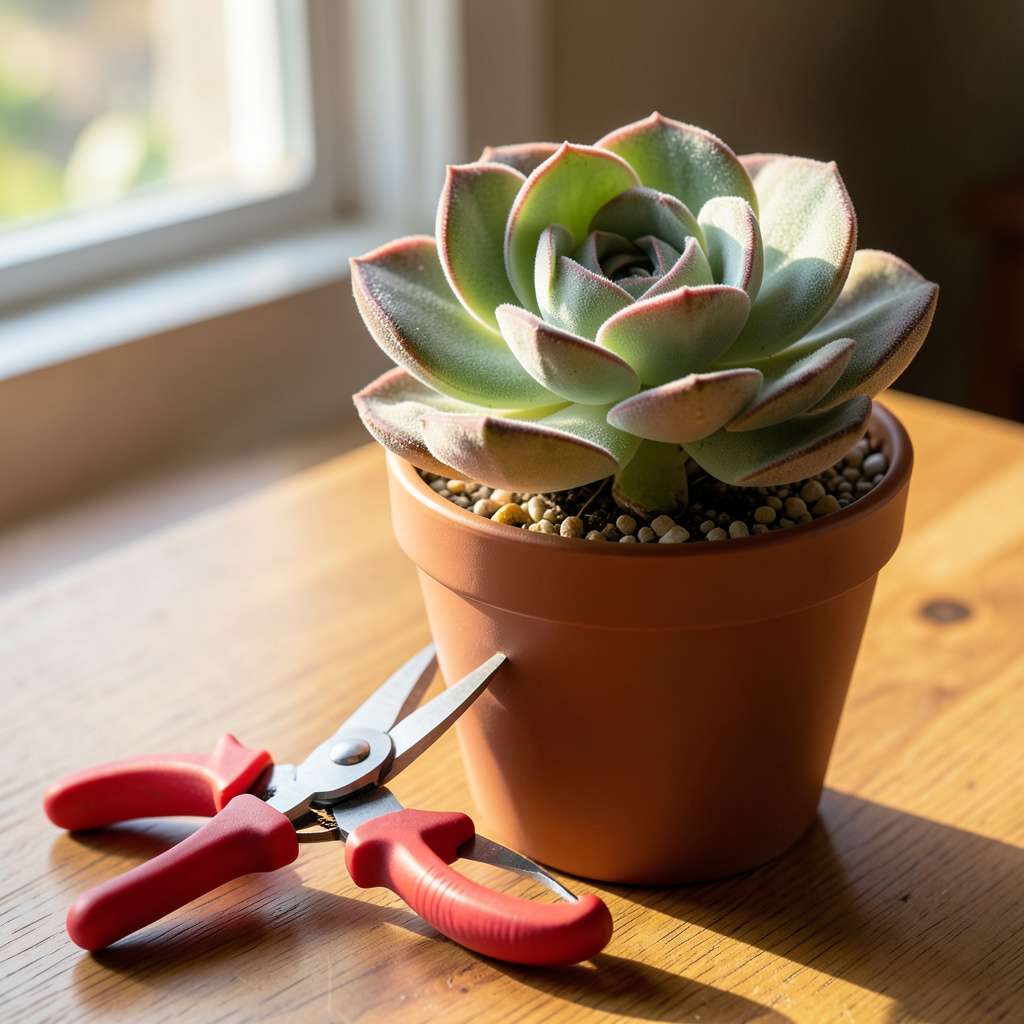
When succulents grow too tall, prune them back using clean shears, cutting just above a leaf node. Propagate the cuttings and repot the base for bushier regrowth. Ensure proper sunlight to prevent future stretching (etiolation).
This stretching happens when your plants aren’t getting enough light, forcing them to grow upward in search of sunshine. 🌱 I’ve found that using sharp, sterilized pruners makes cleaner cuts that heal faster, reducing the risk of infection. The cuttings you remove can often root easily in well-draining soil, giving you free new plants while helping the original grow back fuller and more compact.
What many beginners don’t realize is that this isn’t just about aesthetics—it’s about plant health. Those leggy stems become weak and prone to toppling over. After pruning, I always recommend gradually reintroducing your succulents to brighter light conditions to prevent shock while encouraging that tight, vibrant growth we all love. ✨
💡 In This Article
The phenomenon you’re seeing is called etiolation—a survival mechanism triggered when plants don’t receive enough light. Inside your succulent, special cells called photoreceptors detect light levels. When they sense insufficient brightness, they signal the plant to produce more auxin, a growth hormone that causes cells to elongate rapidly.
This isn’t healthy growth—it’s a desperate reach for sunlight that weakens the plant’s structure.
What’s happening at the cellular level is fascinating. Auxin accumulates on the shady side of stems, causing those cells to grow longer while inhibiting lateral growth. 🌱 This creates that telltale “stretched” look where stems become thin and leaves spread far apart.
Different species react differently: Echeverias often grow tall and top-heavy, while Haworthias may stretch more gradually but still lose their compact rosette form.
The problem goes beyond appearance. These elongated stems become structurally weak because the plant prioritizes vertical growth over developing strong cell walls. I’ve seen stretched succulents topple over from their own weight, and the thin stems are more susceptible to rot when watered.
The leaves also become smaller and less vibrant as the plant diverts energy to stem elongation rather than healthy foliage production.
Light intensity matters more than duration. A south-facing window might provide 6-8 hours of light, but if it’s filtered through curtains or distant from the glass, your succulents still perceive it as low-light conditions. 💡 The ideal is 4-6 hours of direct sunlight daily—what we call “full sun” in gardening terms.
East-facing windows often work better than north-facing ones because they provide gentler morning light that’s still intense enough to prevent stretching.
Temperature plays a role too. In cooler months, succulents grow more slowly, so they can tolerate slightly less light without stretching as dramatically. But during active growing seasons (typically spring and summer), the combination of warmth and low light creates perfect conditions for rapid, weak growth.
This is why many gardeners notice their succulents suddenly shooting upward when moved indoors for winter without supplemental grow lights.
Here’s what most people miss: etiolation isn’t just about height.
Watch for these signs:
The good news is this process is completely reversible with proper pruning and light adjustment.
That stretched growth contains the same genetic potential as the original compact plant—it just needs the right conditions to express its natural form again. ✨
Prune stretched succulents once per year during active growing season (spring to early summer). This timing gives them 6-8 weeks of warm weather to regrow compactly. Avoid winter pruning—dormant plants recover much slower.
Let cuttings dry for 3-5 days until the ends callous over. Then place them on well-draining soil and mist lightly every 3-4 days. Most will root in 2-4 weeks and grow into new plants.
This usually means the light conditions haven’t improved. After pruning, gradually increase sunlight to 4-6 hours daily. South-facing windows work best, or supplement with grow lights 6-12 inches above plants.
Rotate plants quarter-turn weekly for even light exposure. Use sheer curtains to diffuse intense afternoon sun. In winter, move plants to your sunniest window or add 12-14 hours of grow light daily.
Leave at least 1-2 inches of stem above soil for most varieties. Cut just above a leaf node at a 45-degree angle. For top-heavy plants, you may remove up to 2/3 of the height safely.
