
Beautiful Plants For Your Interior
Beautiful Plants For Your Interior
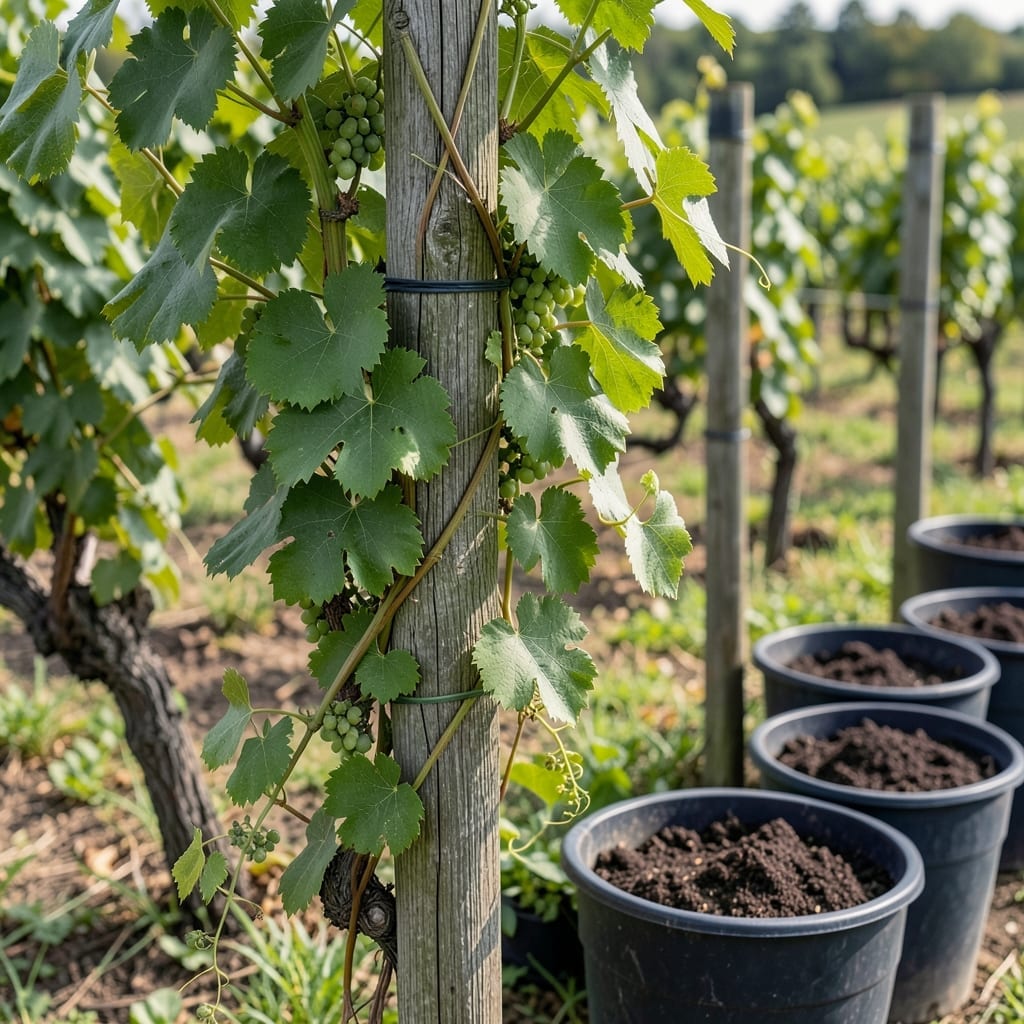
Growing grape vines in containers opens up possibilities for urban gardeners and small-space enthusiasts. The 🍇 Grape Vine can thrive in pots when given the right conditions to spread its roots.
But success hinges on choosing the right vessel. The wrong container size can stunt growth, reduce yields, or even kill your vine before it flourishes.
I’ve tested various setups, and what I discovered will help you avoid common mistakes. Whether you’re new to container gardening or looking to improve, this guide has you covered.
Discover the ideal dimensions for healthy Grape Vine growth and learn how to set your plant up for long-term success.

Choosing the right container size is critical for healthy grape vine growth. Too small, and your vine will struggle with root restriction, leading to poor fruit production and stunted development. I’ve seen firsthand how the wrong pot can limit a vine’s potential. 🌱
For most grape varieties, the absolute minimum container volume should be 15-20 gallons. This provides enough root space for the vine to establish itself. Smaller pots may work for young vines, but they’ll need upgrading as the plant matures.
If you’re growing wine grapes, aim for at least 20 gallons to accommodate their extensive root systems. Table grapes can thrive in slightly smaller containers, but 15 gallons is the safe minimum. Anything less risks root binding, which stifles growth. 🌿
Depth matters just as much as volume. A grape vine’s roots can grow 3-4 feet deep in ideal conditions, so your container should be at least 18-24 inches deep. Shallow pots lead to weak root systems and unstable vines.
Width is another key factor. A diameter of 18-24 inches allows roots to spread horizontally. I recommend 24 inches for most varieties to ensure long-term health. Narrow containers restrict growth and reduce fruit yields over time. ✂️
For dwarf grape varieties, you can get away with 10-12 gallon containers, but don’t expect heavy yields. These compact vines are ideal for small spaces or balcony gardens, but they still need room to develop.
Remember, drainage is non-negotiable. Even the perfect-sized container will fail if it lacks drainage holes. Grape vines hate soggy roots, so ensure excess water can escape easily. I’ve lost a few vines to root rot in poorly drained pots—lesson learned the hard way.
If you’re unsure, always size up. A larger container gives your vine room to grow and reduces the need for frequent repotting. It also helps buffer against temperature swings, which can stress the plant. 🪴
Finally, consider the vine’s mature size. Most grape vines reach 15-20 feet when trained on a trellis. A container that’s too small won’t support this growth, leading to a weak, unproductive plant. Plan ahead for success!
Choosing the right container material impacts your grape vine’s health and longevity. Each option has unique benefits for drainage, insulation, and durability that you should consider carefully. 🌿
I’ve tested various materials and found that wooden barrels offer excellent insulation but require regular maintenance. Meanwhile, fabric pots promote air pruning of roots, which can be beneficial for some varieties.
For urban gardeners, I recommend starting with a 15-20 gallon plastic container with drainage holes. It’s lightweight and easy to move, which is crucial for balcony gardens or small patios. ☀️
If you’re in a colder climate, consider wooden containers for their insulating properties. They protect roots from freezing better than other materials, though you’ll need to seal the wood to prevent rot.
Fabric pots are my personal favorite for young vines. They encourage healthier root systems through air pruning, but remember they dry out faster than other containers.
No matter the material, always ensure your container has adequate drainage and is large enough for your grape variety. A mature vine needs space to thrive, so don’t skimp on size. 🪴