
Beautiful Plants For Your Interior
Beautiful Plants For Your Interior
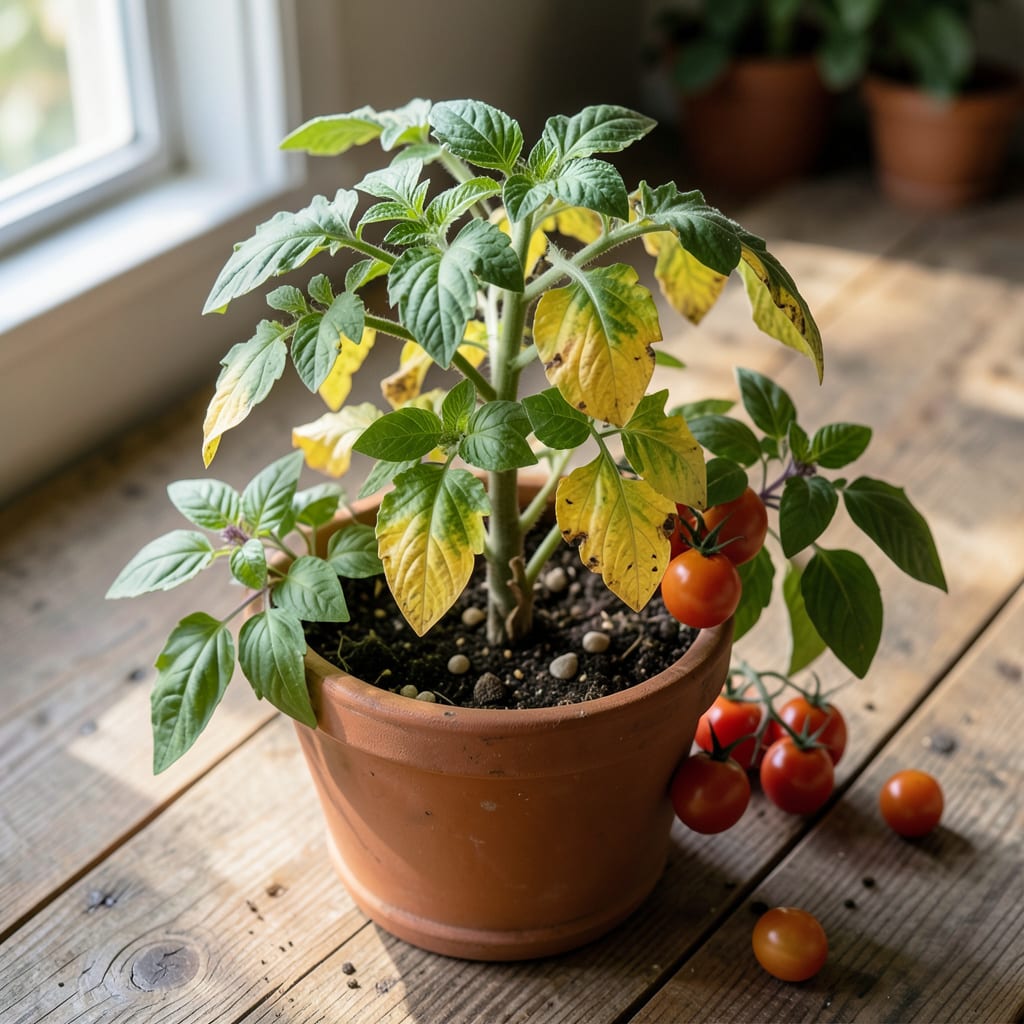
Yellow tomato leaves are your plant’s way of sending an SOS. 🌱 I’ve seen this happen mid-season when everything seemed fine, then suddenly the lower leaves start fading like old photos.
Most times it’s a simple fix—too much water, not enough nitrogen, or a sneaky pest attack. The pattern of yellowing tells you which problem you’re dealing with, and I’ve learned to spot the difference between hunger, thirst, and disease.
Once you know what’s causing it, solutions are straightforward: adjust watering, add the right fertilizer, or treat for pests. Your plants can bounce back within a week with the right care.
Prevention is even easier. Consistent watering, good soil, and regular checks keep leaves green all season long. Let’s figure out what your tomatoes are trying to tell you.
Tomato leaves turning yellow signal underlying issues that disrupt chlorophyll production or plant health. Below are the most common scientific causes and how they manifest in your garden:
Yellowing often stems from a lack of essential nutrients. Nitrogen deficiency causes uniform yellowing in older leaves first, as the plant redirects nitrogen to new growth. Magnesium or iron shortages trigger interveinal chlorosis—yellowing between leaf veins—while potassium deficiency leads to yellow edges (scorching) on lower leaves. A soil test can confirm imbalances.
Extreme temperatures (below 50°F or above 90°F) slow nutrient uptake and chlorophyll synthesis. Overwatering suffocates roots, reducing oxygen flow and causing yellow, wilted leaves. Conversely, drought stress forces leaves to curl and yellow as the plant conserves water. Poor drainage or compacted soil exacerbates these issues.
Infections like Early Blight (Alternaria solani) or Fusarium Wilt create yellow patches with dark spots or ring patterns. Aphids and whiteflies suck sap from leaves, leading to stippling, curling, and yellowing. Viral diseases (e.g., Tomato Yellow Leaf Curl Virus) cause mottled yellowing and deformed growth. Inspect leaf undersides for pests or fungal spores.
Overuse of fertilizers (especially ammonium-based) or herbicides can burn roots, impairing nutrient absorption. High soil salinity from excessive synthetic inputs also triggers yellowing. Flush the soil with water to remove excess salts, and avoid foliar sprays during peak sunlight to prevent leaf scorching.
Addressing yellowing tomato leaves starts with pinpointing the cause and applying targeted fixes. Here’s how to tackle the most common issues:
💡 Pro Tip: Yellowing between veins? Likely iron. Uniform yellowing? Probably nitrogen.
✨ Quick Check: Always inspect both sides of leaves for pests or spots before treating!
Yes, too much water suffocates roots and blocks oxygen uptake. This leads to yellow, wilted leaves, especially on lower foliage. Let soil dry slightly between waterings to prevent this.
Nitrogen deficiency yellows older leaves uniformly, while low magnesium or iron creates yellow patches between veins. A soil test helps confirm which nutrient is lacking.
Check leaf undersides for tiny bugs like aphids or whiteflies. Their feeding causes stippling, curling, or yellow spots. Treat with neem oil or insecticidal soap if found.
Once leaves turn yellow, they usually won’t recover. Focus on fixing the underlying issue to prevent new leaves from yellowing. Remove severely damaged foliage to redirect energy.
