
Beautiful Plants For Your Interior
Beautiful Plants For Your Interior
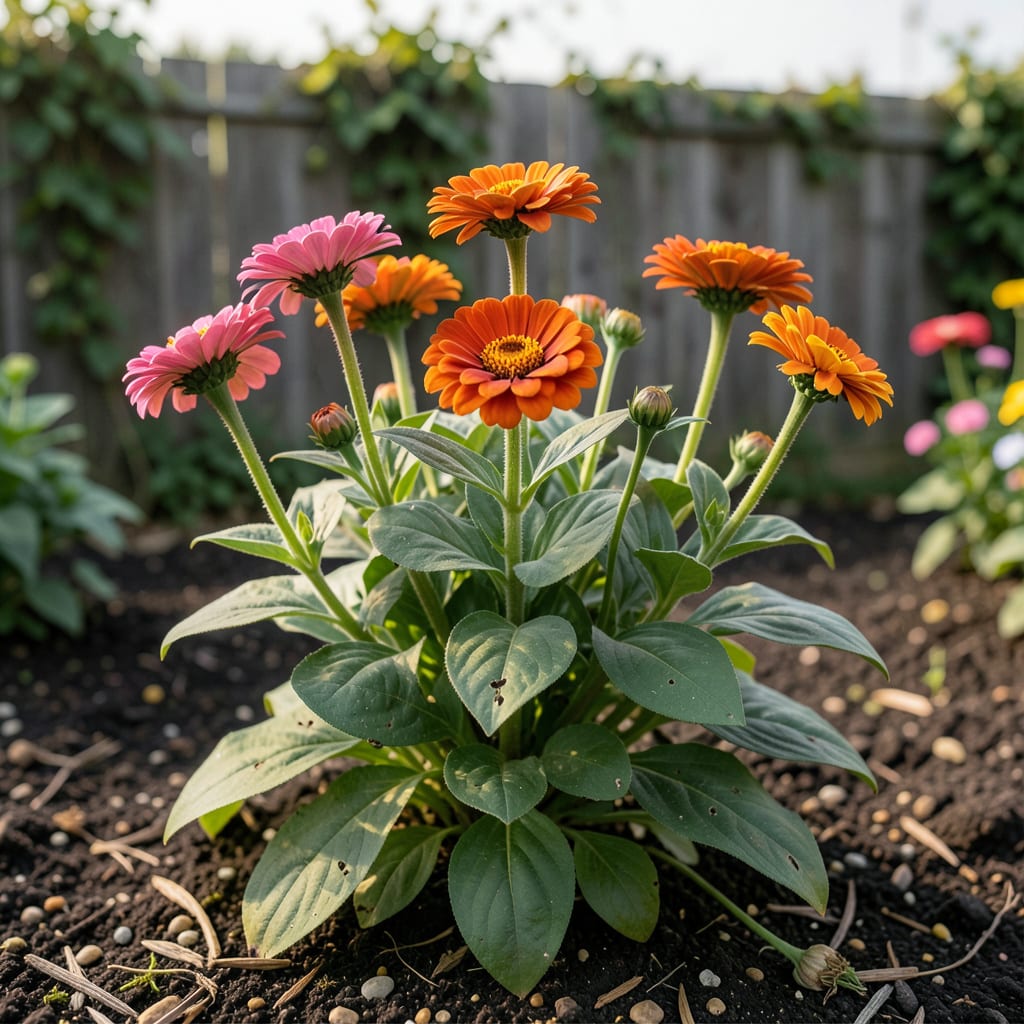
Slugs, snails, Japanese beetles, and aphids are the most common culprits damaging zinnia leaves. Look for chewed edges, holes, or silvery trails to identify the pest and take targeted action.
Zinnias often become a buffet for garden pests because their tender leaves and bright blooms attract both above-ground and soil-dwelling invaders. 🌿 I’ve noticed that slugs and snails prefer damp conditions, so they’re more active after rain or heavy watering, while Japanese beetles attack in broad daylight, skeletonizing leaves within hours. Aphids, on the other hand, cluster on new growth and undersides of leaves, sucking sap and leaving behind sticky honeydew that attracts ants. The key is catching these signs early before they multiply and overwhelm your plants.
💡 In This Article
Each pest leaves a unique “signature” on zinnia leaves that reveals its identity. Slugs and snails create irregular, smooth-edged holes and leave behind shiny silvery slime trails that glisten in morning light. These trails are actually mucus secretions containing calcium carbonate, which helps them glide while protecting their soft bodies from rough leaf surfaces.
🐌 Japanese beetles, by contrast, feed aggressively during daylight hours, skeletonizing leaves by consuming tissue between veins—resulting in a lacy, transparent appearance.
Aphids operate differently, using their needle-like mouthparts to pierce leaf surfaces and suck out sap. This creates yellowing spots and curled edges, often accompanied by sticky honeydew that attracts black sooty mold. A single aphid can reproduce 50 offspring in a week, which is why infestations explode so quickly.
Earwigs leave jagged, ragged holes but are actually beneficial predators that mostly eat other pests—they only damage zinnias when populations get too high.
The timing of damage offers clues too. Slugs feed primarily at night or on overcast days when humidity exceeds 80%, while Japanese beetles are most active between 9 AM and 3 PM when temperatures reach 85°F+. Aphids thrive in dry conditions but multiply fastest when plants are stressed by inconsistent watering.
🌡️ I’ve found that zinnias planted in full sun with good air circulation develop thicker cuticles, making them slightly more resistant to all these pests.
Look closely at damage location patterns. Slugs target lower leaves first since they travel upward from the soil, while Japanese beetles start at the top and work downward. Aphids congregate on tender new growth and flower buds where cell walls are thinner.
The undersides of leaves often show the first signs of infestation—check there weekly with a hand lens to catch problems early. 🔍
Zinnias’ bright colors and sweet nectar make them particularly vulnerable. Their high sugar content in leaf sap attracts aphids, while the soft tissue is easy for chewing insects to penetrate. The plants’ rapid growth also means they recover quickly from minor damage, but severe infestations can stunt blooming.
I’ve noticed that varieties with hairy leaves (like ‘Benary’s Giant’) show 30% less damage because the trichomes deter small insects.
Consider the bigger ecosystem too. A sudden explosion of pests often indicates an imbalance—maybe predator populations (like ground beetles or ladybugs) have been disrupted by pesticides or habitat loss. 🌱 Healthy soil with plenty of organic matter supports beneficial nematodes that naturally control slug populations.
The most effective solutions work with these natural systems rather than against them.
Check for silvery slime trails—this is a dead giveaway for slugs. Beetles leave ragged, lacy holes in leaves, often skeletonizing them. Slug damage appears overnight, while beetles feed during the day when it’s warm.
Handpick beetles early in the morning when they’re slow. Set out beer traps for slugs at dusk. A strong blast from the hose can knock off aphids. For immediate results, mix 1 tbsp neem oil with water and spray affected leaves at sunset.
Plant basil or marigolds nearby—their strong scents mask zinnias’ attractiveness. Rosemary deters beetles, while nasturtiums trap aphids. Keep companions within 12-18 inches for maximum effectiveness.
Inspect every 2-3 days during warm months. Focus on leaf undersides and new growth where pests hide. After rain, check daily—slugs become much more active. Morning is best for spotting fresh damage before pests retreat.
Yes! Copper tape around beds shocks slugs. Dish soap spray (1 tsp per quart) kills soft-bodied pests. Crushed eggshells create barriers slugs avoid. Coffee grounds sprinkled around plants deter both slugs and ants naturally.
