
Beautiful Plants For Your Interior
Beautiful Plants For Your Interior
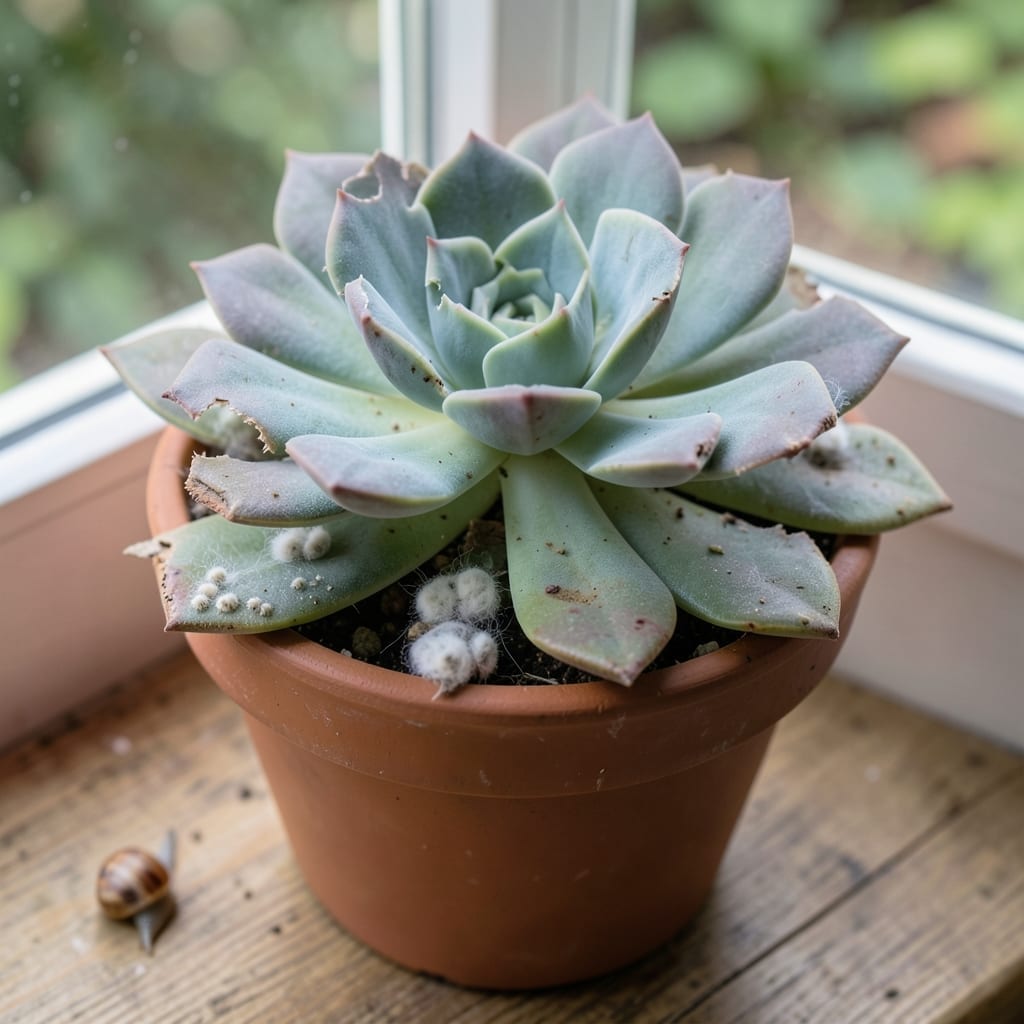
Woke up to chewed leaves on my favorite jade plant. 🌱 Succulents aren’t supposed to be a buffet, but something clearly disagrees with me on this.
Mealybugs, snails, and even deer think your thick-leaved plants are a snack. The damage looks different for each culprit—sticky residue, jagged edges, or entire plants disappearing overnight. I’ve dealt with all three in one season.
Here’s the thing—most pests leave clear evidence behind. White cottony clusters scream mealybugs, slimy trails mean snails, and missing plants point to larger visitors. Spot the sign, solve the problem.
With the right fix, your succulents bounce back fast. Organic sprays, barriers, or simple traps usually do the trick. Let’s save those plants.
Succulents are hardy, but they’re not immune to pests. Understanding why these invaders target your plants helps you prevent and treat the problem effectively. Here are the most common causes:
Insects like aphids, mealybugs, and scale insects are drawn to succulents for their sap. These pests pierce the plant’s tissues, weakening it and causing visible damage like holes, discoloration, or sticky residue (honeydew). Spider mites, another common culprit, thrive in dry conditions and spin fine webs on the plant.
These slow-moving pests leave telltale slime trails and irregular holes in leaves. They’re most active at night or in damp conditions, making overwatered succulents or outdoor pots prime targets. Their rasping mouths scrape away plant tissue, leading to unsightly damage.
Birds, squirrels, and even deer may nibble on succulents, especially in outdoor gardens. They’re often attracted to the moisture in the leaves or the tender new growth. Rodents like mice and rats may also gnaw on succulents, particularly in colder months when other food sources are scarce.
Stressed succulents—whether from overwatering, underwatering, or nutrient deficiencies—are more vulnerable to pests. Weak plants can’t defend themselves as effectively, making them easy targets. For example, overwatered succulents develop soft, mushy leaves that attract fungus gnats and other pests.
Addressing these root causes (pun intended!) will help keep your succulents thriving and pest-free. 💡
Once you’ve identified the culprit, use these targeted fixes to save your succulents and keep pests from coming back.
Dab visible bugs with a cotton swab soaked in rubbing alcohol (70% or higher). For heavy infestations, spray the plant with a mix of 1 part alcohol to 3 parts water or use insecticidal soap. Repeating every 5–7 days breaks their life cycle.
Prevention tip 💡: Inspect new plants before bringing them near your collection, and keep succulents in well-ventilated areas.
Blast mites off with a strong stream of water, then wipe leaves with a soapy cloth (mild dish soap). Follow up with neem oil spray, focusing on undersides. Isolate the plant to prevent spreading.
Prevention tip 💡: Mites thrive in dry conditions—mist your succulents occasionally or use a humidity tray.
Handpick pests at dusk or dawn, or set up beer traps (a shallow dish of beer sunk into the soil). Create a barrier with copper tape around pots or sprinkle diatomaceous earth on the soil surface.
Prevention tip 💡: Keep the area around your succulents free of debris and overgrowth where pests hide.
Gently scrape off scales with a soft brush or toothpick, then apply horticultural oil to suffocate remaining pests. For stubborn cases, repeat weekly until gone.
Prevention tip 💡: Regularly check the undersides of leaves and stems, especially in warm, dry climates.
Let the soil dry completely between waterings to kill larvae. Use yellow sticky traps to catch adults and a layer of sand or grit on top of the soil to deter egg-laying.
Prevention tip 💡: Avoid overwatering and use well-draining soil to discourage gnat activity.
Look for white, cottony clusters in leaf crevices or under stems. These pests also leave sticky honeydew residue on leaves and nearby surfaces.
Use physical barriers like fencing or netting. Motion-activated sprinklers also work well to deter them without harm.
Snails rasp plant tissue with their mouths, leaving irregular, jagged holes. They’re most active at night and leave silvery slime trails.
Soft, mushy leaves from overwatering attract fungus gnats and other pests. Always let soil dry completely between waterings.