
Beautiful Plants For Your Interior
Beautiful Plants For Your Interior
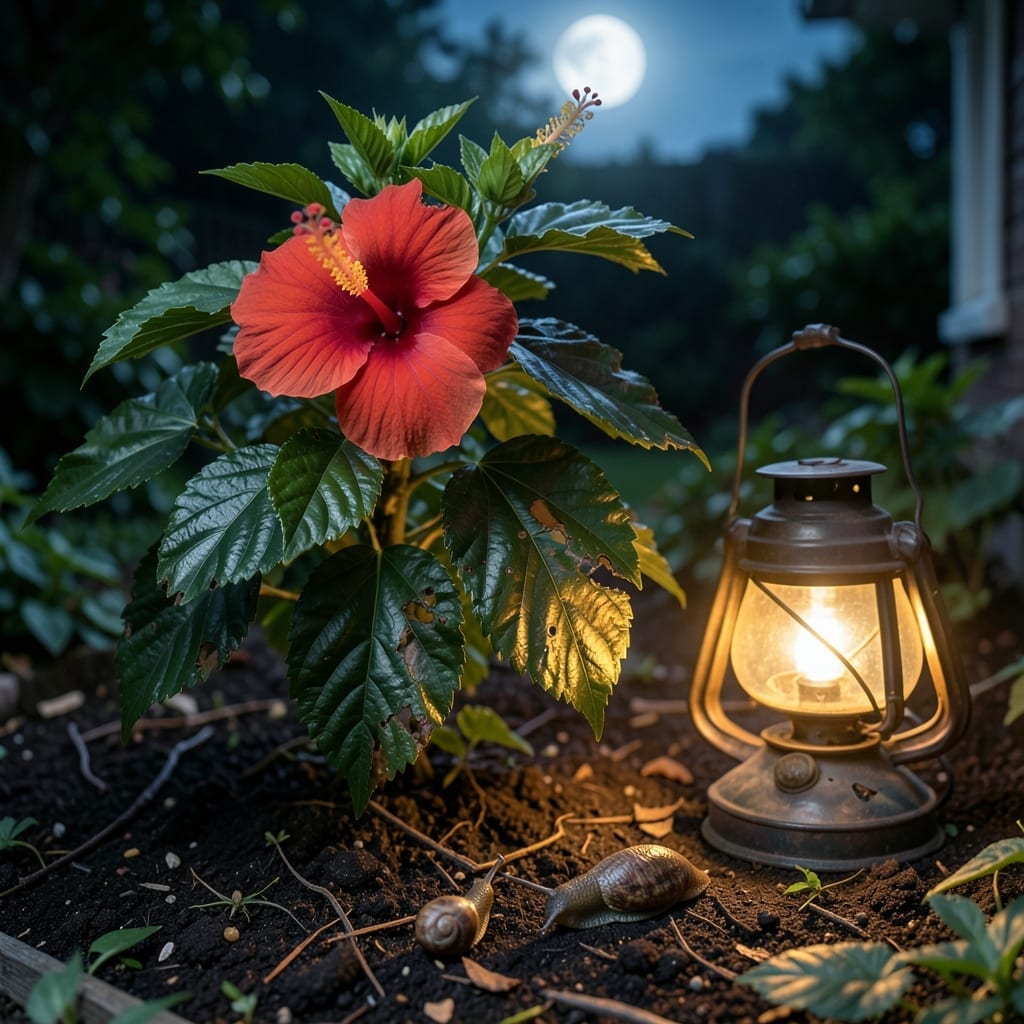
Waking up to find your Hibiscus 🌺 leaves riddled with holes can be disheartening. Those nighttime culprits are likely feasting while you sleep, leaving you to play detective each morning.
Identifying what’s eating your Hibiscus at night is the key to stopping the damage. From slugs to caterpillars, these pests love the cover of darkness to do their dirty work.
I’ve seen gardeners lose entire plants overnight to these hungry invaders. But don’t worry – with the right knowledge, you can turn the tables and protect your blooms.
Let me show you exactly how to discover the pests and implement solutions that work. Your Hibiscus will thank you with vibrant, hole-free leaves.
Nothing is more disheartening than seeing your hibiscus leaves chewed overnight. I’ve found that nocturnal pests are often the hidden culprits behind this damage. These creatures thrive in darkness, making them tricky to catch in the act.
From my experience, slugs and snails are the most common offenders. They leave behind silver slime trails and irregular holes in leaves. Another frequent visitor is the earwig, which loves tender new growth.
| Pest | Signs of Damage | Active Time |
|---|---|---|
| Slugs & Snails | Silver trails, jagged holes | Night |
| Earwigs | Ragged leaf edges | Night |
| Caterpillars | Large holes, rolled leaves | Night/Dusk |
| Japanese Beetles | Skeletonized leaves | Night |
I’ve also spotted caterpillars munching on hibiscus at night. They often hide under leaves during the day. Look for rolled leaves or dark droppings near your plants as telltale signs.
Japanese beetles are another nighttime nuisance. They skeletonize leaves by eating the tissue between veins. I check for their metallic green bodies under leaves in the early morning.
Cutworms are sneaky too. They sever young stems at soil level, causing plants to topple. I find them curled just below the soil surface during the day.
To confirm which pest is attacking your hibiscus, I recommend setting up a nighttime inspection with a flashlight. Check both the upper and lower leaf surfaces as well as the soil around the plant.
Another method I use is laying down light-colored cloths under the plants at dusk. In the morning, I often find pests that have fallen from the plant overnight.
Remember that healthy hibiscus plants are more resistant to pest damage. I always ensure my plants get proper watering and balanced fertilization to maintain their vigor.
If you’re dealing with persistent pest problems, consider rotating your control methods to prevent resistance. I’ve had success alternating between organic sprays and physical barriers to keep pests guessing.
🌿If your hibiscus is under attack at night, don’t panic. There are effective ways to protect your plant and restore its health. The key is to act quickly and use a multi-layered approach to deter pests.
Start by removing any debris or leaf litter around the base of your hibiscus. Pests like slugs and snails thrive in damp, hidden spots. Keeping the area clean reduces their hiding places. 🌿
🌱 5 Ways to Stop Nighttime Hibiscus Pests
For an immediate solution, try copper barriers or organic sprays. Copper tape around pots creates a mild electric charge that repels slugs and snails. Sprays with neem oil or insecticidal soap can also disrupt pests.
I recommend checking your hibiscus at dusk and dawn when pests are most active. Use a flashlight to spot caterpillars or beetles on the leaves. Remove them by hand or with tongs to avoid chemicals.
Another great option is beneficial nematodes. These microscopic worms target soil-dwelling pests like grubs and larvae without harming your hibiscus. Apply them to moist soil for best results.
Finally, consider companion planting. Plants like marigolds and lavender can repel pests naturally. They add beauty to your garden while keeping hibiscus safe from nighttime invaders. ✂️