
Beautiful Plants For Your Interior
Beautiful Plants For Your Interior
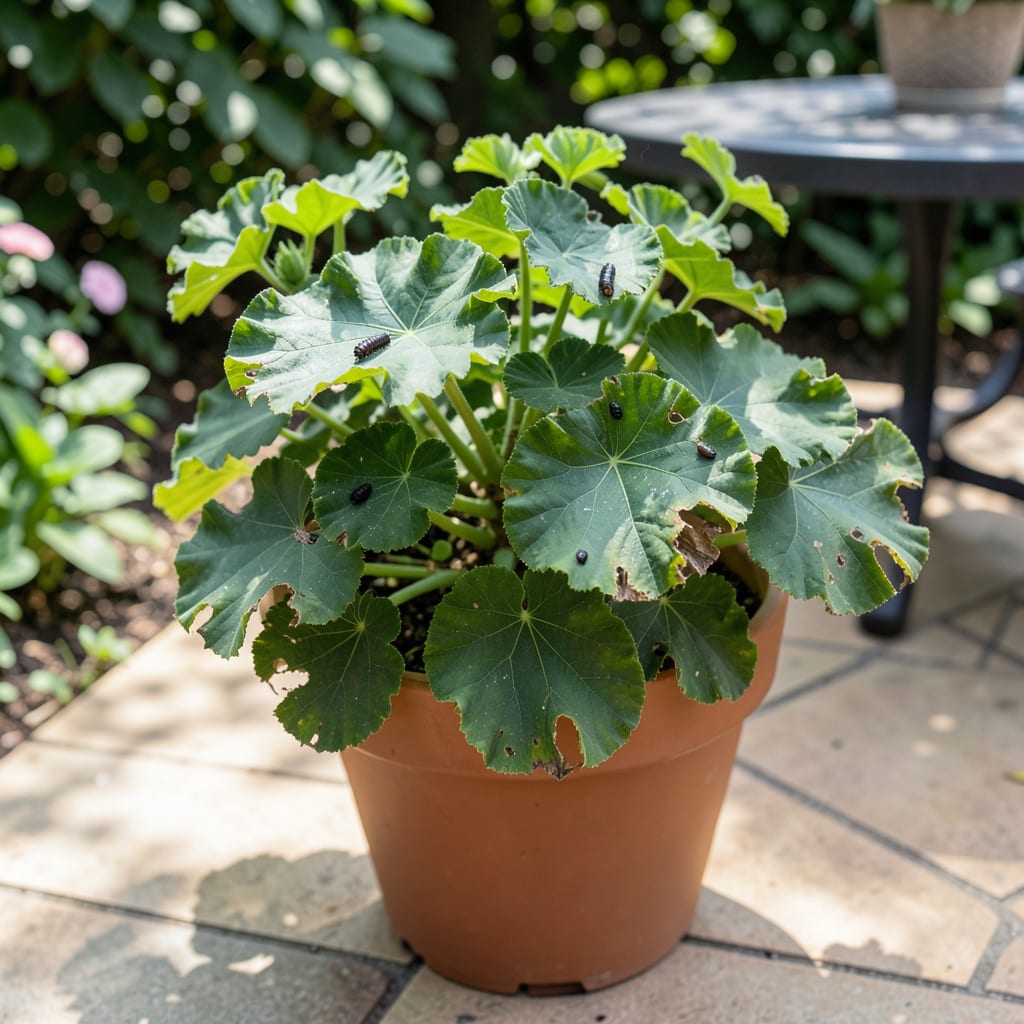
Watching your geraniums go from lush to lunch is frustrating. I’ve been there—waking up to leaves that look like Swiss cheese overnight, with no obvious culprit in sight.
The usual suspects are small but destructive: Japanese beetles, caterpillars, and slugs love geranium foliage. Each leaves a distinct pattern of damage, which makes identification easier than you’d think.
Once you know what’s eating them, solutions range from hand-picking to organic sprays. I’ve tested neem oil and diatomaceous earth with great success, and they’re gentle on the plants.
Prevention is simpler than cure. Regular inspections and removing debris around the base of plants can stop an infestation before it starts. Let’s get your geraniums thriving again.
Geranium leaves are a favorite snack for several pests and conditions. Here’s why your plants might be under attack:
Caterpillars (like the geranium budworm) and beetles (such as Japanese beetles) are common culprits. These pests chew large, irregular holes in leaves, often targeting the edges first. Scientific note: Caterpillars secrete enzymes that break down plant cell walls, making leaves easier to consume.
Spider mites and aphids pierce leaf tissues to feed on sap, causing stipling (tiny dots), yellowing, or curled edges. These pests reproduce rapidly in dry, warm conditions, stressing the plant further.
While not “eating” the leaves, pathogens like Botrytis cinerea (gray mold) or Xanthomonas campestris (bacterial blight) create spots or holes that mimic pest damage. Overwatering or poor air circulation encourages these infections.
Deer, rabbits, and even slugs may feast on geraniums, especially in gardens. Slugs leave a silvery slime trail, while larger animals create jagged tears in leaves. Pro tip: Geraniums contain toxic compounds (geraniol, linalool) that deter some animals—but not all!
Extreme heat or drought can cause leaf edges to crisp and brown, resembling pest damage. Geraniums need consistent moisture and well-draining soil to thrive.
Dealing with pests munching on your geraniums can be frustrating, but these targeted fixes will help you reclaim your plants. Below are practical solutions organized by the most likely culprits, along with prevention tips to keep your geraniums thriving.
Check your plants at dusk or dawn when these pests are most active. Remove them by hand and drop them into soapy water. For a long-term fix, create a barrier with copper tape around pots or sprinkle diatomaceous earth around the base. Prevention tip: 💡 Keep the area clean and free of debris where they hide.
Inspect the undersides of leaves for eggs or larvae. Remove caterpillars by hand or use a neem oil spray (mix 1 tbsp neem oil + 1 tsp dish soap + 1 quart water) to deter them. Apply every 5–7 days until the issue subsides. Prevention tip: 🌡️ Encourage natural predators like birds by adding a bird feeder nearby.
These tiny pests thrive in dry conditions. Blast them off with a strong stream of water, then apply insecticidal soap (follow label instructions). Repeat every 4–5 days until gone. Prevention tip: ✨ Mist your geraniums regularly to maintain humidity and discourage mites.
Handpick beetles in the early morning when they’re sluggish and drop them into soapy water. For a natural approach, apply beneficial nematodes to the soil to target grubs. Prevention tip: 🎯 Avoid overwatering, as moist soil attracts beetle grubs.
Mix 1 tsp dish soap + 1 quart water and spray directly on aphids. For a hands-off method, introduce ladybugs—natural aphid predators—to your garden. Prevention tip: 🌿 Prune heavily infested leaves to prevent spread.
With these fixes, your geraniums will be pest-free in no time! Stay vigilant and address issues early for the best results.
Look for clues like slime trails (slugs), jagged holes (beetles), or fine webbing (spider mites). Each pest leaves a distinct pattern that helps with identification.
Yes! Try neem oil sprays, diatomaceous earth, or introducing beneficial insects like ladybugs. These methods are effective and eco-friendly.
Geraniums have tender leaves and some varieties contain compounds that attract certain insects. Their lush foliage provides both food and shelter for pests.
Too much moisture creates ideal conditions for slugs, snails, and fungal growth. Always ensure good drainage to keep plants healthy.
