
Beautiful Plants For Your Interior
Beautiful Plants For Your Interior
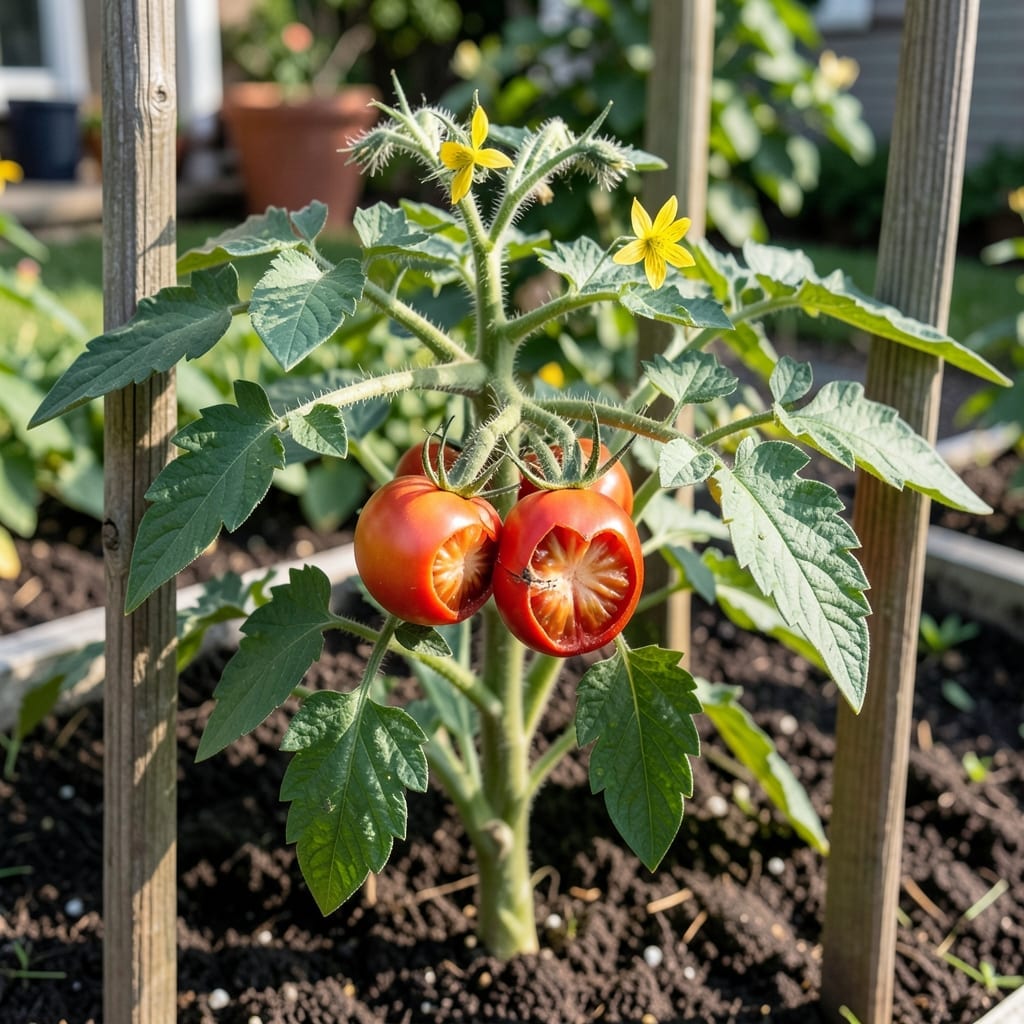
One morning, I found my nearly ripe tomatoes split open. It’s frustrating after nurturing them from seedlings, but there’s always a reason behind the cracking.
Tomatoes crack when their growth outpaces the skin’s ability to stretch. This usually happens after heavy rain or inconsistent watering, causing the fruit to swell too fast. Some varieties are just more prone to it.
Preventing it starts with steady moisture. I check soil with my finger before watering and use mulch to keep conditions even. A little attention goes a long way.
Selecting crack-resistant varieties helps too. With the right approach, you can avoid this issue and enjoy smooth, healthy tomatoes all season.
Tomatoes crack when their growth outpaces their skin’s ability to stretch. This usually happens due to sudden changes in their environment or care. Below are the primary causes, explained with actionable insights.
Inconsistent moisture levels are the #1 cause of cracking. When tomatoes experience drought followed by heavy watering (or rain), the fruit swells rapidly. The skin, unable to expand fast enough, splits. Solution: Maintain steady soil moisture with drip irrigation or a mulch layer to retain water.
Extreme heat or cold shocks the plant, disrupting cellular growth. High temperatures accelerate water uptake, while sudden cold slows it—both can lead to uneven expansion. Solution: Use shade cloth during heatwaves and row covers for unexpected cold snaps.
Excess nitrogen promotes leafy growth at the expense of fruit development, causing rapid, uneven swelling. Solution: Test soil before fertilizing and opt for balanced, slow-release formulas (e.g., 10-10-10). Avoid overfeeding mid-season.
Some heirloom or thin-skinned varieties (e.g., Beefsteak, Brandywine) are genetically prone to cracking. Solution: Choose crack-resistant hybrids like Mountain Merit or Celebrity if this is a recurring issue.
Preventing and fixing cracked tomatoes starts with addressing the root causes. Here’s how to tackle each issue and keep your harvest smooth and intact:
Tomatoes crack when water levels fluctuate. Water deeply and consistently, aiming for 1–2 inches per week, including rainfall. Use a drip irrigation system or soaker hose to deliver water directly to the roots, reducing surface evaporation. Mulch around plants with straw or wood chips to retain moisture and regulate soil temperature.
Prevention tip: Check soil moisture 2 inches down—if it’s dry, it’s time to water. Avoid overhead watering to prevent disease.
When tomatoes grow too fast, their skins can’t keep up. Use a balanced fertilizer (10-10-10) and avoid over-fertilizing with nitrogen, which promotes leafy growth at the expense of fruit. If heavy rain is forecasted, harvest ripe tomatoes early to prevent them from absorbing excess water.
Prevention tip: Prune suckers (the shoots between the main stem and branches) to redirect energy toward fruit development rather than foliage.
Some tomato varieties are more prone to cracking. Opt for crack-resistant types like ‘Roma,’ ‘San Marzano,’ or ‘Celebrity.’ If you’re already growing a susceptible variety, harvest fruits at the first sign of ripening to avoid further damage.
Prevention tip: Save seeds from your best-performing, crack-free tomatoes to plant next season.
Extreme heat or cold can stress tomatoes, leading to cracks. Use shade cloth during heatwaves to reduce temperature spikes. In cooler weather, cover plants with row covers to maintain a steady environment.
Prevention tip: Plant tomatoes in a spot with consistent temperatures, such as near a south-facing wall for warmth.
Yes! A 2-3 inch layer of mulch retains moisture and regulates soil temperature. This prevents the rapid water uptake that leads to splitting. Organic mulches like straw or wood chips work best.
Thin-skinned heirlooms like Beefsteak or Brandywine are genetically prone to splitting. Their delicate skins can’t handle rapid growth. For fewer cracks, try hybrids like Celebrity or Mountain Merit.
Cracks don’t affect flavor or safety. Just harvest and use them quickly before pests or rot set in. Small cracks can be trimmed off if you prefer.
Water deeply 2-3 times per week, providing 1-2 inches total (including rain). Check soil 2 inches down—if dry, it’s time to water. Consistency is key!