
Beautiful Plants For Your Interior
Beautiful Plants For Your Interior
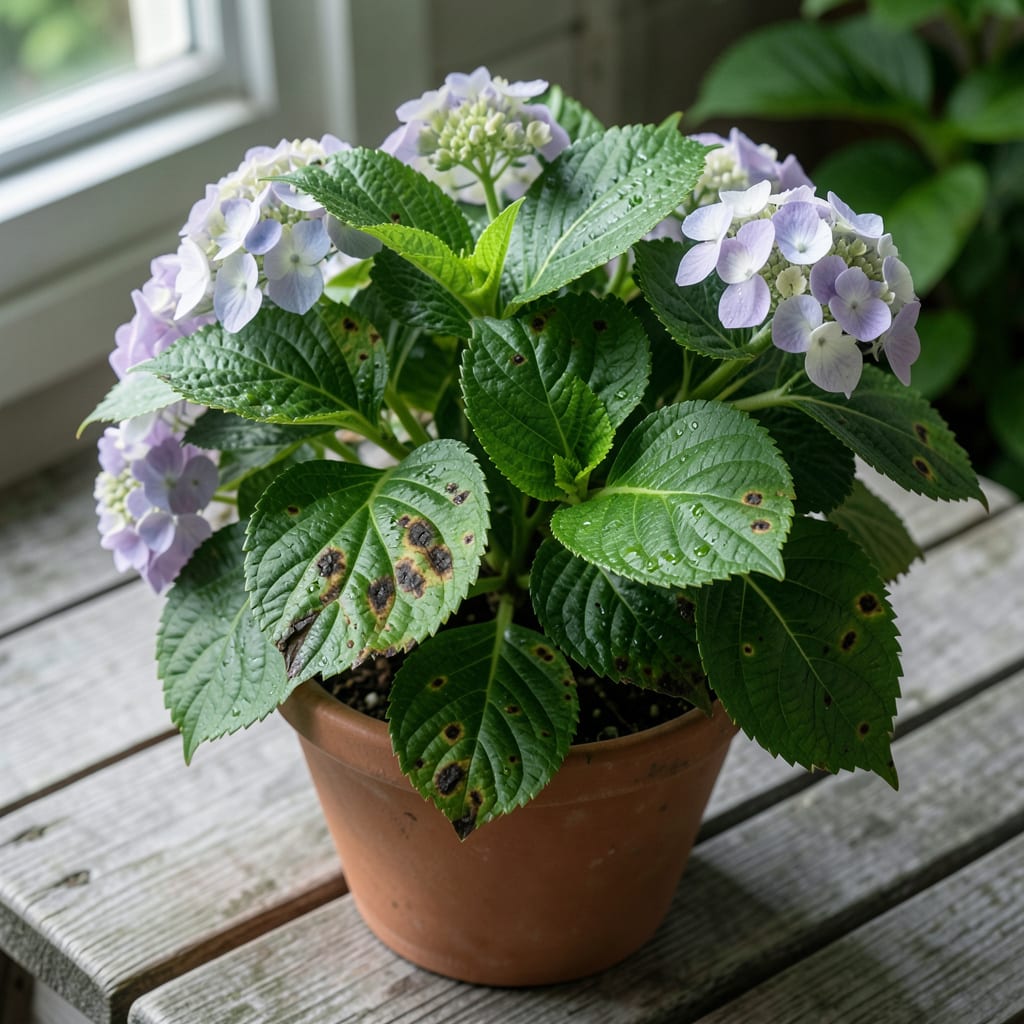
Dark spots on hydrangea leaves ruined my first planting season. I watched healthy green foliage turn spotted and sad within 2 weeks, and it took me months to figure out why.
Turns out most cases come down to fungal issues like anthracnose or leaf spot, often triggered by excess moisture on leaves. Poor air circulation and overhead watering create the perfect storm for these problems to spread.
Once I adjusted my watering routine and improved airflow, new growth stayed clean and vibrant green. The solution was simpler than I expected, and the recovery happened faster than I thought possible.
Early diagnosis makes all the difference. Here’s how to spot the signs and stop the damage before it spreads to the whole plant.
Dark spots on hydrangea leaves are usually a sign of stress or disease. Here’s what’s likely causing them:
The most common culprit is fungal pathogens, such as Cercospora or Alternaria. These thrive in warm, humid conditions, especially when leaves stay wet for long periods. Fungi produce spores that spread via wind or water, infecting healthy tissue and creating circular, dark brown or purple spots with yellow halos.
Watering from above leaves foliage damp, creating the perfect environment for fungal growth. Hydrangeas are particularly susceptible when their leaves remain wet overnight, accelerating spore germination.
Crowded plantings or dense canopies restrict airflow, trapping moisture around leaves. This stagnant humidity allows fungi to take hold and dark spots to multiply.
While less common, deficiencies in magnesium or phosphorus can cause dark, irregular spots. These often appear between leaf veins and may be accompanied by yellowing.
Dark spots on your hydrangea leaves can often be fixed with the right approach. Here’s how to tackle each cause head-on:
For leaf spot diseases like anthracnose or Cercospora, remove infected leaves immediately to prevent spreading. Apply a copper-based fungicide or neem oil weekly until the issue resolves. Improve air circulation by spacing plants properly and watering at the base to keep foliage dry.
Prevention tip: 💡 Rotate your fungicides to avoid resistance and clean up fallen leaves in autumn to reduce overwintering spores.
If soggy soil is the culprit, let the top 1-2 inches of soil dry out between waterings. Ensure your hydrangeas are planted in well-draining soil and consider amending heavy clay with compost. For potted plants, use containers with drainage holes.
Prevention tip: 🎯 Water early in the day so excess moisture evaporates quickly, and use a moisture meter to avoid guesswork.
Yellowing leaves with dark spots may signal a magnesium or phosphorus deficiency. Apply a balanced fertilizer (10-10-10) or Epsom salt (1 tablespoon per gallon of water) for magnesium. Test your soil to pinpoint the exact nutrient lacking.
Prevention tip: ✨ Feed hydrangeas in early spring and mid-summer to maintain steady nutrient levels.
Check the undersides of leaves for pests like aphids or spider mites, which can cause dark spots from their feeding. Blast them off with water or use insecticidal soap. For severe infestations, apply horticultural oil.
Prevention tip: 🌡️ Encourage beneficial insects like ladybugs by planting companion flowers such as marigolds.
Fungal spots often appear as circular, dark brown or purple with yellow halos. They spread quickly in wet conditions and may have a fuzzy texture on the underside of leaves.
Yes, with prompt action! Remove infected leaves, improve airflow, and apply fungicide. New growth should emerge healthy within 2-3 weeks.
Water at the base in the morning to allow foliage to dry. Avoid overhead watering and ensure soil drains well to reduce moisture on leaves.
Not always. They can also indicate nutrient deficiencies or pest damage. Check for pests and test soil if spots appear irregular or without yellow halos.
