
Beautiful Plants For Your Interior
Beautiful Plants For Your Interior
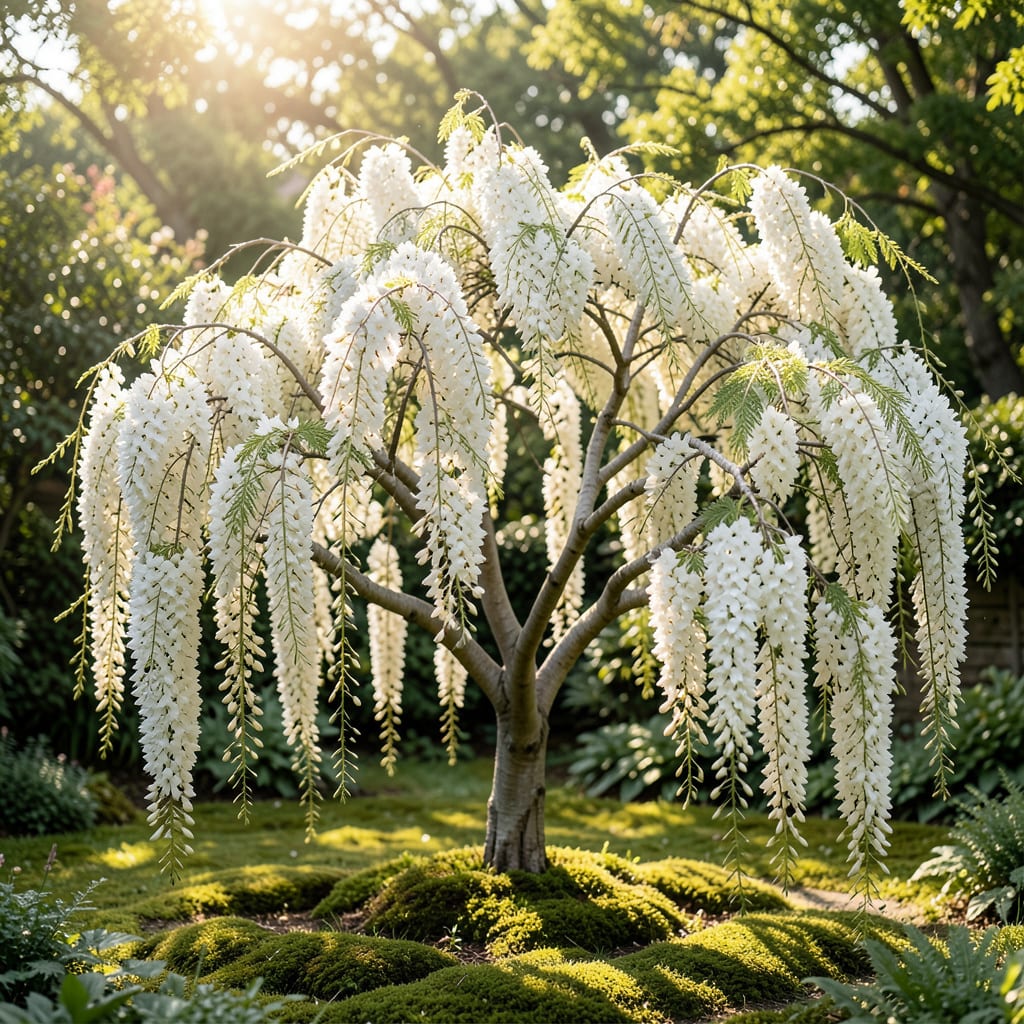
That first glimpse of cascading white blooms changed my garden forever. The gentle sway of weeping branches brings a kind of elegance that stops visitors in their tracks.
These trees thrive in full sun with well-draining soil, and their low-maintenance nature makes them perfect for busy gardeners. They bloom in spring, filling your space with a soft, sweet fragrance.
📚 In This Guide
Here’s the straightforward method I use to establish these elegant trees with long-term success.
Choose a spot with full sun to partial shade—these trees thrive in at least 6 hours of direct sunlight daily but tolerate lighter conditions. The soil should drain well; avoid low areas where water pools after rain. I always test drainage by digging a 1-foot deep hole and filling it with water. If it empties within 2-3 hours, you’re good to go.
Consider the mature size of your tree. Most weeping varieties need 10-15 feet of space to spread their graceful branches without competition. Planting too close to structures or other trees leads to crowded, misshapen growth over time.
Dig a hole that’s twice as wide as the root ball but no deeper. The extra width loosens the surrounding soil, making it easier for roots to establish. I use a shovel to create clean edges, then rough up the sides of the hole to prevent glazing—which can happen when smooth walls repel new root growth.
Remove any rocks, weeds, or debris from the hole. Mix the excavated soil with 20-30% compost to improve fertility and drainage. This gives your tree a strong start without overwhelming the roots with overly rich soil.
Gently remove the tree from its container and loosen the roots if they’re circling the root ball. Place the tree in the hole so the top of the root ball sits 1-2 inches above the surrounding soil level—it will settle after watering. This prevents the trunk from sitting in a depression where water can collect and cause rot.
Backfill the hole with your soil-compost mix, tamping lightly as you go to eliminate air pockets. Stop when the soil reaches the base of the trunk. Then, create a 3-4 inch high watering ring around the perimeter to help direct water to the roots during the first year.
Water deeply immediately after planting, using 10-15 gallons for a young tree. This settles the soil and ensures the roots make good contact with the earth. I water slowly to let the moisture soak in rather than run off. For the first 2-3 weeks, keep the soil consistently moist but not soggy.
Apply a 2-3 inch layer of organic mulch like wood chips or shredded bark, keeping it 6 inches away from the trunk. Mulch conserves moisture, suppresses weeds, and insulates the roots. Just don’t pile it against the bark—that can invite pests and disease.
Prune weeping white flower trees in late winter or early spring before new growth starts. Remove any dead, damaged, or crossing branches first. Then, thin out the canopy to improve air circulation and light penetration. I use clean, sharp pruners and make cuts just outside a branch collar.
These trees naturally develop their graceful weeping form, so avoid heavy pruning that disrupts their elegance. Focus on maintaining health and removing wayward branches that spoil the shape. After pruning, step back frequently to assess your progress from multiple angles.
These practical insights will help you avoid common pitfalls when planting and caring for this elegant tree.
Location Strategy: In Step 1, when selecting your spot, remember that the 6 hours of direct sunlight requirement is non-negotiable for healthy growth. I’ve seen trees struggle in shadier spots, producing sparse blooms and weak branches. Also, that drainage test with a 1-foot deep hole is worth doing—it saved me from planting in a soggy corner that would’ve drowned the roots.
Planting Depth: For Step 3, here’s what nobody tells you—the 1-2 inches above soil level rule prevents more problems than you’d think. I learned this the hard way after losing a young tree to trunk rot when I planted it flush with the ground. That little elevation makes all the difference for water drainage.
Watering Wisdom: The 10-15 gallons immediately after planting in Step 4 might seem excessive, but it’s crucial for eliminating air pockets. I water slowly in stages, letting it absorb between each pour. And during those first 2-3 weeks, consistent moisture is key—set a reminder if you’re forgetful like me.
Pruning Perspective: When you get to Step 5, resist the urge to over-prune. These trees develop their signature weeping form naturally. I focus on just removing dead wood and wayward branches, stepping back often to check the shape from different angles. Heavy pruning can ruin that graceful silhouette we’re all after.
Most weeping white flower trees, like the Chionanthus retusus (White Fringetree), reach 15–25 feet tall with a similar spread. Dwarf varieties stay under 10 feet. Their graceful, pendulous branches create a stunning focal point in any garden!
Typically, these trees bloom in late spring to early summer, producing delicate, fragrant white flowers. The exact timing depends on the climate—warmer zones may see blooms earlier, while cooler areas might wait until early summer.
Yes! Consider the weeping cherry (Prunus subhirtella) or weeping redbud (Cercis canadensis ‘Lavender Twist’). Both offer similar elegance with minimal upkeep and vibrant spring blooms.
Common issues include insufficient sunlight, improper pruning, or young age (some take 3–5 years to bloom). Ensure it gets 6+ hours of sun daily and avoid heavy pruning before the blooming season.
Smaller varieties can thrive in large containers (20+ gallons) with well-draining soil. However, most weeping white flower trees prefer in-ground planting for stability and growth. Regular watering and fertilization are key!
