
Beautiful Plants For Your Interior
Beautiful Plants For Your Interior
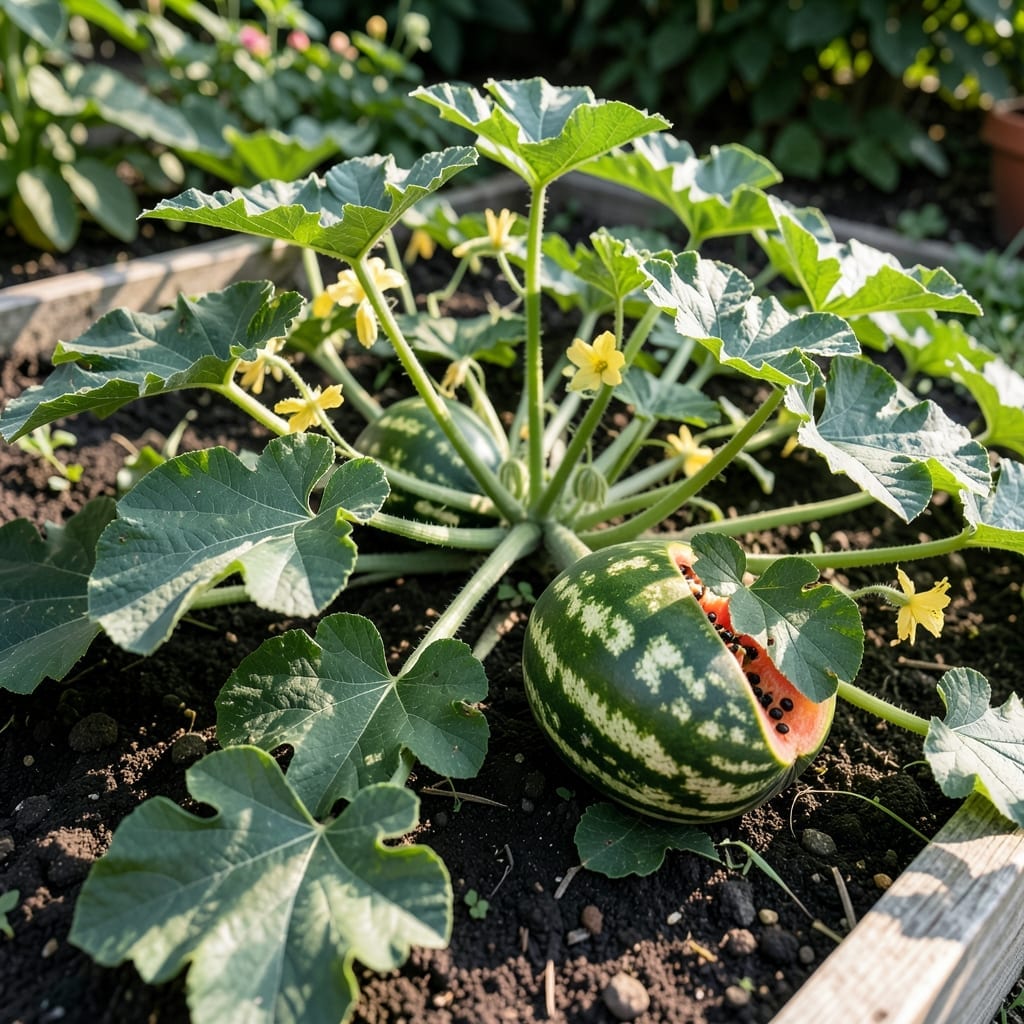
Nothing ruins summer quite like cutting into a watermelon that isn’t ready. That first bite should burst with sweetness, not disappointment.
I’ve learned the hard way that timing is everything with 🍉 Watermelon. Picking too early means a bland, underdeveloped fruit, while waiting too long can lead to a mushy mess.
Fortunately, there are clear signals your vine will give you when it’s harvest time. These aren’t guesses – they’re nature’s way of saying your Watermelon is at peak perfection.
Discover the foolproof methods I use every season to ensure every Watermelon I pick is ripe, juicy, and ready to enjoy.

I’ve learned that timing is everything when harvesting watermelons. Picking too soon means a bland taste, while waiting too long can lead to overripe fruit that splits or loses texture. The vine gives us clear signals if we know what to look for.
The first and most reliable sign is the tendril near the stem. When it turns brown and dry, your watermelon is likely ready. This little curl is the plant’s way of telling you it’s done nourishing that particular fruit.
Another key indicator is the ground spot where the watermelon rests on the soil. A creamy yellow color here means it’s ripe, while a white or pale green spot means it needs more time. This color change happens as the fruit matures and the chlorophyll breaks down.
The rind texture also changes as the fruit ripens. An unripe watermelon has a smooth, shiny surface, while a ripe one develops a dull, almost rough appearance. This visual change is subtle but consistent across most varieties.
I always check the stem connection too. As the fruit ripens, the stem begins to shrink and dry out. If it’s still green and pliable, the watermelon isn’t ready. This is nature’s way of severing the connection when the fruit is fully developed.
For seedless varieties, these signs are even more important since you can’t rely on the traditional seed color test. The visual cues become your primary guide. I’ve found seedless types often ripen a bit earlier than their seeded counterparts.
The size and weight can offer clues too. While size alone isn’t a perfect indicator, a ripe watermelon will feel heavier than it looks. This is because the water content increases as the fruit matures, giving it that satisfying heft.
Remember that different varieties may show these signs slightly differently. For example, yellow-fleshed watermelons might have a slightly different ground spot color. Always refer to your specific variety’s characteristics when in doubt.
I recommend checking these signs in the early morning when the fruit is cool and the plant is less stressed. This gives you the most accurate reading of its true ripeness. ☀️
When visual cues leave you unsure, I rely on hands-on tests to confirm my watermelons are ready. These methods have saved me from many disappointing harvests over the years.
The thumb test is my go-to first check. I press my thumbnail into the rind – if it pierces easily, the fruit isn’t ready. A ripe watermelon will resist penetration.
🌱 Pro Tip:
The tapping method works best on large watermelons. Listen for a deep, hollow sound – that’s the sweet spot!
For the tapping test, I use my knuckles to rap the watermelon. An unripe one produces a high-pitched, metallic sound. A ripe watermelon gives off a deep, hollow thud.
The sugar spot is another reliable indicator. This is where the watermelon rested on the ground. When ripe, it turns from white to creamy yellow. I always check this before harvesting.
I’ve found that morning harvesting gives the best flavor. The fruits are most hydrated after a cool night, making them sweeter and crunchier when picked early in the day.
Remember, size isn’t everything. A small watermelon can be perfectly ripe while a large one might still be green inside. Always combine multiple tests for the most accurate results.