
Beautiful Plants For Your Interior
Beautiful Plants For Your Interior
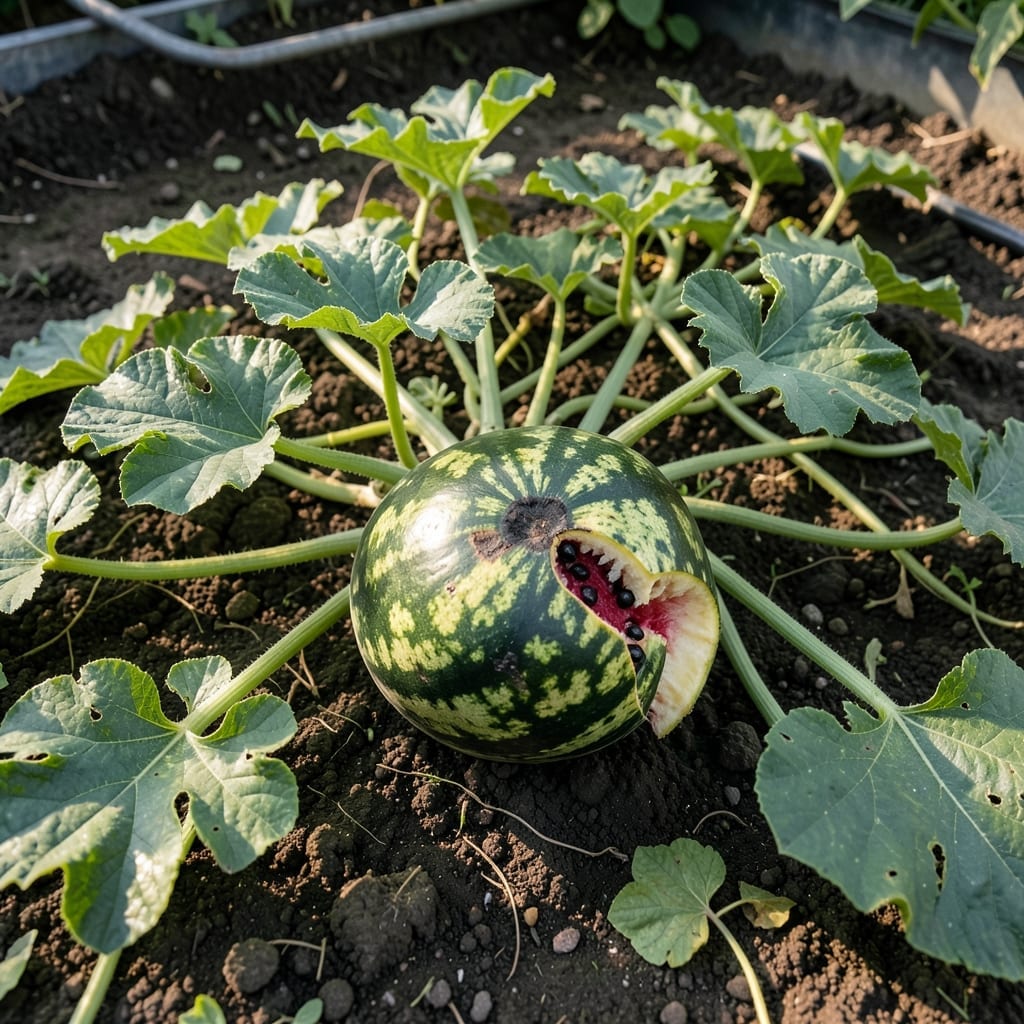
Nothing kills summer excitement like pulling up a watermelon to find the end black and rotting. I’ve lost three perfect melons to this before learning the calcium connection.
End rot hits when plants can’t access enough calcium, usually from uneven watering or poor soil. The first sign is a water-soaked spot on the blossom end that turns dark and sunken.
Fix it with crushed eggshells worked into the soil or a calcium spray at the first sign of trouble. Consistent watering prevents the problem entirely—1-2 inches per week does it.
Early detection saves the rest of your crop. Check developing fruits weekly once they reach softball size.
Watermelon end rot is primarily caused by environmental and nutritional imbalances that disrupt the fruit’s development. Below are the most common triggers, explained in scientific detail.
The leading cause of watermelon end rot is a localized calcium deficiency in the developing fruit. Even if soil calcium levels are adequate, uneven watering or rapid fruit growth can prevent the plant from transporting enough calcium to the blossom end. Calcium is essential for cell wall stability, and without it, tissue breakdown occurs, leading to the characteristic sunken, leathery rot.
Fluctuations in soil moisture—either drought stress or overwatering—disrupt calcium uptake. Watermelons need consistent moisture (1–2 inches per week) to maintain steady nutrient flow. Drought causes roots to absorb less calcium, while waterlogged soil reduces oxygen availability, impairing root function and nutrient absorption.
High heat (above 90°F) or sudden cold snaps can stress the plant, reducing its ability to absorb calcium. Heat accelerates transpiration, pulling water—and dissolved calcium—away from the fruit. Meanwhile, cold temps slow metabolic processes, limiting nutrient distribution to developing watermelons.
During rapid expansion, the fruit’s demand for calcium outpaces supply, especially if vines are over-fertilized with nitrogen. Excess nitrogen promotes leafy growth at the expense of fruit development, creating an imbalance that starves the blossom end of critical calcium.
Watermelon end rot can be frustrating, but with the right fixes, your crop can bounce back. Here’s how to tackle each cause head-on:
Fix it by applying calcium-rich amendments like gypsum or crushed eggshells to the soil. Work them into the top 6 inches for quick absorption. For a fast boost, use a foliar calcium spray (e.g., calcium chloride) on leaves, especially during fruit development.
Prevention tip: 💡 Test your soil before planting—aim for a pH of 6.0–6.8. Add lime if soil is too acidic, as it helps unlock calcium.
Keep soil moisture consistent—drought followed by heavy watering triggers end rot. Use drip irrigation to deliver steady moisture to roots. Mulch with straw or black plastic to retain soil humidity and prevent cracks.
Prevention tip: 💧 Water deeply 1–2 times per week (1–2 inches total) rather than light, frequent sprinkles.
Too much nitrogen or potassium can block calcium uptake. Switch to a balanced fertilizer (e.g., 10-10-10) and avoid over-fertilizing. If you’ve recently added compost, ensure it’s well-aged to prevent nutrient spikes.
Prevention tip: ✨ Rotate crops yearly to prevent nutrient depletion and disease buildup.
Heavy or compacted soil restricts root growth and calcium access. Loosen soil with organic matter like compost or peat moss. For clay soil, mix in sand or perlite to improve drainage.
Prevention tip: 🎯 Plant watermelons in raised beds if your soil is naturally poor or waterlogged.
Act fast at the first sign of end rot—early intervention saves the rest of your harvest!
Look for a water-soaked spot on the blossom end that turns dark and sunken. The area may appear leathery or moldy as it progresses.
No, once end rot sets in, the fruit won’t recover. Remove it to prevent the spread of decay to healthy melons.
If the rot is only on the rind and the flesh inside looks and smells normal, you can cut away the affected area. Discard any with soft or discolored flesh.
It can progress rapidly in 2-3 days under hot, humid conditions. Check developing fruits weekly to catch it early.