
Beautiful Plants For Your Interior
Beautiful Plants For Your Interior
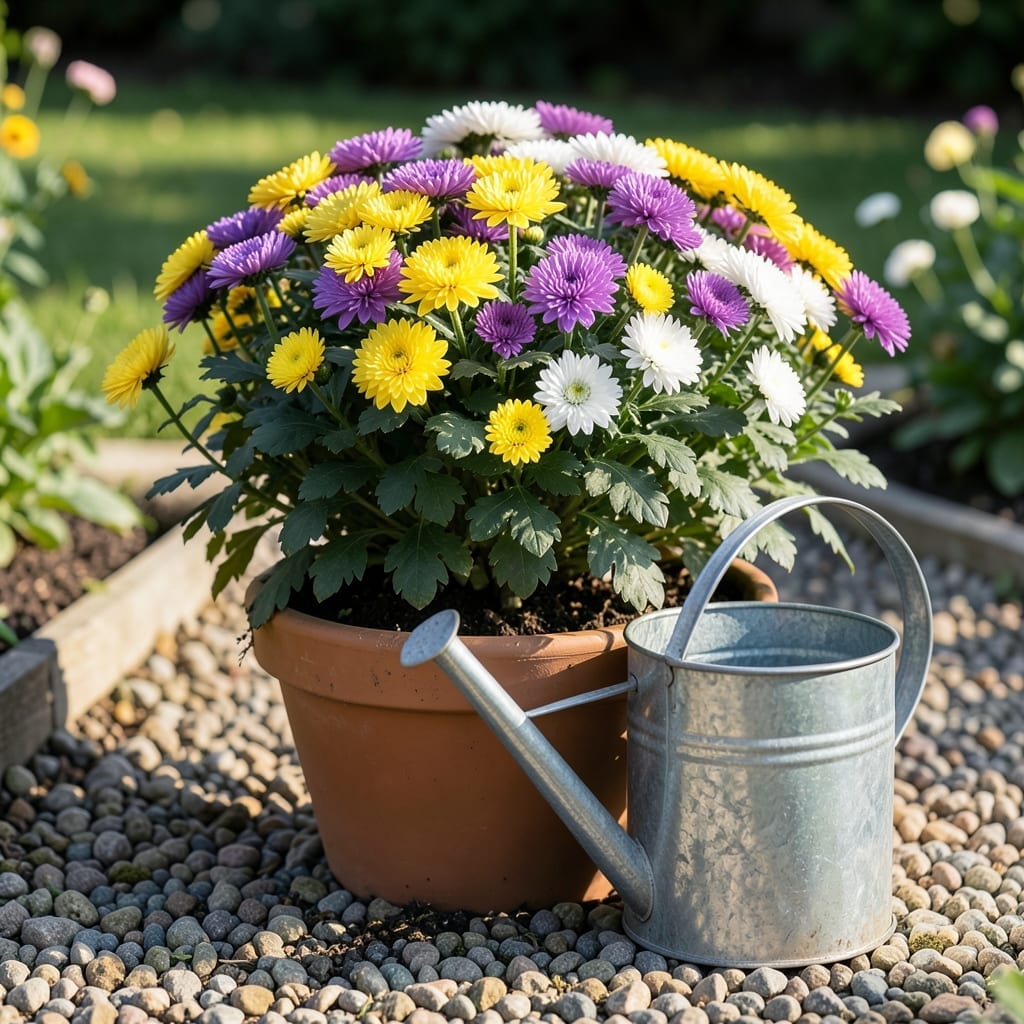
Nothing brightens up a porch like a pot of vibrant 🌼 Chrysanthemum—until improper watering turns those lush blooms into a wilting mess. I’ve seen it happen too many times, and it’s always preventable.
Getting the watering right is the key to keeping your container mums thriving through the season. It’s not complicated, but it does require some know-how.
Let me walk you through exactly what your potted Chrysanthemum needs to stay healthy and vibrant. You’ll discover the simple but crucial steps that make all the difference.


Getting the watering schedule right for potted mums can feel tricky, but it’s simpler than you think. The key is consistent moisture without letting the soil get soggy or bone dry.
I’ve found that most Chrysanthemums in containers need water every 5-7 days, but this can vary based on your climate, pot size, and soil type. Hot, dry conditions may require more frequent attention.
| Factor | Watering Frequency |
|---|---|
| Small pots (6-8 inches) | Every 3-4 days |
| Medium pots (10-12 inches) | Every 5-7 days |
| Hot climate (80°F+) | Every 2-3 days |
| Cool weather (60°F or below) | Every 7-10 days |
| Well-draining soil | Check daily, water as needed |
Always check the top inch of soil before watering. If it feels dry to the touch, it’s time to water. If it’s still moist, wait another day or two before checking again.
For best results, water your mums early in the morning. This gives the plants time to absorb the moisture before the heat of the day and reduces the risk of fungal diseases.
In summer months, your potted mums may need water every 3-5 days, especially if they’re in full sun. The soil dries out much faster in these conditions.
During fall, when temperatures cool down, you can usually stretch the interval to every 7-10 days. But always check the soil first—your plants will tell you what they need.
Remember that overwatering is just as harmful as underwatering. Yellowing leaves and a foul smell from the soil are classic signs of too much water. If you see these, scale back immediately.
If your mums are wilting between waterings, they might need more frequent drinks. But before you increase the schedule, check if the pot has proper drainage holes—this is crucial for healthy roots.
I always recommend using a moisture meter if you’re unsure. It takes the guesswork out and helps you maintain that perfect balance for vibrant blooms all season long. 🌼
The way you water your potted mums matters just as much as how often you do it. Using the right technique ensures the water reaches the roots where it’s needed most.
I always recommend watering at the base of the plant rather than overhead. This keeps the foliage dry and prevents fungal diseases that can damage your Chrysanthemums.
A drip irrigation system works wonderfully for container gardens. It delivers consistent moisture directly to the soil, which is perfect for busy gardeners.
If you’re watering by hand, take your time. Give each pot enough water to soak through the entire root ball. A quick sprinkle on the surface won’t do the job.
For even distribution, I like to water in a circular motion around the pot. This ensures all areas of the soil get moisture, preventing dry pockets.
Remember that clay pots dry out faster than plastic ones. If you’re using terracotta, you may need to water more frequently or switch to a moisture-retaining container.
🌼