
Beautiful Plants For Your Interior
Beautiful Plants For Your Interior
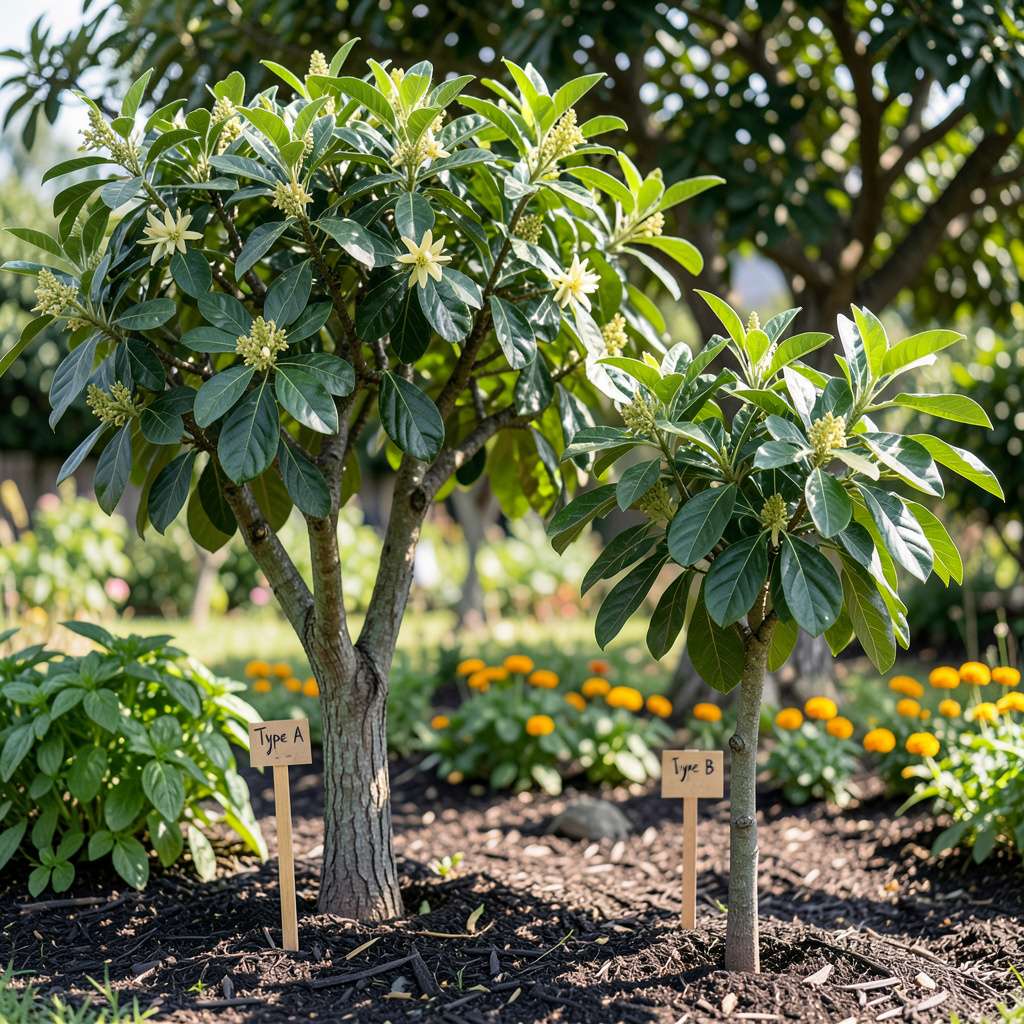
Type A avocado trees bloom with female flowers in the morning and male in the afternoon, while Type B trees do the opposite. Both are needed for cross-pollination to maximize fruit production in home gardens.
This natural synchronization is what makes avocado trees so fascinating to grow. 🌳 The alternating bloom cycles prevent self-pollination, which actually improves fruit quality and yield. I’ve noticed that when both types are planted within 20-30 feet of each other, the pollination success rate jumps dramatically. What’s particularly clever about this system is how it ensures genetic diversity – the female flowers of one type open when the male flowers of the other are actively shedding pollen.
💡 In This Article
Avocado trees have developed a fascinating reproductive strategy called dichogamy, where male and female flower parts mature at different times. In Type A trees like Hass or Pinkerton, the flowers open as female in the morning (typically between 8-11 AM when temperatures reach 65-75°F), then close and reopen as male the following afternoon (1-4 PM).
This precise timing prevents self-pollination while maximizing cross-pollination opportunities. 🌸
Type B trees (including Fuerte and Bacon) operate on the exact opposite schedule. Their flowers function as male in the morning and female in the afternoon.
What’s particularly clever is how this synchronization creates a 24-hour pollination window – when Type A’s female flowers are receptive, Type B’s male flowers are actively shedding pollen, and vice versa. The pollen remains viable for about 48 hours, giving bees and other pollinators ample time to transfer it between trees.
Temperature plays a crucial role in this delicate dance. Cooler mornings (55-65°F) can delay flower opening by 1-2 hours, while heat waves (> 90°F) may cause flowers to close prematurely. I’ve observed that in coastal regions, the more moderate temperatures create ideal conditions where the bloom cycles overlap perfectly for about 2-3 hours daily.
This overlap period is when most successful pollination occurs. ☀️
The biological reason behind this system is genetic diversity. When avocado trees cross-pollinate, the resulting fruit tends to have better seed viability and the tree produces more consistent yields. Studies show that cross-pollinated avocado trees can produce 200-300% more fruit than self-pollinated trees.
The flowers even produce a subtle vanilla-like fragrance when receptive, which attracts more pollinators to the garden. 🐝
What many gardeners don’t realize is that each flower actually goes through this cycle twice – once as female and once as male – over a 48-hour period. The first day it’s female, closes, then reopens the next day as male. This double opportunity increases the chances of successful pollination.
The flowers are most receptive when humidity levels are between 40-60%, which is why morning dew often helps with pollination success.
For those growing avocados in containers or small spaces, this flowering mechanism explains why you might see flowers but no fruit. Without a compatible pollinator nearby (within 50 feet), the female flowers won’t receive pollen during their brief receptive window. The solution?
Plant at least one Type A and one Type B tree, or choose a self-fruitful variety like the Reed avocado that can produce some fruit on its own. 🌱
You’ll likely get very few avocados, if any. Single trees can produce some fruit through occasional self-pollination, but yields are typically 70-90% lower than properly paired trees. The flowers are designed to cross-pollinate, so without a compatible partner, most flowers will drop without setting fruit.
Ideally within 20-30 feet of each other for optimal pollination. Bees and other pollinators can travel further, but this distance ensures maximum pollen transfer. In small gardens, you can plant them as close as 10 feet apart if using dwarf varieties. Just ensure good air circulation between them.
Choose dwarf varieties like Wurtz (Type A) and Bacon (Type B). Use at least 15-gallon containers with excellent drainage. Place them 5-8 feet apart to allow pollinators to move between them easily. Container trees need more frequent watering and feeding than in-ground plants.
Yes, temperature significantly affects flowering times. In cooler areas, morning blooms may open 1-2 hours later. Hot climates can cause afternoon flowers to close early. Coastal regions often have the most consistent 2-3 hour daily overlap between types. Keep a garden journal to track your local bloom patterns.
The classic Hass (Type A) and Fuerte (Type B) combo is famous for both productivity and flavor. Hass offers creamy, rich fruit while Fuerte provides a lighter, buttery taste. For something different, try Pinkerton (Type A) with Bacon (Type B) – Pinkerton’s large fruit pairs beautifully with Bacon’s smooth texture.
