
Beautiful Plants For Your Interior
Beautiful Plants For Your Interior
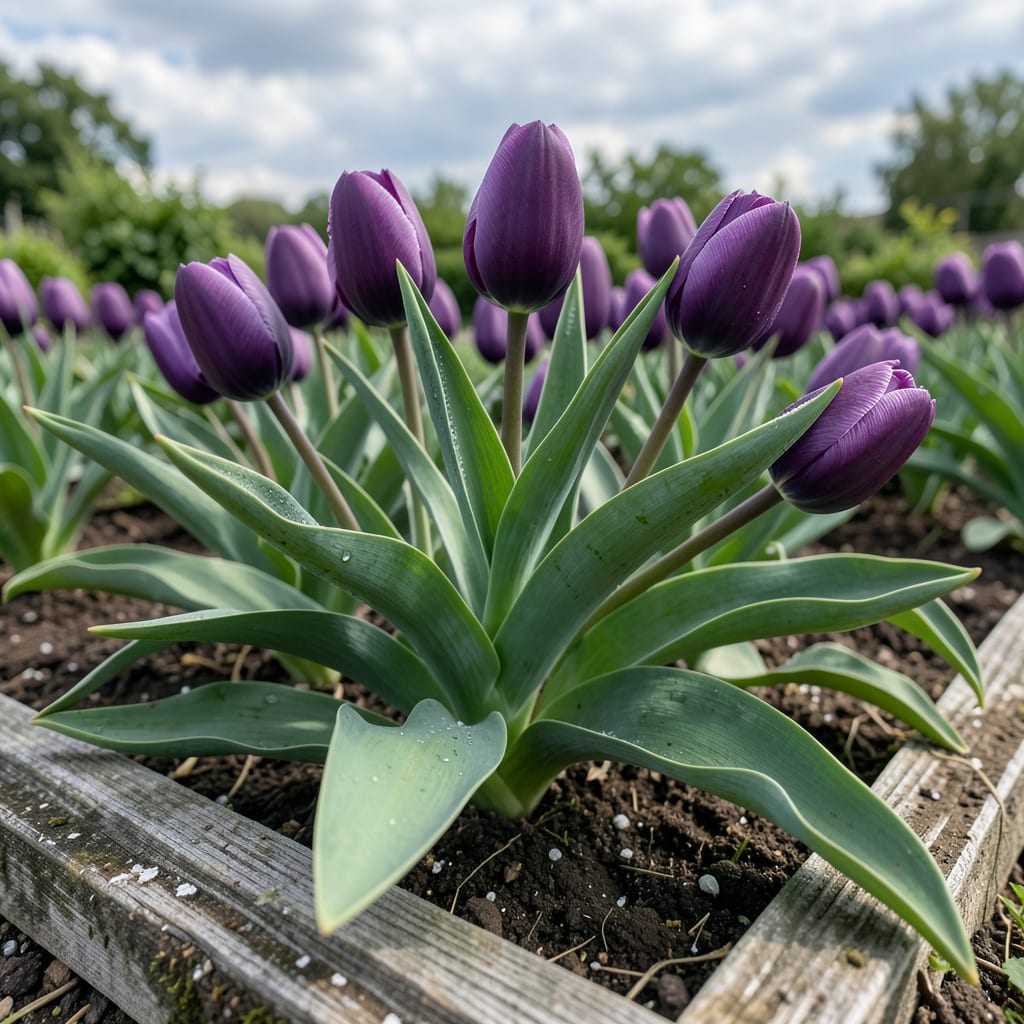
Purple tulip leaves are your plants sending an SOS. I’ve seen this happen when phosphorus runs low or when nights get too cold for their liking.
Fix it fast with balanced fertilizer and row cover on chilly evenings. You’ll see green returning in days once they get what they need, and next season’s blooms will thank you.
📚 In This Guide
Here’s how I diagnose and fix purple leaves in tulips, with solutions you can implement today.
Purple leaves often signal a lack of phosphorus in the soil. This nutrient is crucial for root development and energy transfer. I look for dark green veins with purple edges, especially on older leaves first. That’s the classic sign.
Test your soil with a basic kit. If phosphorus levels are below 5 ppm, it’s time to act. Work bone meal or a 5-10-5 fertilizer into the top 2-3 inches of soil around your tulips. Water deeply afterward to help the nutrients reach the roots.
You’ll typically see improvement in 7-10 days. New growth should emerge green and healthy, while existing purple leaves may not fully recover but will stop deteriorating.
Sudden cold snaps, especially in early spring, can cause tulip leaves to turn purple. This is the plant’s way of protecting itself. I check the weather history—if temperatures dropped below 40°F for several nights, that’s likely your culprit.
Protect bulbs next year by applying a 2-3 inch layer of mulch in late fall. This insulates the soil and prevents temperature swings. For current plants, there’s no need to remove purple leaves—they’ll usually green up as temperatures stabilize.
If cold stress is severe, you may see stunted growth. In that case, a light application of balanced fertilizer can help the plant recover its vigor.
Insufficient light can also cause purple leaves, though this is less common with tulips. I notice this most often with potted tulips kept in shady areas. The purple color develops because the plant isn’t producing enough chlorophyll.
Move container-grown tulips to a spot receiving 6+ hours of direct sunlight daily. For in-ground plants, trim back any overhanging branches or nearby plants that might be casting too much shade.
You should see greener new growth within 2-3 weeks of improving light conditions. If the problem persists, consider dividing crowded bulbs in the fall to give each plant more space and access to light.
While less likely, some fungal diseases can cause purpling. I look for additional symptoms like spots, wilting, or distorted growth. If present, this might be tulip fire or another fungal issue.
Remove and destroy any severely affected plants immediately to prevent spread. For mild cases, apply a copper-based fungicide according to package directions. Always water at the base of plants to keep foliage dry and reduce disease risk.
Prevent future issues by cleaning up all plant debris in fall and rotating planting locations every few years. Healthy soil is your best defense against disease.
Here’s what I’ve learned from fixing purple leaves in my own garden, so you can get it right the first time.
The Nutrient Test: In Step 1, don’t guess about phosphorus levels—use a soil test kit. If results show below 5 ppm, bone meal or 5-10-5 fertilizer worked into the top 2-3 inches of soil will give your tulips the boost they need. Watering deeply afterward ensures the nutrients reach the roots where they’re needed most.
Cold Weather Protection: For Step 2, that 40°F threshold is critical. If you’ve had a string of chilly nights, apply a 2-3 inch layer of mulch in late fall next year. It’s like tucking your bulbs in with a warm blanket to prevent temperature stress.
Light Requirements: Step 3 is all about sunlight. If your tulips aren’t getting 6+ hours of direct sunlight daily, move potted plants or trim back shade-casting branches. It takes 2-3 weeks to see improvement, but the new growth will be noticeably greener.
Disease Prevention: In Step 4, tulip fire is aggressive. Remove and destroy any plants with spots or wilting immediately to stop the spread. For prevention, always clean up plant debris in fall and rotate planting locations. Healthy soil practices save a lot of headaches later.
Purple tulip leaves often signal a phosphorus deficiency, cold stress, or over-fertilization. Check soil pH (6.0–7.0 is ideal) and adjust nutrients if needed.
Yes! If caught early, correcting nutrient imbalances or improving drainage can restore healthy green growth. Severely damaged leaves may not recover, but new growth should improve.
Fertilize in early spring with a balanced (10-10-10) or phosphorus-rich formula before blooming. Avoid high-nitrogen fertilizers, which can worsen the issue.
Not usually—purple discoloration is more likely a nutrient or environmental issue. However, if accompanied by spots or wilting, check for fungal diseases like tulip fire.
Test soil pH and add bone meal (for phosphorus) or compost. Ensure proper drainage and protect plants from extreme cold. Results may take 2–4 weeks.
