
Beautiful Plants For Your Interior
Beautiful Plants For Your Interior
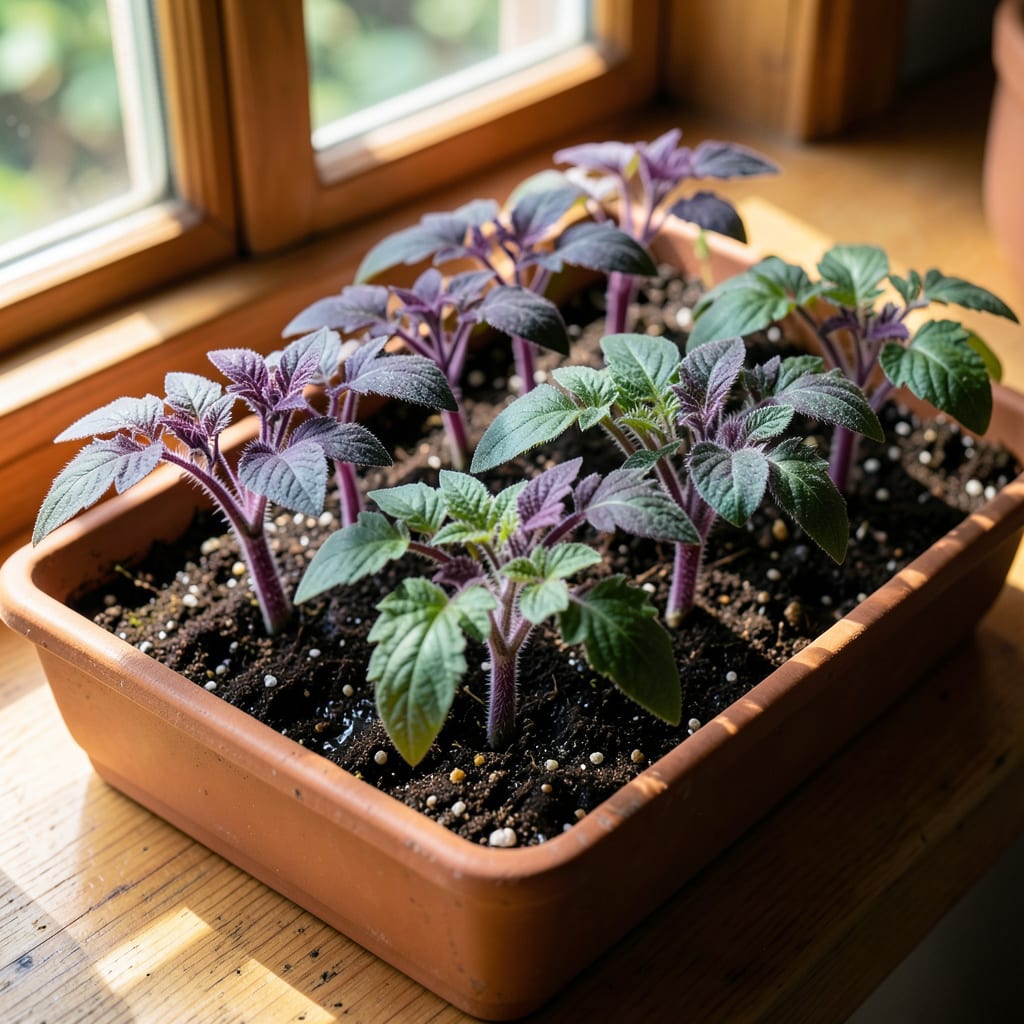
Those purple stems and leaves hit different. I’ve seen this exact shade of purple on tomato seedlings when they’re screaming for help—either from cold nights or hungry roots.
The fix isn’t complicated. Warm them up with a heat mat, or feed them with a phosphorus boost. Most seedlings bounce back in 3-5 days once the stress stops.
Prevention is simpler than cure. Keep soil temps above 55°F, use a balanced fertilizer, and avoid overwatering. Your plants will stay green and growing strong.
Even first-time growers can spot the difference between healthy and stressed seedlings once they know what to look for.
When your tomato seedlings start turning purple, it’s usually a sign of stress or a nutrient issue. Here are the most common causes, explained simply:
Phosphorus is crucial for root development and energy transfer in plants. When soil temperatures drop below 55°F (13°C), phosphorus becomes less available to roots, leading to a purple tint in leaves and stems. This is especially common in early spring when soil is still cold. A soil test can confirm low phosphorus levels, and adding a balanced fertilizer (like 10-10-10) or bone meal can help.
Tomatoes are warm-season crops and thrive in temperatures between 70–85°F (21–29°C). Exposure to cold (below 50°F/10°C) can slow phosphorus uptake, causing purpling. If seedlings are outdoors too early or in unheated greenhouses, cold stress may be the culprit. Move them to a warmer spot or use row covers to retain heat.
Soggy soil can suffocate roots, reducing their ability to absorb nutrients, including phosphorus. If your seedlings sit in waterlogged soil, they may turn purple due to nutrient lockout. Ensure pots have drainage holes, and let the top inch of soil dry before watering again.
Some tomato varieties naturally develop purple stems or leaves under stress. If your seedlings are a purple-stemmed heirloom, the color may be genetic rather than a problem. However, if the leaves are also purple, it’s likely a nutrient or temperature issue.
Identifying the cause early helps you take action—whether it’s warming the soil, adjusting watering, or amending with phosphorus-rich fertilizers.
Here’s how to turn those purple tomato seedlings back to a healthy green, mapped to each likely cause.
Not always. Some heirloom varieties naturally develop purple stems, but widespread purple leaves usually signal stress. Check for cold soil or nutrient issues first.
With proper fixes, most seedlings return to green within 3-5 days. Warmth and phosphorus boosts work fastest when applied to dry soil.
Yes. Too much nitrogen can lock out phosphorus, creating the same effect as deficiency. Stick to half-strength fertilizer until seedlings recover.
Only after fixing the issue. Transplanting stressed seedlings can worsen shock. Wait until they show green growth for 2-3 days.
