
Beautiful Plants For Your Interior
Beautiful Plants For Your Interior
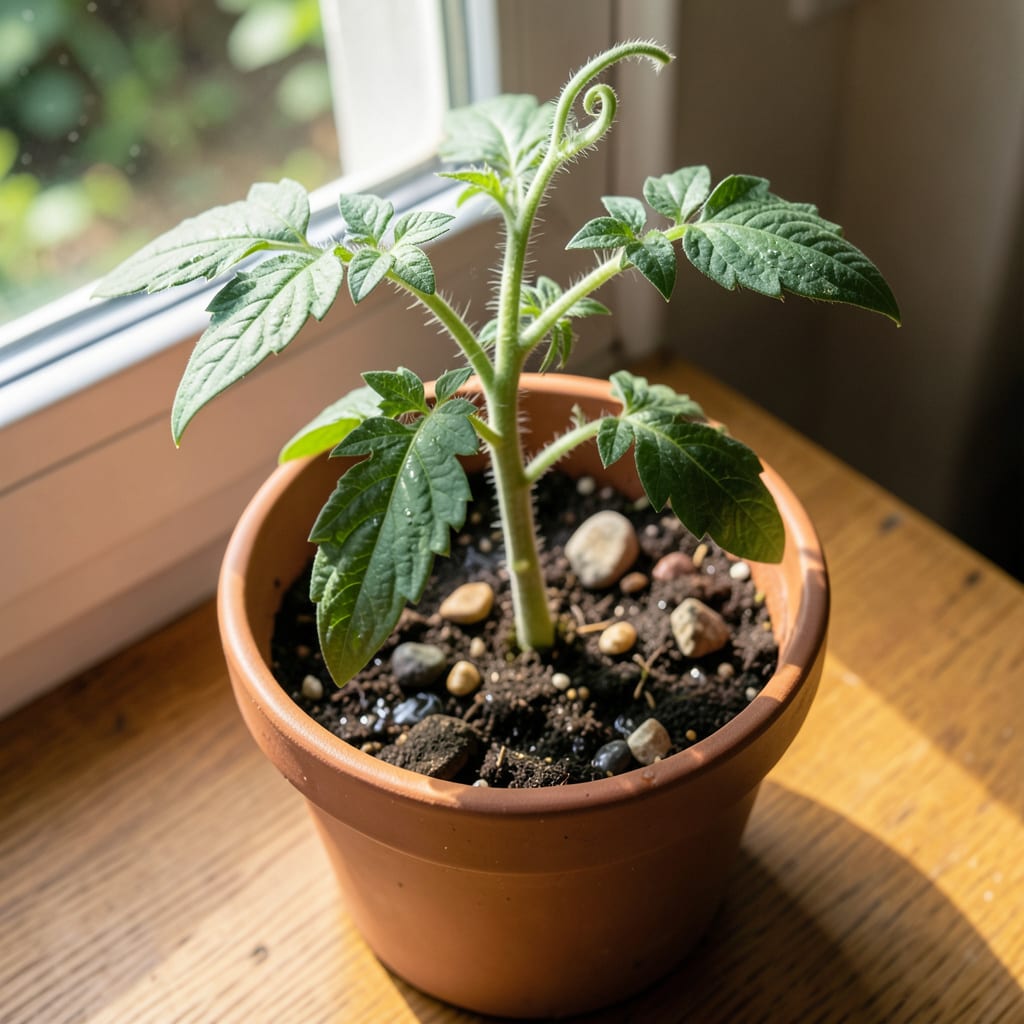
Those little tomato seedlings should look perky, not like tiny tacos. I’ve seen this exact leaf curl in my own trays, and it’s always a sign something’s off in their environment.
Most often it’s stress from uneven watering, too much heat, or not enough light. The good news? Seedlings recover fast once you fix the issue. I’ve saved batches that looked hopeless with a few simple adjustments.
You’ll notice the curling starts at the edges before spreading inward. Catching it early means your plants will bounce back within 2-3 days of the right care.
This happens to new and experienced gardeners alike. The key is knowing what to check first and how to correct it immediately.
Tomato seedling leaves curling upward is often a distress signal from the plant. Several environmental and physiological factors can trigger this response. Below are the most common causes, explained scientifically for clarity and actionability.
When temperatures exceed 90°F (32°C), tomato seedlings may curl their leaves to reduce surface area and minimize water loss through transpiration. This is a protective mechanism called hyponasty, where cells on the lower leaf surface elongate faster than those on the upper surface, causing upward curling.
Drought stress causes leaves to curl upward as the plant conserves moisture. Conversely, overwatering can suffocate roots, reducing their ability to absorb water and nutrients, which also leads to curling. Check soil moisture 1-2 inches deep—it should feel slightly damp, not soggy or bone-dry.
In dry conditions, tomato leaves curl to limit water evaporation. Seedlings thrive in 40-70% humidity. Below this range, the plant’s stomata (pores) close to retain moisture, but prolonged stress can stunt growth. Use a humidity tray or mist leaves lightly to counteract this.
Excessive nitrogen or calcium/magnesium deficiencies can cause leaf curling. Nitrogen overload promotes rapid leaf growth that the plant struggles to support, while a lack of calcium (e.g., blossom end rot-related stress) disrupts cell wall formation. Test soil pH (ideal: 6.0-6.8) and amend with compost or a balanced fertilizer.
Early infestations of aphids, whiteflies, or spider mites can cause leaf curling as they suck sap from new growth, distorting cells. Viral diseases like tomato yellow leaf curl virus (TYLCV) also trigger upward curling. Inspect leaf undersides for pests and remove infected plants to prevent spread.
Addressing tomato seedling leaves curling upward starts with identifying the root cause. Below are targeted solutions for the most common issues, along with prevention tips to keep your seedlings thriving.
Fix: Reduce watering frequency and ensure pots have drainage holes. Let the top inch of soil dry out between waterings. If the soil is waterlogged, repot the seedling in fresh, well-draining mix.
Prevention: Use a moisture meter to monitor soil conditions. Water only when the topsoil feels dry to the touch. Consider adding perlite or vermiculite to improve drainage.
Fix: Move seedlings to a location with stable temperatures (65–75°F) and consistent airflow. Shield them from direct drafts or extreme heat sources like vents or radiators.
Prevention: Use a small fan on low to maintain gentle air circulation. If growing indoors, keep seedlings away from windows that experience temperature swings.
Fix: Apply a balanced, water-soluble fertilizer (e.g., 10-10-10) at half strength to avoid burning tender roots. For calcium deficiency, use a calcium-rich foliar spray.
Prevention: Start with a high-quality seedling mix enriched with compost. Test soil pH (aim for 6.0–6.8) and adjust if necessary to ensure nutrient availability.
Fix: Inspect the undersides of leaves for aphids or whiteflies. Remove pests with a strong spray of water or apply insecticidal soap. For severe cases, use neem oil as a natural treatment.
Prevention: Introduce beneficial insects like ladybugs. Keep the growing area clean and free of debris to deter pests.
Monitor seedlings daily for early signs of stress. Consistency in care—watering, light, and temperature—is key to preventing leaf curling. A simple journal can help track progress and spot patterns!
Most seedlings bounce back within 2-3 days after correcting the issue. Ensure consistent care—stable watering, proper light, and ideal temperatures—to speed up recovery.
Yes! Soggy soil suffocates roots, preventing proper water and nutrient uptake. Always check soil moisture 1-2 inches deep—it should feel slightly damp, not waterlogged.
If they’re exposed to extreme heat or cold drafts, yes. Keep them in a stable environment with temperatures between 65-75°F and gentle airflow.
Possibly. If leaves also show yellowing or mottling, it might be a viral issue like TYLCV. Inspect carefully and remove infected plants to prevent spreading.
