
Beautiful Plants For Your Interior
Beautiful Plants For Your Interior
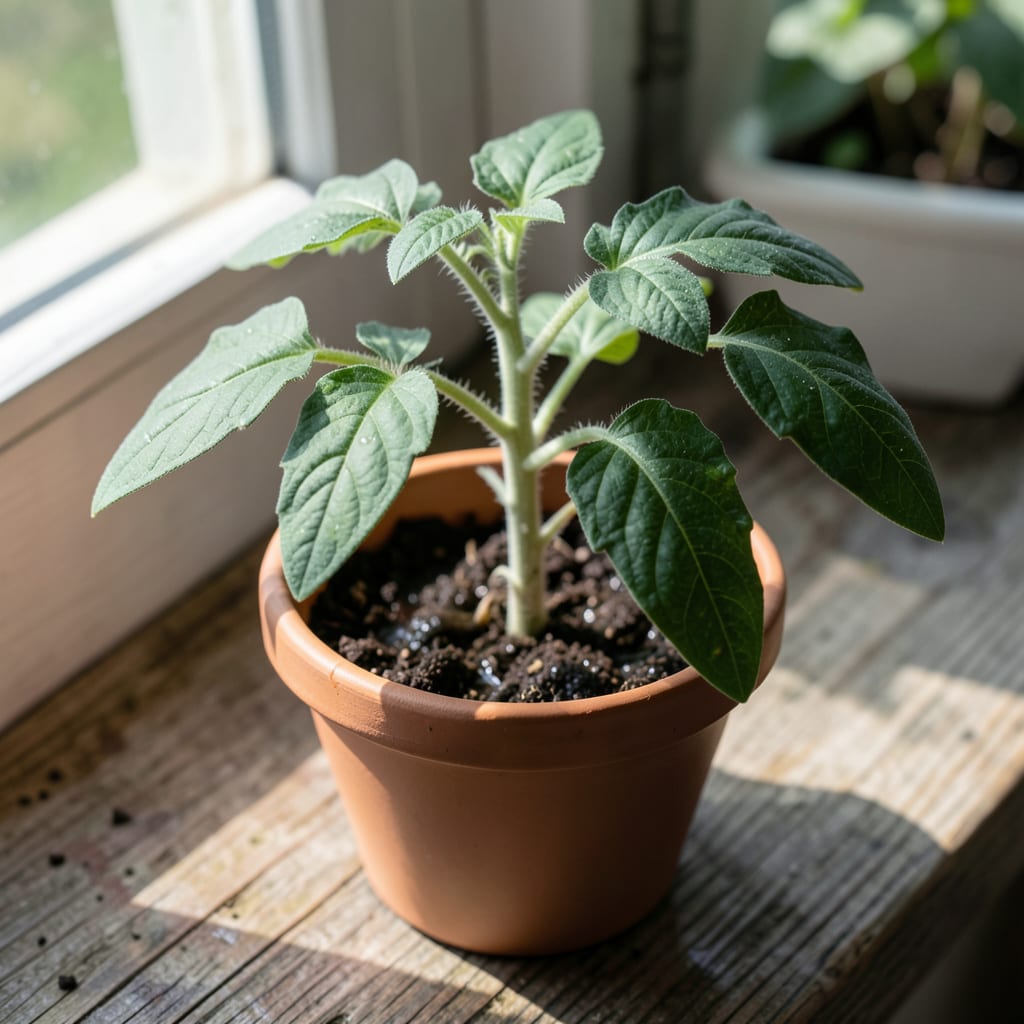
Those downward-curling tomato leaves scream for help. I’ve seen this happen overnight when conditions shift, and it’s usually your plant’s way of saying something’s off in its environment.
Most often, it’s too much heat or inconsistent watering—seedlings get stressed and curl to conserve moisture. Sometimes it’s root bound plants struggling, or even a nutrient imbalance from over-fertilizing early on.
Good news: this is fixable in 24-48 hours once you identify the trigger. The key is checking water levels, light exposure, and temperature first.
With the right adjustments, your seedlings will straighten up and get back to growing. Here’s how to diagnose and solve it fast.
Tomato seedling leaves curling downward is often a sign of stress. Below are the most common causes, explained in simple, actionable terms.
High temperatures—especially above 90°F (32°C)—can cause leaves to curl downward as a protective mechanism to reduce surface area and minimize water loss. Seedlings are particularly vulnerable because their root systems are not yet fully developed.
Underwatering leads to dehydration, making leaves curl to conserve moisture. On the flip side, overwatering suffocates roots, preventing proper nutrient uptake and leading to similar symptoms. Check soil moisture 1-2 inches deep—it should be moist but not soggy.
If seedlings were recently moved or repotted, transplant shock can trigger temporary leaf curling. Roots need time to adjust to their new environment, and stress responses like wilting or curling are common during this period.
Sap-sucking pests like aphids, whiteflies, or spider mites can cause leaves to curl downward as they drain essential fluids from the plant. Inspect the undersides of leaves for tiny insects or webbing.
Excess nitrogen or deficiencies in magnesium, calcium, or potassium can lead to curling. Over-fertilization, especially with high-nitrogen mixes, forces rapid leaf growth that the plant can’t sustain, causing distortion.
Don’t panic—curling leaves on tomato seedlings are often fixable with a few tweaks. Below are targeted solutions for the most common causes, paired with prevention tips to keep your plants thriving.
If high temperatures or dry soil are to blame, act fast. Move seedlings to a shadier spot or use shade cloth during peak sun (11 AM–3 PM). Water deeply at the base in the early morning to prevent evaporation. Prevention: Mulch with straw to retain moisture and maintain consistent soil temps.
Soggy roots suffocate plants. Let the top inch of soil dry between waterings, and ensure pots have drainage holes. If root rot is suspected, gently remove the seedling, trim blackened roots, and repot in fresh, well-draining mix. Prevention: Use a moisture meter to avoid guesswork.
Check leaf undersides for aphids, whiteflies, or spider mites. Blast them off with water or apply neem oil or insecticidal soap at dusk. For severe cases, remove heavily infested leaves. Prevention: Introduce beneficial insects like ladybugs or use reflective mulch to deter pests.
Protect seedlings with a windbreak (e.g., a mesh screen) or move them indoors temporarily. If herbicide drift is suspected, rinse leaves with water to remove residues. Prevention: Avoid spraying herbicides near your garden on windy days.
Over-fertilizing (especially with nitrogen) can curl leaves. Flush the soil with water to remove excess salts, then feed with a balanced, diluted fertilizer (e.g., 10-10-10). For deficiencies, use a soil test to identify missing nutrients. Prevention: Start with compost-rich soil and fertilize lightly every 2–3 weeks.
Pro tip: 🌱 Always quarantine new seedlings for a few days to monitor for issues before introducing them to your main garden. Early action saves time—and plants!
Most seedlings recover within 24-48 hours once conditions improve. Severe cases may take up to 3-4 days. If curling persists, recheck your diagnosis and solutions.
Yes, too much nitrogen forces rapid growth the plant can’t support, leading to curled leaves. Always use half-strength fertilizer for seedlings and flush soil if you suspect overfeeding.
Only remove leaves that are severely damaged or pest-infested. Curled but healthy leaves will recover and still photosynthesize. Pruning too much stresses the plant further.
All varieties can be affected, but cherry tomatoes and heirlooms often show stress more visibly. Their thinner leaves react faster to environmental changes.
