
Beautiful Plants For Your Interior
Beautiful Plants For Your Interior
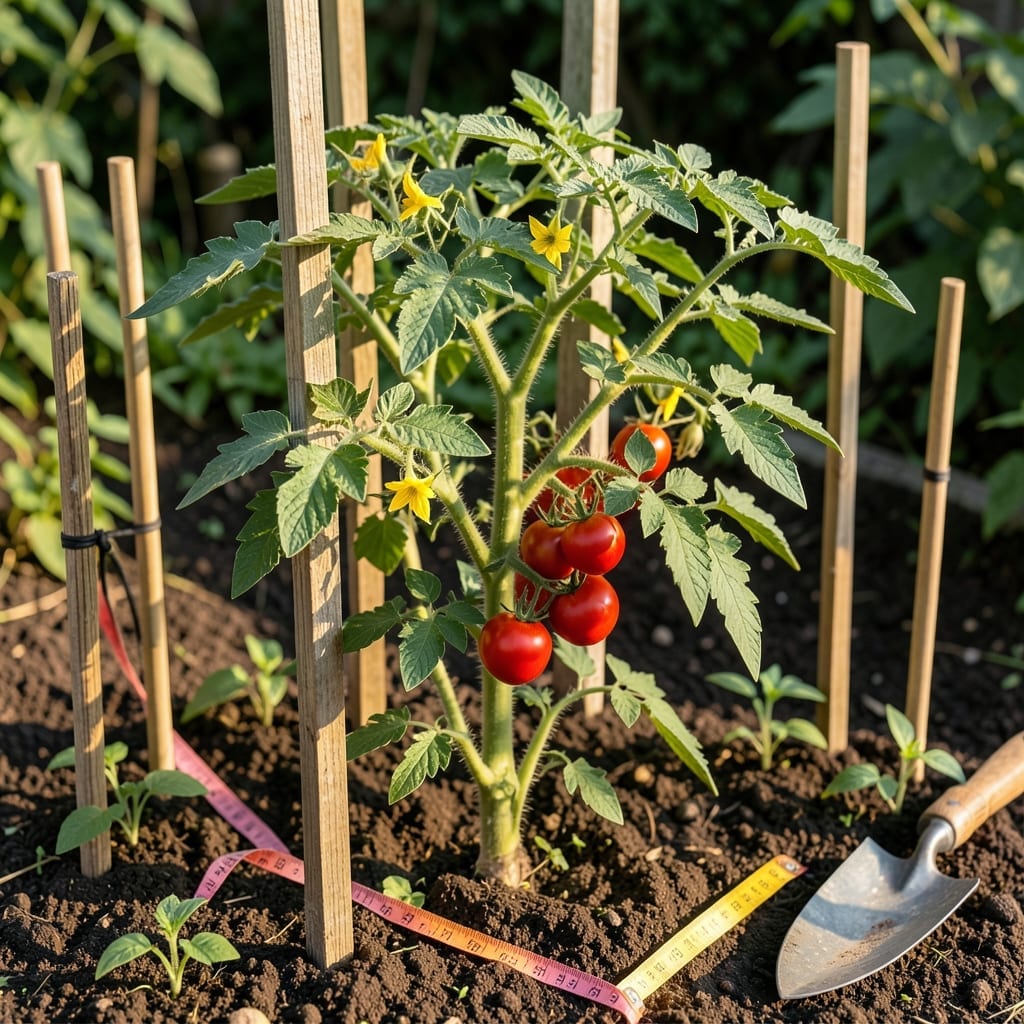
Ever noticed how some gardeners harvest bountiful 🍅 tomato crops while others struggle with sickly plants? The game-changer often comes down to one simple yet crucial factor: spacing.
Getting it right means the difference between thriving vines and a tangled mess of disease-prone foliage. Proper tomato plant spacing in rows isn’t just about aesthetics—it’s about giving your plants room to breathe, grow, and produce.
I’ve seen firsthand how the right layout transforms a garden. With the correct distances, you’ll boost airflow, reduce pests, and make harvesting a breeze.
Discover how to space your Tomato plants like a pro and watch your yield soar this growing season.
I’ve found that proper tomato spacing starts with knowing your variety. Determinate tomatoes, like Roma or Bush Early Girl, stay compact and need 18-24 inches between plants in a row.
For indeterminate varieties such as Beefsteak or Cherry, I recommend 24-36 inches in-row. These vining types grow tall and sprawl, so they demand extra space to thrive.
| Variety | In-Row Spacing | Row Spacing |
|---|---|---|
| Determinate | 18-24 inches | 36 inches |
| Indeterminate | 24-36 inches | 48 inches |
| Cherry Tomatoes | 24 inches | 36-48 inches |
| Beefsteak | 36 inches | 48 inches |
In my garden, I always leave 36-48 inches between rows. This gives me enough room to walk, tend, and harvest without compacting the soil or damaging the plants.
Cherry tomatoes are a special case. Even though they’re small, I space them 24 inches apart in-row. They produce so many fruits that crowded plants can suffer from poor airflow.
For heirloom varieties, which often grow larger and more vigorously, I go with 36 inches in-row and 48 inches between rows. This extra space helps prevent disease and ensures each plant gets enough sunlight.
I’ve learned that soil quality affects spacing too. In rich, well-draining soil, tomatoes can handle slightly tighter spacing. But in poorer soil, I give them more room to compete less for nutrients.
Climate plays a role as well. In hot, dry areas, I might space plants a bit farther apart to reduce stress. In cooler, wetter climates, wider spacing improves air circulation and lowers disease risk.
If you’re using stakes or trellises, you can reduce in-row spacing slightly. But I still maintain those row spacing guidelines to keep things manageable and healthy.
Remember, these are just guidelines. I always observe my plants and adjust as needed. If they look crowded or stressed, I’ll thin them out or prune more aggressively.
At the end of the day, giving your tomatoes enough space is one of the best ways to ensure a healthy, productive garden 🌱
Proper tomato plant spacing in rows directly impacts your harvest. I’ve learned that crowded plants compete for sunlight and nutrients, leading to weaker growth and smaller yields.
Good spacing ensures airflow between plants, which is critical for preventing fungal diseases like blight. It also makes watering and harvesting far easier.
✅ Why Spacing Matters
In my garden, I noticed indeterminate tomatoes spaced too closely produced fewer fruits and had more pest issues. Proper spacing changed everything.
The right layout also helps soil moisture distribution. With adequate space, each plant gets equal access to water, reducing the risk of overwatering or drought stress.
For determinate varieties, closer spacing works, but indeterminates need more room. I always measure 36-48 inches between rows to allow for staking and trellising.
Finally, well-spaced rows make garden maintenance simpler. You’ll spend less time battling disease and more time enjoying healthy plants and abundant harvests 🌱