
Beautiful Plants For Your Interior
Beautiful Plants For Your Interior
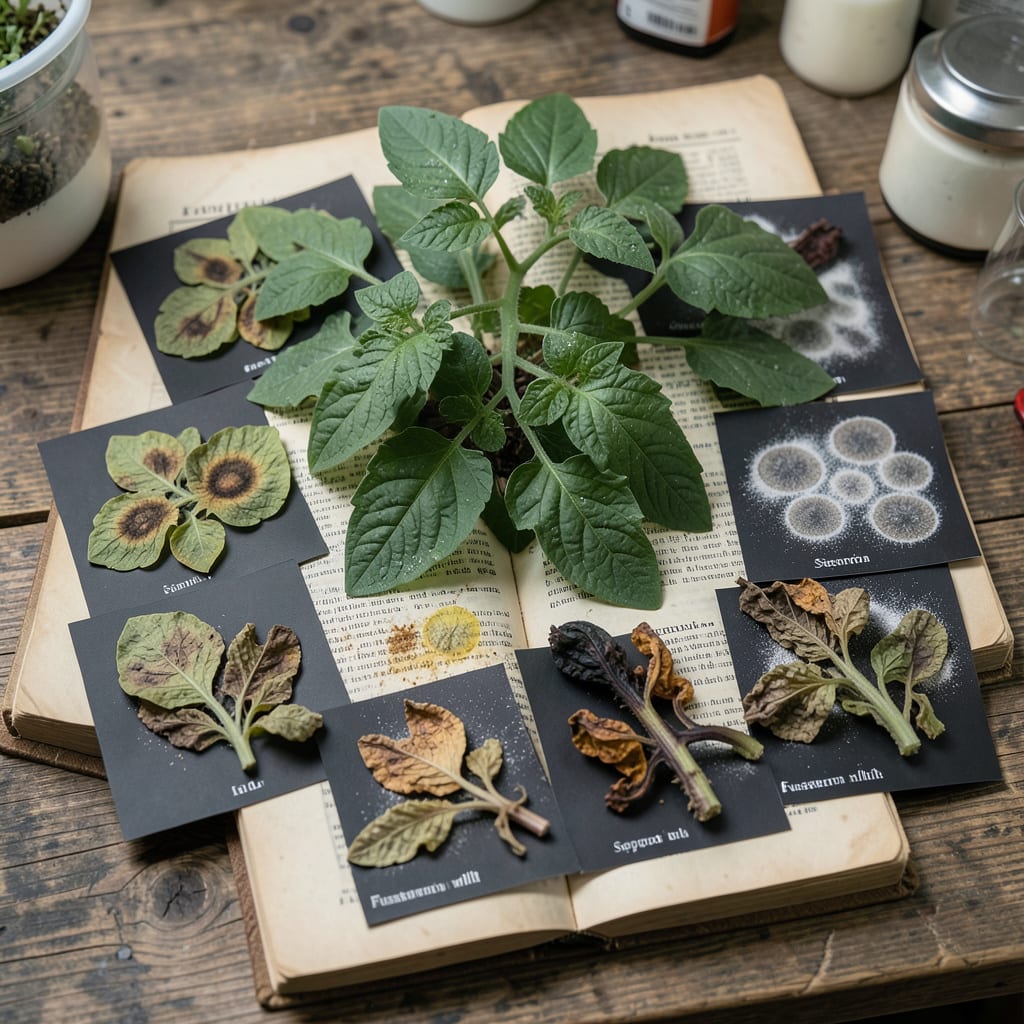
Spotted yellow leaves on your tomato plants? Don’t panic. Early identification is the game-changer between a full recovery and a complete crop loss.
I’ve lost entire seasons to early blight and powdery mildew before learning to recognize the first warning signs. The key is knowing which spots, wilts, or discolorations signal which disease—and acting fast.
With the right organic treatments, most common tomato diseases can be managed without harsh chemicals. You’ll learn to distinguish fungal issues from viral ones and stop them in their tracks.
Works for garden beds, containers, and even greenhouse setups. Here’s how to save your plants.
Understanding the root causes of tomato plant diseases helps you prevent and manage them effectively. Here are the primary reasons behind common issues:
Extreme temperatures, inconsistent watering, or poor soil drainage create stress, weakening the plant’s natural defenses. Heat stress (above 90°F) can trigger blossom end rot, while overwatering encourages fungal growth like Phytophthora infestans (late blight). Ensure consistent moisture and mulch to regulate soil temperature.
High humidity and wet foliage provide ideal conditions for fungi (e.g., Alternaria solani causing early blight) and bacteria (e.g., Pseudomonas syringae leading to bacterial speck). Spore dispersal via wind or splashing water spreads infections rapidly. Prune for airflow and avoid overhead irrigation to reduce risks.
Insects like aphids, whiteflies, and tomato hornworms damage plants directly and transmit viruses (e.g., Tomato Yellow Leaf Curl Virus). Their feeding wounds also invite secondary infections. Use neem oil or introduce beneficial insects like ladybugs for organic control.
Lack of calcium causes blossom end rot, while nitrogen deficiency leads to yellowing leaves (chlorosis). Conduct a soil test and amend with compost or targeted fertilizers (e.g., calcium-rich eggshells) to restore balance.
Crowded plantings, unclean tools, or crop rotation neglect spread diseases. Rotate tomatoes with non-solanaceous crops every 3 years, sanitize pruners, and remove debris to break pathogen cycles.
Once you’ve spotted trouble, act fast with these targeted fixes to nurse your tomato plants back to health.
Prune affected lower leaves immediately to stop the spread. Collect and destroy (do not compost) infected foliage. Apply copper fungicide every 7–10 days, especially after rain. Prevent it: Rotate crops yearly and space plants for airflow. 💡 Mulch with straw to prevent soil splashing onto leaves.
Remove and burn infected plants to protect neighbors. Use potassium bicarbonate or copper-based sprays at first sign. Stop overhead watering. Prevent it: Avoid planting tomatoes near potatoes. Choose resistant varieties like ‘Mountain Magic’ or ‘Defiant’.
Spray off aphids with a strong jet of water. Introduce ladybugs or lacewings. Apply neem oil or insecticidal soap if infestation persists. Prevent it: Encourage pollinators and keep ants away—they farm aphids! 🎯 Plant basil or marigolds nearby as natural deterrents.
Mix 1 tsp baking soda, 1 quart water, and a drop of dish soap. Spray on leaves weekly. Improve air circulation by pruning dense growth. Prevent it: Water in the morning so leaves dry quickly. Opt for mildew-resistant varieties like ‘Jasper’.
With quick action and smart habits, your tomatoes can bounce back—and stay strong for seasons to come.
Yellow spots on lower leaves often signal early blight. White powdery coating on leaves indicates mildew. Wilting during the day that doesn’t recover at night may mean bacterial wilt. Act within 24-48 hours for best results.
For fungal issues like late blight, remove and destroy the plant to protect others. For mild cases, prune affected areas and apply organic fungicides. Isolate immediately to prevent spread.
This is blossom end rot, caused by calcium deficiency. It’s not a disease but a nutritional issue. Add crushed eggshells to soil and maintain even moisture.
