
Beautiful Plants For Your Interior
Beautiful Plants For Your Interior
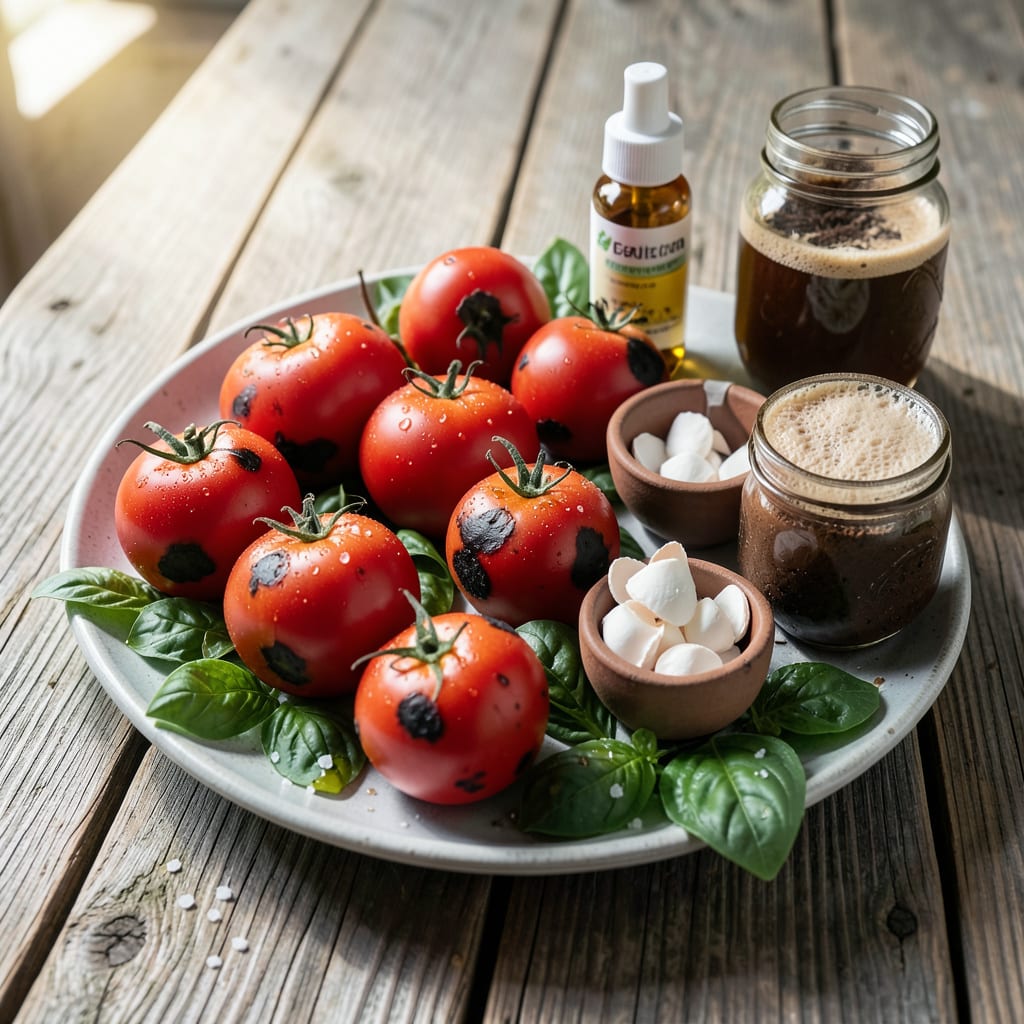
That sunken black spot on your tomatoes isn’t sunburn or disease. It’s your plants screaming for calcium, and I’ve got the simple fix that saved my crop last season.
Blossom end rot hits when calcium can’t reach the fruit—usually from uneven watering or poor soil. The solution isn’t complicated: consistent moisture and a calcium boost. I use crushed eggshells, but there are faster methods too.
Within 2 weeks of treating, new tomatoes form without those ugly brown patches. The plants look healthier overall, and you’ll actually get to harvest what you grew instead of tossing half your crop.
Works for patio pots or garden rows. Start today before your next fruit sets.
Blossom end rot in tomatoes is primarily caused by calcium deficiency in the developing fruit, but the underlying triggers are often environmental or cultural. Here’s a breakdown of the most common causes:
Even if your soil has adequate calcium, uneven moisture levels or poor root uptake can prevent the plant from absorbing it. Sandy or highly acidic soils (pH below 6.0) often lack sufficient calcium, while overly alkaline soils (pH above 7.5) can lock it up, making it unavailable to the plant. Regular soil testing helps identify deficiencies before they affect your crop.
Fluctuations in soil moisture—drought stress followed by overwatering—disrupt calcium transport to the fruit. Calcium moves through the plant via water, so dry spells slow its delivery, leading to localized deficiencies. Mulching and drip irrigation can stabilize moisture levels and reduce this risk.
During periods of fast growth (e.g., after heavy fertilizing or warm weather), tomatoes demand more calcium than the roots can supply. If the plant can’t keep up, the blossom end—the farthest point from the roots—suffers first. Balanced fertilization (avoiding excess nitrogen) and steady watering help prevent this.
Compromised roots from over-cultivation, nematodes, or transplant shock struggle to absorb nutrients efficiently. Shallow or damaged root systems limit the plant’s ability to take up calcium, even if it’s present in the soil. Gentle handling during transplanting and promoting healthy soil biology can mitigate this issue.
Blossom end rot in tomatoes is frustrating, but these targeted fixes can nurse your plants back to health—and keep the problem from returning. Address the root causes with these practical, at-home solutions.
Give your plants an immediate calcium boost to stop new cases. Mix 1 tablespoon of calcium chloride or calcium nitrate per gallon of water and apply as a foliar spray at dusk (to prevent leaf burn). For a slower-release option, crush eggshells into a fine powder and work them into the soil around the plant’s base. Water deeply afterward to help absorption.
Fluctuating soil moisture disrupts calcium uptake. Water deeply 1–2 times per week (about 1–2 inches of water total), keeping the soil evenly moist but not soggy. Mulch with straw or shredded leaves to retain moisture and reduce evaporation. Avoid letting the soil dry out completely between waterings.
💡 Pro tip: Use a moisture meter to monitor soil levels—aim for 40–60% moisture in the root zone.
Calcium becomes unavailable if the soil pH is too high or low. Test your soil with a home pH kit—tomatoes thrive at 6.0–6.8 pH. If the pH is off, amend with lime (to raise pH) or sulfur (to lower pH) following package instructions. Retest after a few weeks to confirm the adjustment.
Too much nitrogen or potassium can block calcium absorption. Pause fertilizing until the issue improves, then switch to a balanced, calcium-rich fertilizer (look for a 4-4-4 or 5-5-5 NPK ratio with added calcium). Avoid high-nitrogen formulas, which promote leafy growth at the expense of fruit health.
🌟 Prevention for Next Season: Start with a soil test before planting, add compost for organic matter, and choose blossom-end-rot-resistant tomato varieties like ‘Mountain Merit’ or ‘Defiant PhR’. Rotate crops yearly to prevent nutrient depletion.
Crushed eggshells work slowly as they break down in soil. Expect to see improvement in 2-4 weeks after application. For faster results, use a calcium spray which can show effects within 7-10 days.
Yes, but dilute it first (1 part milk to 4 parts water). Apply weekly as a soil drench. Avoid using undiluted milk as it can attract pests. This method works best as a supplement, not a primary fix.
Recurring issues usually mean inconsistent watering or poor soil pH. Test your soil and maintain even moisture. Even with treatment, new fruit can develop rot if the root causes aren’t addressed.
No, the damaged portion won’t recover. Remove affected fruit to direct the plant’s energy to healthy tomatoes. Prevent future cases by addressing calcium and watering immediately.
