
Beautiful Plants For Your Interior
Beautiful Plants For Your Interior
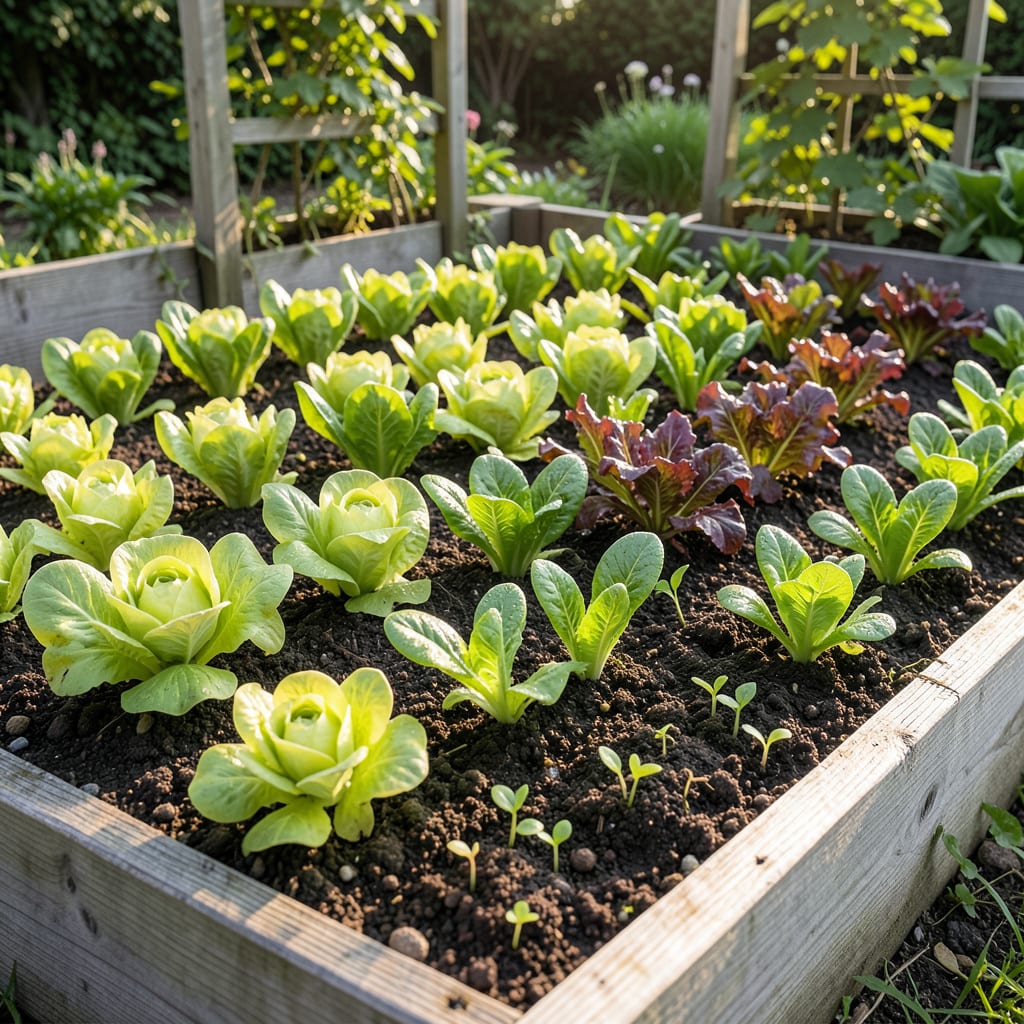
I used to think lettuce was finicky until I nailed the succession planting rhythm. Now my garden produces crisp leaves every 2-3 weeks without gap.
Start with cool-season varieties like butterhead or romaine, plant shallow, and keep soil consistently moist. The secret is planting new seeds every 10-14 days for continuous harvests through spring and fall.
📚 In This Guide
Here’s the succession planting method I use to keep fresh lettuce coming all season long.
Choose a location with partial shade to full sun—lettuce thrives in 4-6 hours of direct sunlight but appreciates afternoon shade in warmer climates. I always start by loosening the soil to a depth of 12-15 inches with a garden fork, breaking up any compacted areas. This encourages strong root development right from the start.
Work in 2-3 inches of compost or well-rotted organic matter to improve fertility and drainage. Lettuce prefers a slightly acidic to neutral pH (6.0-7.0). If your soil is heavy clay, consider raised beds to prevent waterlogging, which causes root rot in lettuce.
Sow seeds ¼ inch deep in rows spaced 12-18 inches apart. For leaf lettuce, I plant seeds 1 inch apart and thin to 4-6 inches once seedlings have 2-3 true leaves. Head lettuce needs more space—8-12 inches between plants.
Water gently but thoroughly after planting. The soil should feel moist to a depth of 1 inch—this is critical for germination. I use a fine mist nozzle to avoid displacing the tiny seeds. Expect germination in 7-14 days depending on soil temperature (40-75°F is ideal).
For continuous harvests, plant a new section every 10-14 days. This staggered approach ensures you’ll always have fresh lettuce ready as older plants are harvested. I mark my calendar and set reminders—consistency is key with succession planting.
As temperatures rise above 75°F, switch to heat-tolerant varieties like ‘Black Seeded Simpson’ or ‘Oakleaf’. In hot climates, I plant in the early morning or late afternoon to reduce stress on the seedlings. Always water immediately after planting to help seeds settle into the soil.
Keep the soil consistently moist but not waterlogged. Lettuce has shallow roots, so 1 inch of water per week is usually sufficient. I check soil moisture daily during dry spells—if the top ½ inch feels dry, it’s time to water.
Harvest leaf lettuce by removing outer leaves when they reach 3-6 inches long, allowing the center to continue growing. For head lettuce, cut the entire plant at the base when the head feels firm and full. Always use clean, sharp scissors or garden shears to prevent disease.
Small adjustments in your approach can mean the difference between patchy growth and a thriving, continuous lettuce harvest.
Soil Preparation Insight: In Step 1, when loosening the soil to that critical 12-15 inch depth, pay special attention to removing any rocks or debris that could impede root growth. I’ve found that breaking up compacted areas with a garden fork works better than a shovel for preserving soil structure.
Planting Depth Precision: The ¼ inch planting depth in Step 2 isn’t arbitrary—too deep and the seeds may struggle to emerge, too shallow and they’ll dry out. Use the tip of your finger to create a consistent furrow, then lightly cover the seeds with soil and press gently to ensure good contact.
Timing Strategy: That 10-14 day interval in Step 3 is the sweet spot for succession planting. If you plant too close together, you’ll overwhelm your space; too far apart, and you’ll have gaps in your harvest. I set calendar reminders to stay on track, especially during busy growing seasons.
Moisture Management: The 1 inch of water per week guideline in Step 4 works best when delivered in consistent, light applications rather than one heavy watering. Lettuce’s shallow roots can’t access moisture deep in the soil, so frequent checks—especially when the top ½ inch feels dry—are essential.
Sow new lettuce seeds every 2-3 weeks for a steady supply. This succession planting ensures fresh leaves as earlier crops mature or bolt. Adjust timing based on your climate and variety.
Plant in the early morning or late afternoon to avoid heat stress. Cooler temps help seedlings establish roots without wilting. Water gently after planting.
Absolutely! Use shallow, wide containers (6+ inches deep) with good drainage. Fill with potting mix and keep soil moist. Great for small spaces or balconies!
Bitterness often means heat stress or over-maturity. Bolt (flowering) happens in warm weather. Choose heat-tolerant varieties, provide shade, or plant in cooler seasons.
