
Beautiful Plants For Your Interior
Beautiful Plants For Your Interior
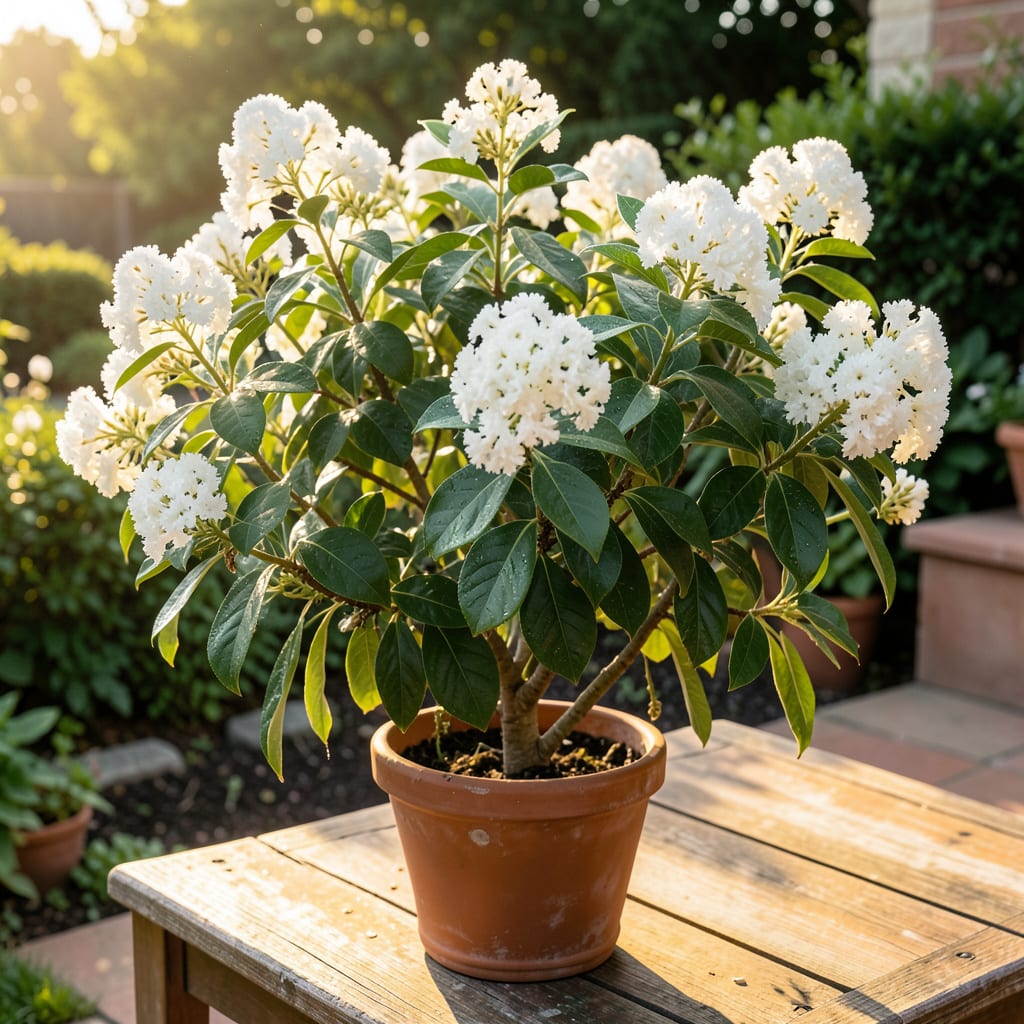
White summer blooms that stop traffic—literally. This crape myrtle delivers vibrant color and drought tolerance that most shrubs can’t match.
I planted mine in full sun with well-draining soil, and by July it was covered in pure white flowers. The bark sheds beautifully in winter, adding year-round interest with almost no maintenance.
📚 In This Guide
Here’s the method I use to establish these stunning shrubs with minimal stress and maximum impact.
Choose a location with full sun (at least 6-8 hours daily) and well-draining soil. This cultivar thrives in heat but needs space—allow 4-6 feet between plants for proper air circulation. I avoid low-lying areas where cold air settles, as late frosts can damage new growth.
Test drainage by digging a 12-inch hole and filling it with water. If it drains within 1 hour, you’re good. If not, amend with compost or choose a raised bed. The soil pH should be slightly acidic to neutral (6.0-7.0) for optimal bloom production.
Dig a hole twice as wide as the root ball but no deeper—planting too deep suffocates the roots. I loosen the soil at the sides of the hole with a garden fork to encourage outward root growth. This is critical for drought tolerance once established.
Mix the native soil with 50% compost to improve fertility and drainage. If your soil is heavy clay, add a handful of coarse sand to the mix. Avoid adding fertilizer at planting—it can burn young roots. Instead, I top-dress with compost after the first growing season.
Remove the container and gently loosen any circling roots—this prevents girdling as the plant matures. Place the root ball in the hole so the top sits 1-2 inches above ground level to account for settling. Backfill with the amended soil, tampling lightly to eliminate air pockets.
Create a 3-inch-high water ring around the base to direct moisture to the roots. Water immediately with 5-10 gallons to settle the soil. I water deeply at planting, then again after 2-3 days to ensure even moisture during the critical establishment period.
Apply a 2-3 inch layer of organic mulch (shredded bark or wood chips) around the base, keeping it 6 inches away from the trunk to prevent rot. Mulch conserves moisture and suppresses weeds, but too much can smother the roots.
Check soil moisture weekly for the first month—it should feel moist but not soggy at 3-4 inches deep. New plants need 1-1.5 inches of water weekly from rain or irrigation. I reduce watering once I see new leaf growth, typically within 3-4 weeks.
Wait until late winter to prune, removing any dead, crossing, or weak branches. This cultivar blooms on new wood, so pruning now won’t sacrifice flowers. I thin out about 20% of the oldest stems at ground level to rejuvenate the plant and improve air flow.
For a tree form, select 3-5 strong trunks and remove all other shoots from the base. Shorten lateral branches by 1/3 to encourage bushier growth. Always sterilize pruners between cuts with rubbing alcohol to prevent disease spread.
Here’s what I’ve learned from years of planting and nurturing these stunning shrubs to perfection.
Sunlight is Non-Negotiable: The 6-8 hours of daily full sun requirement isn’t just a suggestion. I’ve tried planting in partial shade, and the bloom production drops dramatically. Choose the sunniest spot in your landscape, especially in northern climates where light is less intense.
Drainage Test Saves Headaches: That 12-inch hole drainage test in Step 1 is critical. If water doesn’t drain within the 1 hour mark, don’t risk it. I once ignored this and lost three plants to root rot. Raised beds are your friend in heavy clay soil areas.
Planting Depth Matters: In Step 2, when digging your hole twice as wide but no deeper, resist the urge to bury the root ball completely. Planting with the top 1-2 inches above ground level accounts for settling and prevents suffocation. I use a level handle across the hole to check depth.
Watering Wisdom: The initial 5-10 gallons at planting might seem excessive, but it’s essential for eliminating air pockets. Then, that follow-up watering after 2-3 days ensures even moisture during the critical establishment period. I set phone reminders for this second watering—it’s easy to forget!
This compact variety typically reaches 3–5 feet tall and 3–4 feet wide, making it perfect for small gardens or containers. Its manageable size ensures easy maintenance without sacrificing vibrant blooms.
Plant in early spring or fall to allow roots to establish before extreme heat or cold. Avoid summer planting in hot climates, as stress can hinder growth.
Yes! For the best flowering, place it in full sun (6+ hours daily). Partial shade may reduce bloom intensity and lead to leggy growth.
Check sunlight, watering, and fertilizer use. Over-fertilizing (especially with high nitrogen) can promote leaves over flowers. Prune only in late winter to avoid cutting off new buds.
Consider ‘Razzle Dazzle’ or ‘Delta Jazz’ crape myrtles. Both offer vibrant colors, compact sizes, and strong drought resistance once established.
