
Beautiful Plants For Your Interior
Beautiful Plants For Your Interior
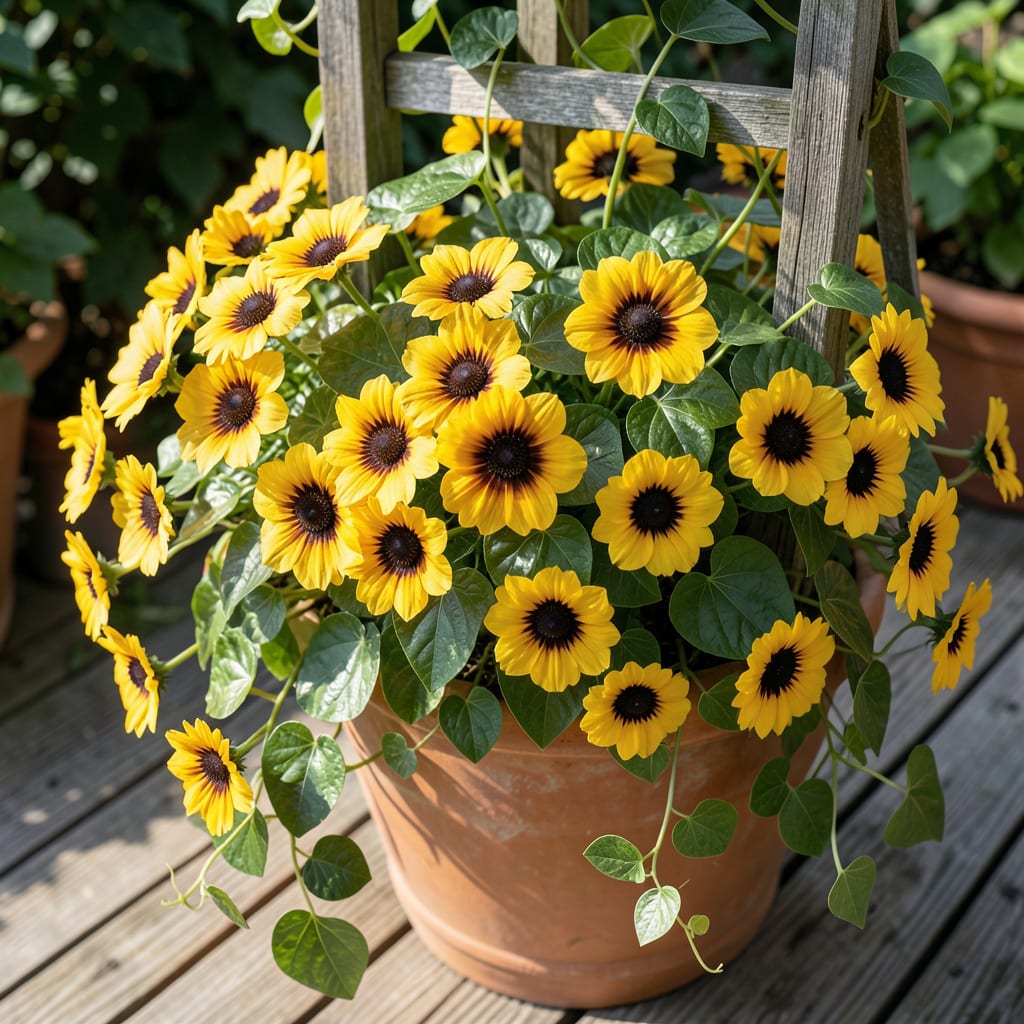
Black-eyed Susan vine transformed my sad fence into a vibrant curtain of orange and yellow in one season. The cascading blooms keep coming from summer through first frost, attracting hummingbirds and compliments.
This fast grower thrives in containers or ground with minimal care. Give it a trellis or let it spill over edges—it handles heat better than most vines. I’ve grown it in 6 hours of sun with just weekly watering.
📚 In This Guide
This method delivers vibrant cascades of blooms with minimal effort and maximum visual impact.
Select a spot with full sun to partial shade, as Thunbergia thrives in 6-8 hours of sunlight but tolerates lighter conditions. For vertical gardens, ensure your structure—whether a trellis, arbor, or hanging basket—is sturdy enough to support the vigorous vines, which can reach 6-8 feet in a single season.
I always position mine where I can admire the black-centered yellow blooms from a window or seating area. If using a container, opt for one at least 12 inches deep to accommodate the root system. Avoid windy locations, as the delicate stems can snap under stress.
Thunbergia prefers well-draining, fertile soil with a pH of 6.0-7.0. Amend garden beds with compost or aged manure to improve fertility and drainage. For containers, use a high-quality potting mix blended with 20% perlite or coarse sand to prevent waterlogging.
I mix in a slow-release fertilizer at planting time to give the vines a steady nutrient supply. If your soil is heavy clay, consider raising the bed or using containers—Thunbergia won’t tolerate soggy roots. Test drainage by watering the area: if puddles remain after 30 minutes, improve the soil structure.
Start seeds indoors 8-10 weeks before the last frost, or sow directly after the danger of frost has passed when soil temperatures reach 60°F. Plant seeds ¼ inch deep and 12 inches apart, as they need space to climb without competition. If transplanting seedlings, set them at the same depth as their nursery pot.
Water gently but thoroughly after planting to settle the soil. I’ve found that soaking the seeds for 12 hours before sowing speeds up germination, which typically takes 10-14 days. Keep the soil consistently moist but not soggy during this period.
As the vines grow, guide them onto your support structure by loosely tying them with soft twine or garden tape. Thunbergia climbs by twisting its stems around supports, so ensure the structure has plenty of gaps or wires for the vines to grab. I check mine weekly and redirect any wayward stems to maintain even coverage.
For hanging baskets, let the vines trail naturally, but trim back any that grow too long to encourage bushier growth. Pinch off the tips of young vines to promote branching, which leads to more blooms. This technique works best when the plants are 6-8 inches tall.
Water your Thunbergia deeply once a week, or more often in extreme heat, ensuring the soil stays evenly moist but not waterlogged. Mulch around the base to retain moisture and suppress weeds. I apply a balanced liquid fertilizer every 2-3 weeks during the growing season to fuel the prolific blooming.
Deadhead spent blooms regularly to encourage more flowers. If the vines become overgrown or tangled, prune them back by up to one-third to rejuvenate growth. Watch for pests like aphids or spider mites, and treat promptly with insecticidal soap if needed. With proper care, your Thunbergia will reward you with cascades of blooms from early summer until the first frost.
Small adjustments make a big difference in achieving those vibrant cascading blooms.
Sunlight Strategy: The specified 6-8 hours of sunlight is ideal, but don’t assume morning sun equals evening sun. I learned this the hard way after positioning mine in late afternoon shade—those blooms were sparse. East-facing spots often provide the gentlest, most consistent light for these delicate vines.
Soil Drainage Test: That 30-minute drainage check in Step 2 isn’t just a suggestion. After watering, if puddles linger beyond this time, your Thunbergia roots will suffocate. I’ve saved several plants by simply raising the bed an extra 6 inches when the test failed.
Seed Preparation: Soaking seeds for the full 12 hours before planting (as mentioned in Step 3) cuts germination time significantly. Trust me on this—I skipped it once and waited 18 days instead of the typical 10-14 for those first sprouts to appear.
Support Timing: Begin training vines onto your structure when they’re about 6 inches tall (Step 4). Waiting until they’re 8 inches means you’ll be untangling a mess. Use soft ties that won’t cut into the stems as they thicken.
Keep soil moist but well-drained, and provide full sun to partial shade. Prune regularly to encourage blooming and remove dead flowers. Fertilize lightly every 2-3 weeks during the growing season for vibrant cascading blooms.
Plant in spring after the last frost, when soil temperatures reach at least 60°F (15°C). This warm-season vine thrives in heat and will bloom profusely from summer to early fall.
Yes! It’s perfect for hanging baskets or vertical planters. Use a well-draining potting mix and ensure the container has drainage holes to prevent root rot.
Yellow leaves often signal overwatering or poor drainage. Check soil moisture and adjust watering. If the issue persists, test for nutrient deficiencies or pests like spider mites.
Try Sweet Pea or Nasturtium for similar cascading effects. Both are easy to grow and add vibrant colors to vertical gardens.
