
Beautiful Plants For Your Interior
Beautiful Plants For Your Interior
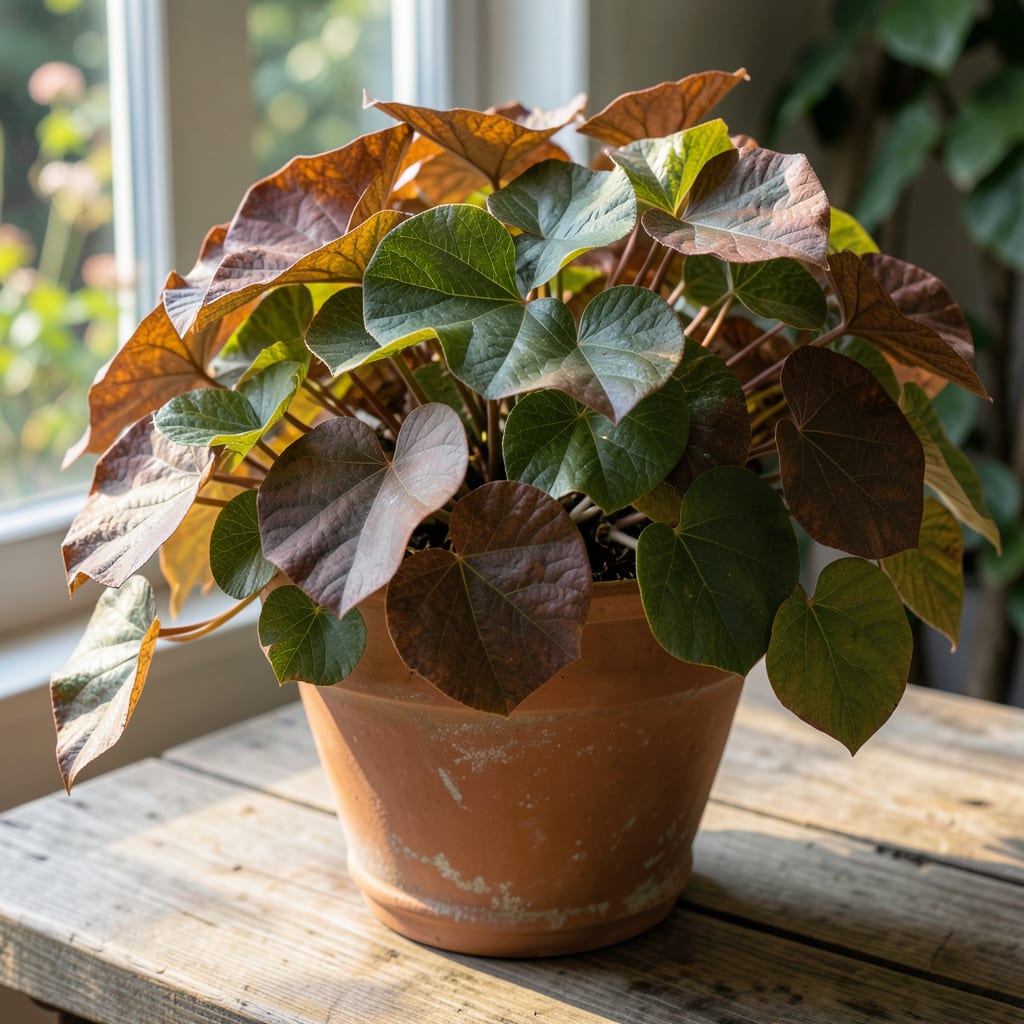
Brown leaves on your sweet potato vine aren’t a death sentence. I’ve revived more than I can count with the right diagnosis.
This usually starts with water—either too much or too little. The edges crisp first, then the whole leaf darkens. But pests and fungal issues can mimic the same symptoms, so you’ll need to check stems and soil closely.
Once you pinpoint the cause, solutions are straightforward. Adjust watering, treat for pests, or improve drainage. Most plants bounce back within 2-3 weeks if you act fast.
Prevention is simpler than cure. Consistent moisture, good airflow, and regular inspections keep problems from starting in the first place.
Sweet potato vine leaves turn brown for several reasons, often tied to environmental stress or care issues. Below are the most common causes, explained simply but with scientific precision.
Sweet potato vines (Ipomoea batatas) thrive in bright, indirect light. When exposed to intense, direct sunlight for prolonged periods, especially in hot climates, the leaves can suffer from photooxidative stress. This occurs when the plant’s chlorophyll breaks down due to excessive light energy, leading to brown, crispy edges or patches. The leaves may also develop a bleached appearance before browning.
Inconsistent watering is a leading cause of browning leaves. Underwatering leads to dehydration, causing the leaf margins to dry out and turn brown as the plant conserves moisture. Conversely, overwatering suffocates the roots, reducing their ability to absorb oxygen and nutrients. This triggers root rot (often caused by Phytophthora or Pythium fungi), which manifests as yellowing leaves that eventually turn brown and wilt.
Sweet potato vines are sensitive to temperature swings. Heat stress (temperatures above 90°F/32°C) accelerates transpiration, causing leaf scorch. Meanwhile, cold drafts or temperatures below 50°F (10°C) can damage cell membranes, leading to necrosis (dead, brown tissue). Sudden temperature drops, like from an unexpected frost, are particularly harmful.
A lack of essential nutrients, particularly magnesium or potassium, can cause leaf browning. Magnesium deficiency often starts as interveinal chlorosis (yellowing between veins) before progressing to brown spots. Potassium deficiency typically appears as brown, crispy leaf edges, a condition known as “scorch.” A soil test can confirm imbalances, allowing for targeted fertilization.
Pests like spider mites (Tetranychus urticae) and aphids suck sap from the leaves, weakening the plant and leaving behind brown, stippled, or curled foliage. Spider mites thrive in dry conditions, while aphids often cluster on new growth. Left unchecked, their feeding damage can lead to widespread browning and leaf drop.
If your sweet potato vine leaves are turning brown, don’t panic—most issues are fixable with a few simple adjustments. Below are targeted solutions for the most common causes, along with prevention tips to keep your plant thriving.
Give your vine a deep soak at the base until water drains from the bottom of the pot or the soil feels moist 2-3 inches down. Water consistently—about 1-2 times per week, depending on heat and humidity. Prevention tip: 💡 Use a moisture meter or the finger test (stick your finger in the soil) to check dryness before watering.
Stop watering immediately and let the soil dry out. If root rot is suspected, trim any mushy, black roots and repot in fresh, well-draining soil. Ensure your container has drainage holes, and consider adding perlite or sand to the mix. Prevention tip: 🌱 Water only when the top inch of soil is dry.
Move your vine to a spot with bright, indirect light or provide afternoon shade, especially in hot climates. If growing outdoors, use a shade cloth to filter intense sunlight. Prevention tip: 🌿 Acclimate plants gradually to direct sun to avoid shock.
Use a balanced, water-soluble fertilizer (10-10-10 or 20-20-20) every 2-4 weeks during the growing season. For magnesium deficiency (yellowing between veins), apply Epsom salt (1 tablespoon per gallon of water) as a foliar spray. Prevention tip: 📅 Feed regularly but avoid over-fertilizing, which can burn roots.
For spider mites or aphids, spray leaves with a mix of water and insecticidal soap (1 tsp per quart) or neem oil. Wipe leaves gently with a damp cloth to remove pests. Prevention tip: 🕵️♂️ Inspect plants weekly and isolate new plants for 1-2 weeks to prevent infestations.
Keep your vine in a location where temperatures stay between 60–85°F (15–29°C). Move potted plants indoors or to a sheltered area if cold snaps or heatwaves are forecasted. Prevention tip: 🌡️ Use a thermometer to monitor conditions, especially in greenhouses or enclosed spaces.
Underwatered leaves feel dry and crispy, while overwatered leaves appear yellow and mushy. Check soil moisture 2 inches deep to confirm.
Spray leaves with 1 tsp insecticidal soap per quart of water, focusing on undersides. Repeat every 3-5 days until gone.
No, once leaves brown, they won’t recover. Remove them and address the root cause to prevent further damage.
Use a balanced fertilizer every 2-4 weeks during growing season. Avoid over-fertilizing, which can burn roots.
