
Beautiful Plants For Your Interior
Beautiful Plants For Your Interior
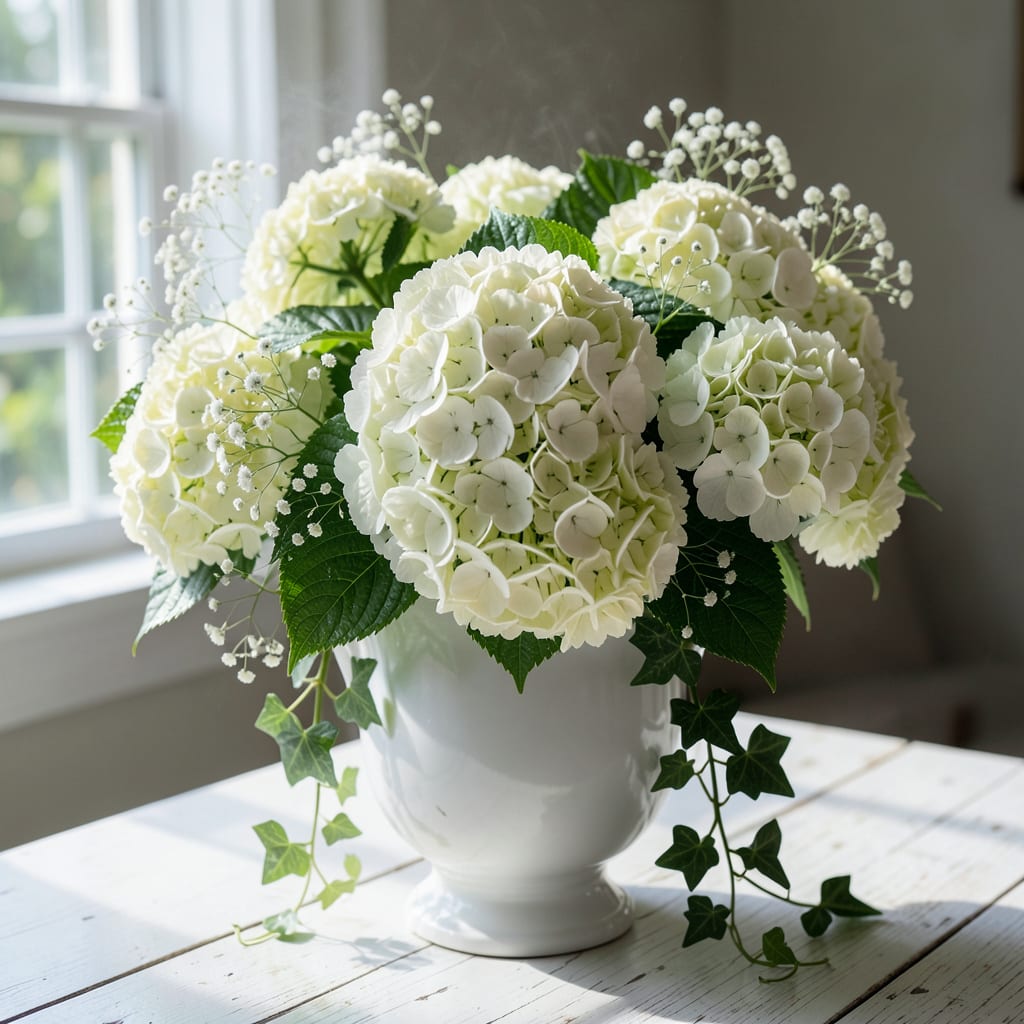
White Wedding hydrangeas stopped me in my tracks the first time I saw them. Those foot-wide blooms look like something from a storybook, yet they thrive with basic care.
This variety handles southern heat better than most hydrangeas, and the flowers start green then turn pure white. Plant in partial shade with rich, well-draining soil, and you’ll get reliable blooms year after year.
📚 In This Guide
This method delivers those stunning white blooms that make gardens feel like a fairytale setting.
Select a spot with partial sun—about 4-6 hours of morning sunlight is ideal. These hydrangeas thrive in bright, dappled light but will scorch in harsh afternoon rays. I always test the spot by observing how sunlight moves across it throughout the day.
Ensure the area has well-draining soil. If water pools after rain, work in compost to improve drainage. The roots need consistent moisture but will rot if left sitting in water. A slight slope or raised bed helps prevent this issue entirely.
Amend the planting area with organic matter like compost or aged manure. These hydrangeas prefer slightly acidic to neutral soil (pH 6.0-7.0). A soil test kit from your local garden center will tell you exactly what adjustments you need.
Dig a hole twice as wide as the root ball but no deeper. Loosen the soil around the edges of the hole so roots can spread easily. I like to mix a handful of slow-release fertilizer into the backfill to give the plant a strong start.
Gently remove the hydrangea from its container and loosen any circled roots with your fingers. Place it in the hole so the top of the root ball sits slightly above ground level. Backfill with your amended soil, pressing down lightly to eliminate air pockets.
Water deeply immediately after planting until the soil is saturated. Then add a 2-3 inch layer of mulch around the base, keeping it a few inches away from the stems. This keeps roots cool and retains moisture between waterings.
Water your hydrangea 1-2 times per week during the first growing season, more often during extreme heat. The goal is to keep the soil consistently moist but not soggy. I check by pushing my finger 1 inch into the soil—if it feels dry, it’s time to water.
Fertilize in early spring with a balanced, slow-release product, then again in early summer. Avoid high-nitrogen fertilizers, as they promote leaf growth at the expense of those beautiful white blooms. Prune only after flowering to avoid cutting off next year’s buds.
In colder climates, add a 4-6 inch layer of mulch around the base in late fall to protect the roots. In extremely cold areas, you might need to wrap the plant in burlap. I learned the hard way that even cold-hardy varieties appreciate this extra protection.
Watch for common issues like powdery mildew—space plants 3-4 feet apart for good air circulation. If leaves start yellowing between veins, your soil might be too alkaline. A sulfur amendment can help bring the pH back into the ideal range.
Small adjustments make a big difference when growing these stunning blooms.
The Sunlight Sweet Spot: Stick to that 4-6 hours of morning sunlight mentioned in Step 1—afternoon sun will scorch the delicate petals. I test spots by watching how light moves across my yard before committing to a location. East-facing areas often work perfectly.
Soil pH Precision: The pH 6.0-7.0 range in Step 2 is non-negotiable for white blooms. If your soil test shows higher alkalinity, amend with sulfur as mentioned. I keep a pH meter handy to monitor this—yellowing leaves between veins are your first warning sign.
Watering Wisdom: That 1-inch finger test from Step 4 is more reliable than any schedule. During heatwaves, I sometimes water daily, but always check first. Overwatering is worse than underwatering—soggy roots lead to rot.
Plant Spacing: The 3-4 feet apart guideline in Step 5 prevents powdery mildew by allowing air circulation. I learned this after losing two plants to fungal issues in my early gardening days. Crowding also reduces bloom size.
Keep the soil consistently moist but well-drained. Plant in partial shade to full sun, and apply a balanced fertilizer in early spring. Prune after blooming to maintain shape and encourage next year’s flowers.
These hydrangeas typically bloom from late spring to early fall, producing large, white flowers. The exact timing depends on your climate and local growing conditions.
Yes! Use a large container with good drainage and high-quality potting mix. Ensure they receive adequate water and partial sunlight for best results.
Yellow leaves often indicate overwatering, poor drainage, or nutrient deficiencies. Check soil moisture levels and adjust watering habits, or test the soil for pH imbalances.
