
Beautiful Plants For Your Interior
Beautiful Plants For Your Interior
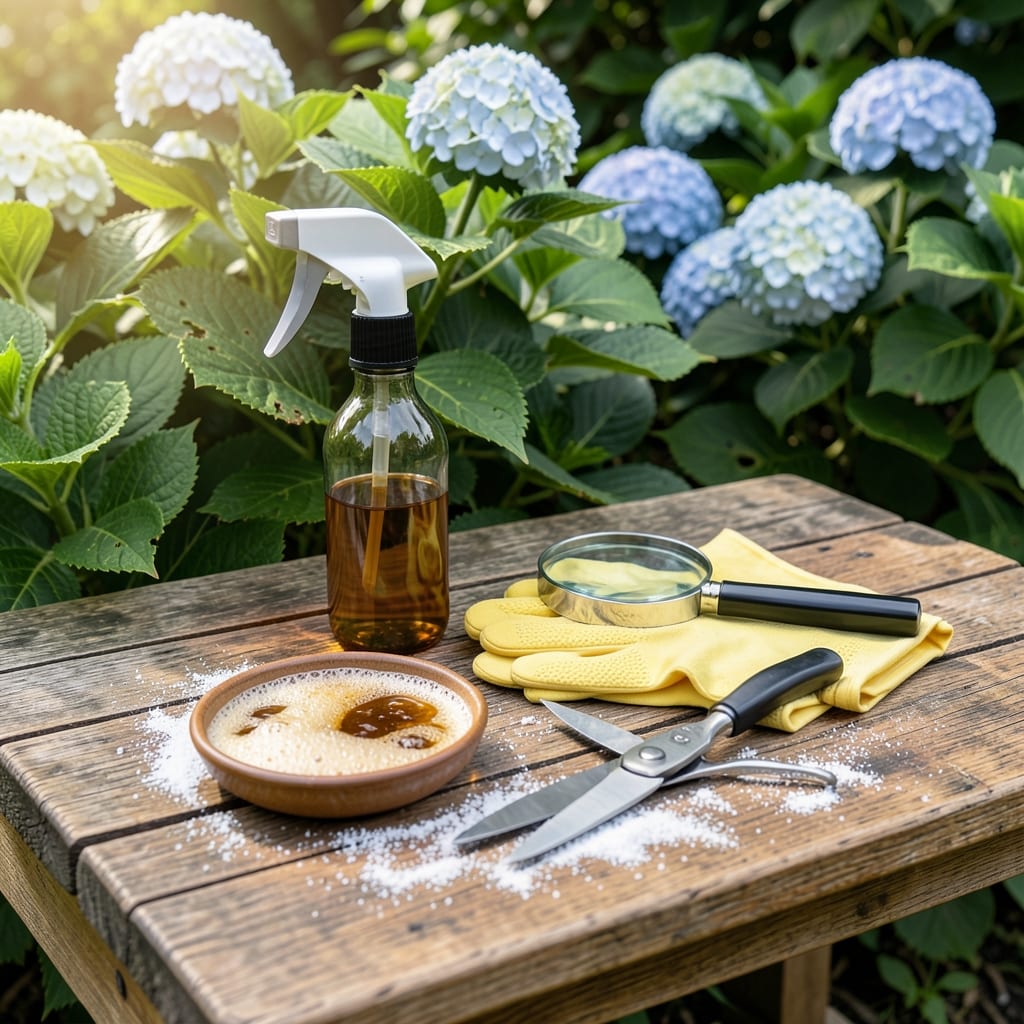
Waking up to ragged hydrangea leaves is frustrating. I’ve dealt with this myself—one morning the leaves are fine, the next they look like lace.
Most often it’s slugs, snails, or Japanese beetles. The good news is identification takes minutes, and solutions are straightforward. Here’s how to stop the damage.
Quick fixes for chewed leaves. Most of these are already in your shed.
| Ingredient | Amount | Notes |
|---|---|---|
| Neem Oil Spray 💧 | 1 piece | Cold-pressed for best results |
| Beer Traps 🍺 | 2 pieces | For slugs and snails |
| Handheld Magnifying Glass 🔍 | 1 piece | For pest inspection |
| Garden Gloves 🧤 | 1 piece | Protective nitrile or latex |
| Pruning Shears ✂️ | 1 piece | Sharp clean blades |
| Diatomaceous Earth 🌾 | 1 lb | Food-grade for crawling pests |
| Japanese Beetle Traps 🪲 | 1 piece | Place 30 feet from plants |
| Soap Spray Bottle 💦 | 1 piece | Mild insecticidal soap |
| Flashlight 🔦 | 1 piece | For nighttime pest checks |
[recipeingredientscaler]
Neem oil and diatomaceous earth are garden center staples. Neem oil disrupts pest life cycles—look for cold-pressed at Home Depot or Lowe’s. Food-grade diatomaceous earth works on soft-bodied pests but loses potency when wet (the good stuff, not the pool-grade kind). Beer traps at night catch slugs and snails within hours.
No neem oil? Insecticidal soap handles most soft pests—mix 1 tbsp per quart of water. Skip the traps if you’ve got pets (beer attracts them too). A flashlight at dusk reveals slugs and snails on the move. Pruning shears help remove heavily damaged leaves to reduce stress on the plant.
Store neem oil in a cool, dark place—it degrades in heat. Diatomaceous earth keeps indefinitely if dry. I keep spare gloves in the garage so I’m never without when I spot fresh damage at dawn.
Here’s my proven process for identifying and stopping leaf predators in their tracks.
Put on the garden gloves first—many pests leave irritating residues. Use the handheld magnifying glass to examine both sides of affected leaves, focusing on the veins and undersides where most culprits hide. Look for telltale signs: slug slime trails appear as silvery streaks, while beetle damage shows as ragged holes.
Shine the flashlight at dusk or dawn when many pests are most active. Japanese beetles often feed in early morning, while slugs emerge at night. Note the pattern of damage—large, irregular holes suggest beetles; lacy, skeletonized leaves indicate sawfly larvae.
Set out the two beer traps by burying them up to their rims near the hydrangea base. The yeast in beer attracts slugs and snails, which will crawl in and drown. Empty and refresh the traps every 48-72 hours—stale beer loses its effectiveness and starts to smell.
Position the Japanese beetle trap at least 30 feet away from your hydrangeas (the pheromone lure can actually draw more beetles to your garden if placed too close). Check it daily and dispose of captured beetles to prevent escape.
Sprinkle the 1 lb diatomaceous earth in a 2-inch wide ring around the plant base. This creates a microscopic glass-like barrier that dehydrates crawling pests like slugs, snails, and some beetle larvae. Reapply after rain or heavy watering as it loses effectiveness when wet.
Use the neem oil spray on the leaves, focusing on the undersides where pests feed. Mix according to package instructions and apply in the early morning or late evening to avoid harming beneficial insects. Neem works as both a repellent and growth disruptor for many leaf-eating pests.
With the pruning shears, trim away heavily damaged leaves and stems. This removes both the pests currently feeding and their potential egg-laying sites. Make clean cuts at a 45-degree angle to help the plant heal faster and reduce disease entry points.
For visible soft-bodied pests like aphids, use the soap spray bottle. A mild insecticidal soap solution (mix according to package) will break down their protective coatings. Spray directly on pests until they’re thoroughly coated—you’ll see results within 24-48 hours.
If you’ve prepared a solution or treatment to address pests eating your hydrangea leaves, you can store it in the refrigerator for short-term use. Place it in an airtight container to maintain its effectiveness. Most homemade or organic treatments will last 3-4 days when properly sealed and chilled. Always label the container with the date to avoid using expired mixtures.
For longer storage, some pest control solutions, like neem oil blends or garlic sprays, can be frozen for 2-3 months. Pour the mixture into ice cube trays for easy portioning, then transfer the cubes to a freezer-safe bag or container. Thaw only what you need for each application to preserve potency.
If your treatment requires warmth (e.g., a soap-based spray), gently heat it in a double boiler on low heat (avoid direct flame) until it reaches room temperature. Never microwave chemical or oil-based solutions, as uneven heating can degrade their effectiveness. Stir well before use.
To keep your hydrangea leaf treatment effective, avoid moisture contamination, which can dilute or spoil the mixture. If frozen, thaw the solution in the refrigerator overnight. Shake or stir thoroughly before applying to ensure even distribution of active ingredients.
