
Beautiful Plants For Your Interior
Beautiful Plants For Your Interior
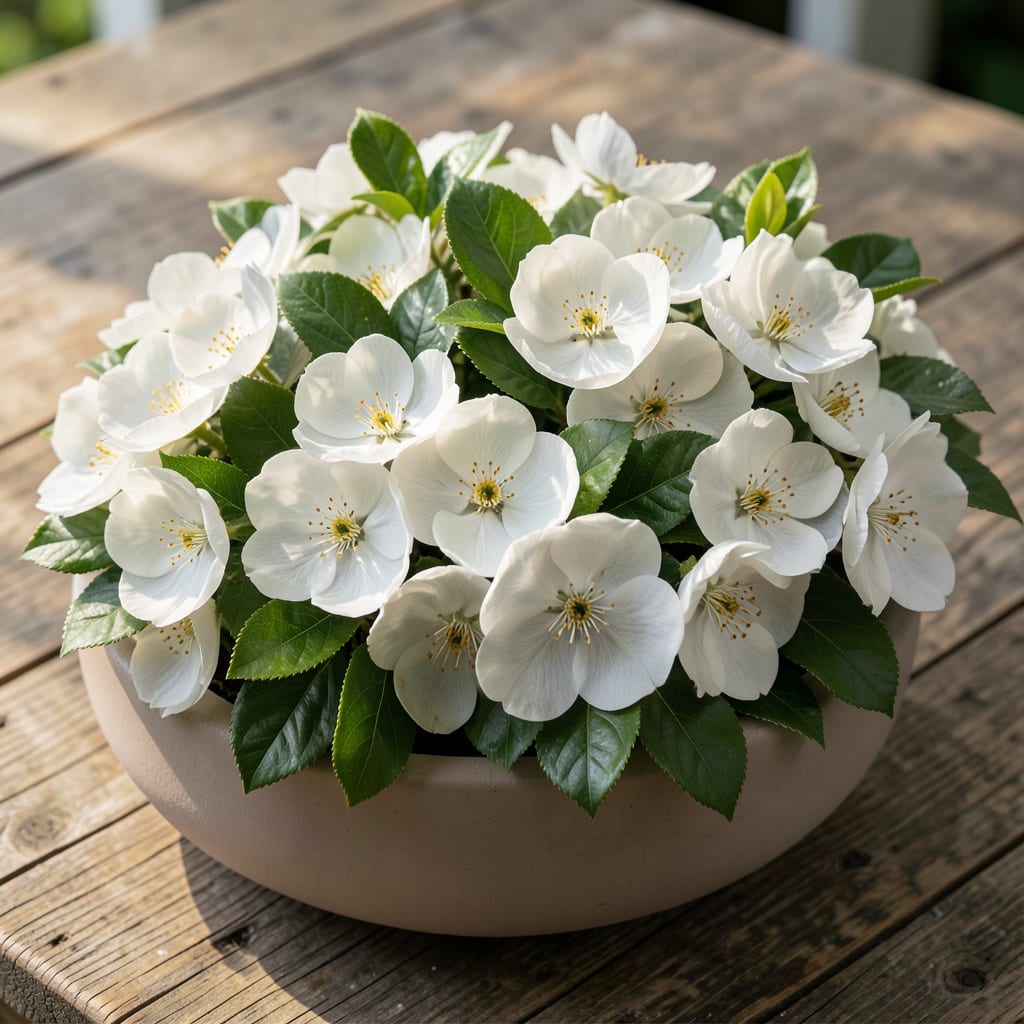
I discovered Snow White Indian Hawthorn when I needed a low-maintenance shrub that stays neat without constant pruning. This compact beauty delivers glossy evergreen leaves and spring blossoms that light up the garden.
It thrives in full sun to partial shade with minimal fuss. Once established, it handles drought like a champ and rewards you with year-round interest. Perfect for borders, foundations, or anywhere you want structure without the work.
📚 In This Guide
Here’s my proven approach for establishing these elegant shrubs with minimal stress on the plants.
Choose a site receiving full sun to partial shade—this cultivar tolerates both but produces the most abundant blooms in brighter conditions. The soil should drain well; Indian hawthorn despises wet feet and will develop root rot in waterlogged areas.
Test drainage by digging a 12-inch-deep hole and filling it with water. If it drains completely within 4 hours, the site is suitable. I always check multiple spots before deciding, as subtle variations in grade can create unexpected low points.
Dig a hole exactly as deep as the root ball and twice as wide. Roughen the sides of the hole with your shovel to create micro-fractures that help roots penetrate the surrounding soil more easily.
Remove any rocks, weeds, or debris from the hole. I’ve found that mixing a handful of the native soil with the backfill helps the plant transition more smoothly, as it prevents the root ball from being surrounded by dramatically different soil textures.
Gently remove the plant from its container and loosen any circling roots. Position it in the hole so the top of the root ball sits 1 inch above the surrounding soil level—this accounts for settling. Indian hawthorn’s crown is particularly sensitive to being planted too deep.
Backfill with native soil, pressing lightly to eliminate air pockets. Create a 3-inch-high watering ring around the perimeter to help direct water to the roots during establishment. This simple step prevents runoff and ensures moisture reaches where it’s needed most.
Water immediately after planting until the soil is completely saturated. The first watering is critical for settling the soil around the roots. I use a slow trickle from the hose for 10-15 minutes to ensure deep penetration.
Apply a 2-3 inch layer of organic mulch, keeping it 2 inches away from the trunk to prevent moisture buildup against the bark. Cypress mulch works particularly well for Indian hawthorn, as it slowly acidifies the soil over time, which this plant prefers.
Water deeply twice weekly for the first 4-6 weeks after planting, then gradually reduce frequency as the plant establishes. The goal is to encourage deep root growth, which makes the plant more drought-tolerant in the long run.
Monitor the plant for signs of stress, particularly leaf yellowing or wilting. These often indicate either overwatering or poor drainage. I’ve found that morning watering is most effective, as it allows foliage to dry before evening, reducing disease risk.
Here’s what I’ve learned from years of planting these beautiful shrubs.
Drainage Test: That 12-inch-deep hole and 4-hour drainage test in Step 1 is non-negotiable. Indian hawthorn will suffer in soggy soil, so if your test hole doesn’t drain completely within that time frame, choose a different spot or amend the soil with compost to improve drainage.
Planting Depth: In Step 3, positioning the root ball 1 inch above the surrounding soil level is critical. I learned this the hard way after losing several plants to crown rot from being planted too deep. The extra inch accounts for settling and prevents water from pooling around the sensitive crown.
Watering Technique: For that initial watering in Step 4, the 10-15 minute slow trickle isn’t just about time—it’s about depth. A quick splash won’t reach the root zone. I use my hose on its lowest setting and move it around the watering ring to ensure even saturation.
Mulch Placement: When applying that 2-3 inch layer of mulch, keeping it 2 inches away from the trunk is as important as the mulch itself. Piled-up mulch can trap moisture against the bark, leading to rot. I like to create a little mulch-free “doughnut” around the base of each plant.
This compact shrub typically reaches 3–4 feet tall and wide, making it perfect for small gardens or borders. Its manageable size also suits container planting.
Plant in early spring or fall to allow roots to establish before extreme heat or cold. Avoid summer planting in hot climates to reduce stress.
Consider Dwarf Yaupon Holly or Abelia for similar low-maintenance, evergreen shrubs with ornamental appeal and drought tolerance.
Brown leaves often signal overwatering, poor drainage, or fungal issues. Check soil moisture and improve airflow to prevent further damage.
Yes! Its spring blooms attract bees and butterflies, supporting local ecosystems while adding beauty to your garden.
