
Beautiful Plants For Your Interior
Beautiful Plants For Your Interior
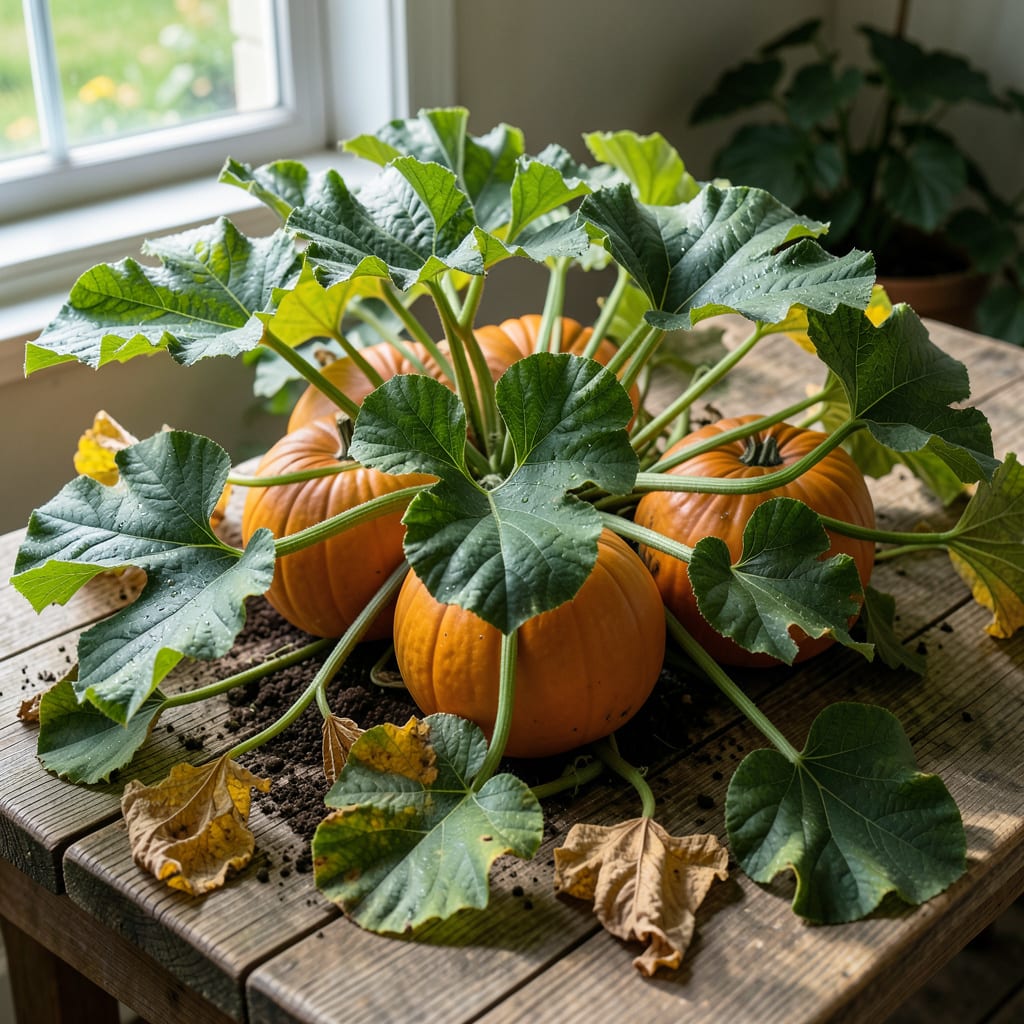
Those yellowing pumpkin leaves aren’t just unsightly—they’re a cry for help. I learned the hard way that ignoring them can spread problems to healthy parts of the plant.
Here’s the thing—dying leaves often signal bigger issues like disease, pests, or poor growing conditions. The good news is that smart pruning can redirect the plant’s energy to new growth and fruit production.
With a sharp pair of pruners and a little know-how, you can safely remove damaged foliage without harming the vine. The key is timing and technique to avoid stressing the plant further.
This approach works for both established vines and young plants showing early signs of trouble. Let’s get those pumpkins back on track.
Dying pumpkin leaves often signal underlying issues that can spread if ignored. Here are the most common causes:
Pathogens like Powdery Mildew or Downy Mildew thrive in humid, poorly ventilated conditions. These fungi block sunlight absorption, turning leaves yellow or brown. Action: Improve airflow and apply fungicide early.
Pumpkins need consistent moisture—too much causes root rot (wilting, blackened leaves), while too little leads to crispy, curling edges. Action: Water deeply 1–2x weekly; let soil dry slightly between sessions.
Sap-sucking pests (e.g., aphids, cucumber beetles) weaken leaves, leaving stippled or curled damage. Action: Handpick pests or use neem oil. Check leaf undersides for eggs.
Extreme heat or frost disrupts photosynthesis, causing scorch marks or blackened patches. Action: Use shade cloth for heatwaves; cover plants if frost is forecast.
Yellowing between veins (interveinal chlorosis) often indicates magnesium or nitrogen shortages. Action: Test soil; amend with compost or Epsom salts for magnesium.
Reviving your pumpkin plant starts with targeted fixes for the root causes of dying leaves. Here’s how to address each issue and keep your plant thriving:
Inspect the undersides of leaves for pests like aphids or squash bugs. Use a strong blast of water to dislodge them, or apply neem oil or insecticidal soap for stubborn cases. Prevention tip: Encourage beneficial insects like ladybugs by planting companion flowers (e.g., marigolds). 💡
Check soil moisture 1 inch deep—it should feel slightly damp, not soggy or bone-dry. Water deeply 1–2 times per week (more in extreme heat) and use mulch to retain moisture. Prevention tip: Water at the base to avoid wetting leaves, which can invite fungal diseases. 🌡️
Remove all infected leaves with clean shears, and dispose of them far from the garden. Apply a copper fungicide or a baking soda spray (1 tsp baking soda + 1 quart water + a drop of dish soap). Prevention tip: Space plants 2–3 feet apart for airflow, and avoid overhead watering. ✨
Yellowing leaves often signal a nitrogen deficiency. Use a balanced fertilizer (10-10-10) or compost tea every 2–3 weeks. For flowering/fruiting stages, switch to a low-nitrogen, high-phosphorus formula. Prevention tip: Test soil annually to tailor nutrient needs. 🎯
If leaves are crispy or bleached, create temporary shade with a lightweight row cover or strategically placed cardboard during peak sun (10 AM–4 PM). Prevention tip: Plant in a spot with morning sun and afternoon shade in scorching climates. 🌿
Pro move: Always sterilize pruning tools with rubbing alcohol between cuts to avoid spreading disease!
Yes, removing dying leaves redirects energy to healthy growth and fruit production. It also improves airflow, reducing disease risk. Always use clean, sharp tools to avoid further damage.
Dying leaves turn yellow or brown, feel dry, and may crumble. Stressed leaves often wilt but recover with proper care. Check for pests or disease spots to confirm.
Prune on a dry, sunny morning so wounds dry quickly. Avoid pruning during wet weather to prevent fungal infections. Remove no more than 1/3 of foliage at once.
No, composting diseased leaves can spread pathogens. Dispose of them in the trash or burn them. Healthy leaves can be composted to return nutrients to the soil.
