
Beautiful Plants For Your Interior
Beautiful Plants For Your Interior
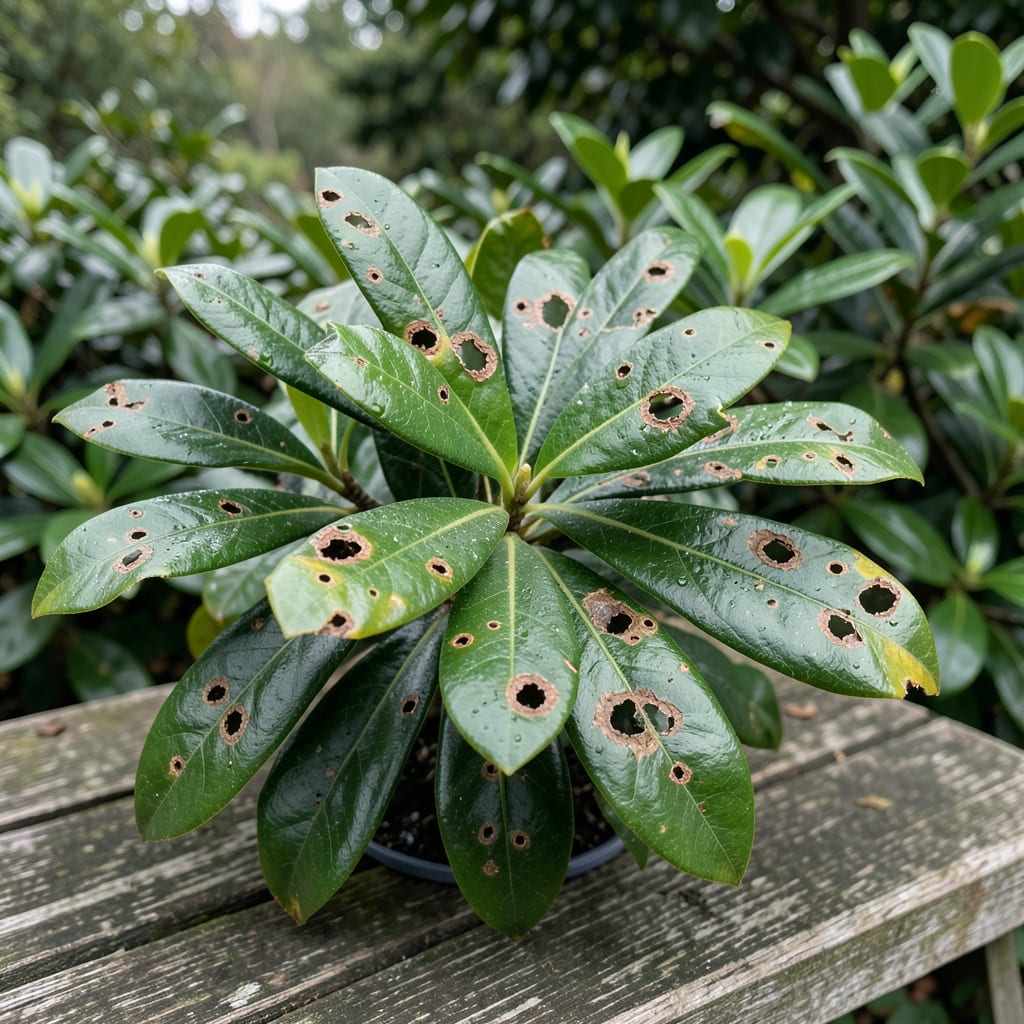
Those little holes in your laurel leaves aren’t from hungry bugs. Shot hole disease sneaks in when bacteria exploit wet, cool conditions to attack fresh growth.
I first noticed it after a spring rain—tiny brown spots that turned into ragged holes overnight. The damage looks worse than it is, but unchecked, it weakens plants and invites secondary infections.
Catching it early means the difference between a quick recovery and a season-long battle. You’ll spot the first signs on new leaves, where the bacteria enter through natural openings or injuries.
Prevention is simpler than treatment: improve air circulation, avoid overhead watering, and clean up fallen debris. Your laurels will thank you with healthy, hole-free foliage.
Shot hole disease in laurels is primarily triggered by fungal pathogens, environmental stressors, and cultural practices. Below are the key causes, explained in detail to help you address the root of the problem.
The most common culprit is the fungus Stigmina carpophila (formerly Wilsonomyces carpophilus), which thrives in wet, humid conditions. It infects laurel leaves through wounds or natural openings, leading to the characteristic “shot hole” lesions. Secondary fungi, like Cercospora spp., may also contribute, especially in stressed plants.
Prolonged leaf wetness—from rain, overhead irrigation, or high humidity—creates an ideal environment for fungal spores to germinate and spread. Laurels in poorly drained soil or crowded plantings are particularly vulnerable, as airflow is restricted, trapping moisture on foliage.
Laurels weakened by drought, nutrient deficiencies, or extreme temperatures become more susceptible to infection. Stress reduces the plant’s natural defenses, allowing fungi to take hold more easily. Cold, wet springs often see a spike in cases.
Improper pruning (e.g., using contaminated tools or cutting during wet weather) can introduce or spread the fungus. Additionally, over-fertilization—especially with high-nitrogen products—promotes lush, tender growth that’s more prone to disease.
Addressing these factors through proper sanitation, improved airflow, and stress reduction can significantly lower the risk of shot hole disease.
Shot hole disease can be managed and prevented with the right approach. Below are practical solutions tailored to each cause, along with prevention tips to keep your laurels healthy.
If fungal pathogens like Stigmina or Septoria are the culprit:
Wet foliage encourages fungal spores to germinate. Switch to:
Crowded plants trap moisture and limit airflow. Fix this by:
Consistency is key—monitor your plants regularly and act at the first sign of trouble!
Look for small, purple-brown spots that turn into holes in new leaves. These lesions often have yellow halos and appear after wet, cool weather.
Yes, but act fast. Remove all affected leaves, apply a copper fungicide, and improve air circulation. Severe cases may require multiple treatments.
The fungus can spread via water splashing between plants. Space laurels 3-6 feet apart and avoid overhead watering to prevent cross-contamination.
Neem oil or baking soda sprays can help with mild cases. Apply weekly and combine with good cultural practices like cleaning up fallen debris.
