
Beautiful Plants For Your Interior
Beautiful Plants For Your Interior
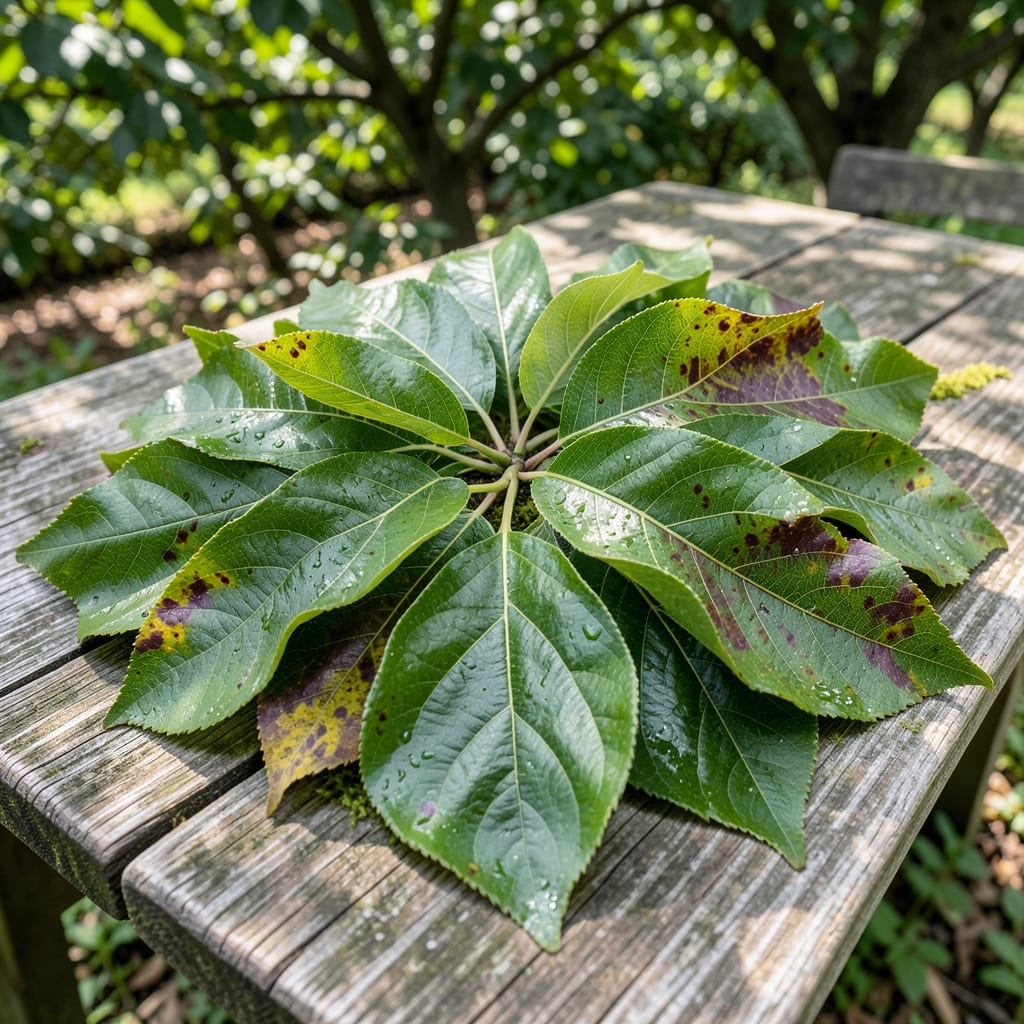
My Santa Rosa plum tree’s leaves tell a story before the fruit even appears. Yellowing edges, brown spots, or curled tips each point to a different issue—too much water, not enough nutrients, or a sneaky pest.
Catching these signs early saves the season. I’ve learned that weekly leaf checks and quick action keep my tree healthy and productive year after year.
📚 In This Guide
Here’s the method I use to diagnose and resolve leaf problems before they spread through the tree.
Start by inspecting both upper and lower leaf surfaces with a magnifying glass. Look for purple or red spots on upper leaves, which often indicate bacterial leaf spot. Check for yellowing between veins—a classic sign of iron deficiency in Santa Rosa plums.
Note any brown, crispy edges or hole formations, which may point to environmental stress or pest damage. I always compare affected leaves to healthy ones on the same tree to spot subtle differences in color or texture.
Pay special attention to leaf undersides for tiny webbing or stippling, which reveals spider mite activity. The presence of black, sooty residue suggests aphid infestation that’s attracting mold growth.
Determine whether the problem appears uniformly throughout the tree or concentrates in specific areas. Lower leaves showing yellowing often indicate nitrogen deficiency, while new growth distortion suggests zinc shortage.
Check if affected leaves are primarily on the side facing prevailing winds or intense afternoon sun. This pattern typically signals environmental stress rather than disease. I’ve found that Santa Rosa plums in low-lying areas often develop fungal issues due to poor air circulation.
Note the tree’s age—young trees frequently show nutrient deficiencies as their root systems establish, while mature trees often develop pest problems from accumulated stressors over time.
For bacterial issues, apply copper fungicide spray at first sign of spots, repeating every 7-10 days until symptoms subside. With nutrient deficiencies, work chelated iron or appropriate fertilizer into the soil around the drip line.
Control pest populations with horticultural oil for mites or aphids, applying in early morning when temperatures are below 85°F. For fungal problems, improve air circulation by thinning interior branches and removing fallen leaves promptly.
I always water deeply at the base rather than overhead to prevent fungal spores from splashing onto leaves. Mulching with 2-3 inches of organic material helps maintain consistent soil moisture, which reduces stress-related leaf issues.
After treatment, check the tree every 3-4 days for new symptoms or improvement in existing ones. Keep a garden journal noting weather conditions, treatment dates, and leaf appearance to identify patterns.
Prevent future issues by maintaining proper spacing between trees (10-15 feet for Santa Rosa plums) and pruning annually to open the canopy. I’ve found that regular dormant season spraying with horticultural oil prevents many overwintering pest problems.
Ensure the tree receives full sun (at least 6-8 hours daily) and has well-draining soil. Santa Rosa plums particularly benefit from consistent moisture during fruit development, so I monitor soil moisture weekly during dry periods.
Here are the key insights I’ve gathered from years of troubleshooting Santa Rosa plum trees.
Diagnostic Precision: In Step 1, use a magnifying glass to distinguish between bacterial leaf spot (purple or red spots) and iron deficiency (yellowing between veins). These symptoms often mimic each other, but the treatment differs entirely—copper fungicide for bacterial issues versus chelated iron for deficiencies.
Environmental Clues: Step 2 highlights that leaves facing prevailing winds or afternoon sun often show environmental stress. Don’t assume disease—check if the pattern matches exposure first. Low-lying areas with poor air circulation are prime spots for fungal growth, so prioritize pruning to open the canopy.
Treatment Timing: For bacterial issues in Step 3, the 7-10 day repetition of copper fungicide is non-negotiable. Skipping applications or stretching the interval beyond 10 days can allow the infection to spread. Similarly, horticultural oil for pests must be applied in early morning when temperatures are below 85°F to avoid burning leaves.
Prevention Strategy: The 10-15 feet spacing mentioned in Step 4 isn’t just for growth—it’s critical for air circulation, which prevents fungal issues. Dormant season spraying with horticultural oil also targets overwintering pests before they become a problem in spring.
Yellowing leaves often indicate water stress, nutrient deficiency, or disease. Check soil moisture—overwatering or drought can cause this. Test for iron or nitrogen shortages, and inspect for fungal infections like rust or leaf spot.
Prune during late winter or early spring (before buds swell) to remove dead or diseased wood. This improves airflow, reducing fungal issues. Avoid heavy pruning in fall, as it can stimulate tender new growth vulnerable to frost.
Consider disease-resistant varieties like Methley or Stanley plums. These are hardier and less prone to leaf issues. Ensure proper spacing and sunlight to minimize stress and improve overall tree health.
Brown spots often signal fungal diseases like bacterial leaf spot or rust. Remove infected leaves, improve airflow, and apply fungicides like copper-based sprays. Water at the base to keep foliage dry.
