
Beautiful Plants For Your Interior
Beautiful Plants For Your Interior
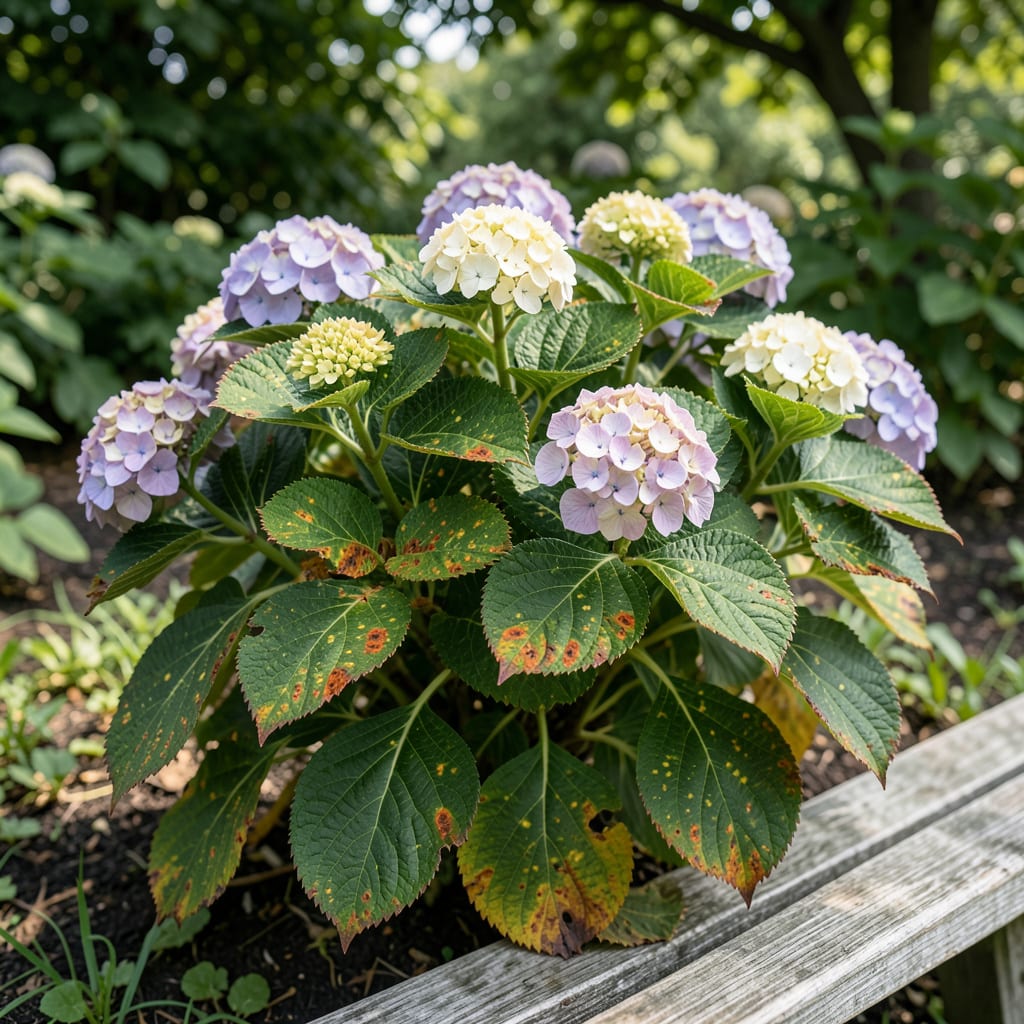
Spotted orange splotches on your hydrangea leaves last week. Not good. I ignored the first few spots and watched my plant’s health spiral—rust fungus spreads fast when left unchecked.
Here’s the thing—it starts subtle. Tiny yellow spots on upper leaves, orange pustules underneath. By the time you notice, it’s already stressing the plant and stealing its vigor.
I turned mine around with targeted organic treatments and better airflow. The new growth came back clean and the leaves regained their deep green within 3 weeks.
Early action saves the plant and stops the spread to neighbors. Don’t wait until half the foliage looks sick. This works.
Rust on hydrangea plants is typically caused by fungal pathogens, with Pucciniastrum hydrangeae being the most common culprit. This fungus thrives in specific environmental conditions, leading to those unsightly orange-brown spots on leaves. Here’s why it happens:
Rust fungi love wet foliage. Overhead watering, poor drainage, or high humidity create the perfect breeding ground. When leaves stay damp for extended periods (especially 6+ hours), spores germinate and infect the plant.
Fungal spores thrive in 60–75°F (15–24°C) ranges. Hydrangeas in temperate climates or shaded, cool spots are more vulnerable during spring and fall when these conditions are common.
Crowded plantings or dense canopies restrict airflow, trapping moisture around leaves. Stagnant air prevents foliage from drying quickly, giving rust fungi a foothold.
Fallen infected leaves left on the soil surface harbor spores over winter. In spring, splashing rain or wind can carry these spores back to new growth, restarting the cycle.
Actionable tip: Remove and destroy (do not compost) infected leaves promptly to break the disease cycle.
Rust on hydrangeas is treatable, especially when caught early. Below are targeted solutions for the most common causes, along with prevention tips to keep your plants thriving.
Trim overcrowded branches to improve airflow around the plant. Space hydrangeas at least 3–4 feet apart to reduce humidity buildup, which rust fungi love. Prevention tip: Regularly thin out dense foliage to discourage future outbreaks. 💡
Switch to drip irrigation or water at the base to keep leaves dry. Water early in the day so foliage dries quickly in the sun. Prevention tip: Avoid wetting leaves, especially in the evening. 🌡️
Remove and destroy (do not compost) all fallen leaves, stems, and flowers showing rust spots. Disinfect pruning tools with rubbing alcohol between cuts. Prevention tip: Rake up leaf litter under plants weekly during growing season. ✨
Spray affected plants with neem oil or a baking soda solution (1 tbsp baking soda + 1 tsp dish soap + 1 gallon water). Apply every 7–10 days until rust subsides. Prevention tip: Use copper fungicide in early spring as a protective barrier. 🎯
Consistency is key—combine these fixes with good cultural practices to restore your hydrangea’s health and prevent rust from returning.
Rust can spread rapidly in wet, mild conditions, sometimes covering entire leaves within 1-2 weeks. Early intervention is crucial to prevent it from reaching stems and other plants.
Yes, rust spores can travel via wind or splashing water to nearby susceptible plants. Keep infected hydrangeas isolated and remove fallen leaves to protect your garden.
Rarely, but severe infections weaken plants, making them vulnerable to other diseases. With proper treatment, most recover within 3-4 weeks.
For active rust, spray every 7-10 days until symptoms disappear. Preventatively, apply every 2-3 weeks during humid seasons.
