
Beautiful Plants For Your Interior
Beautiful Plants For Your Interior
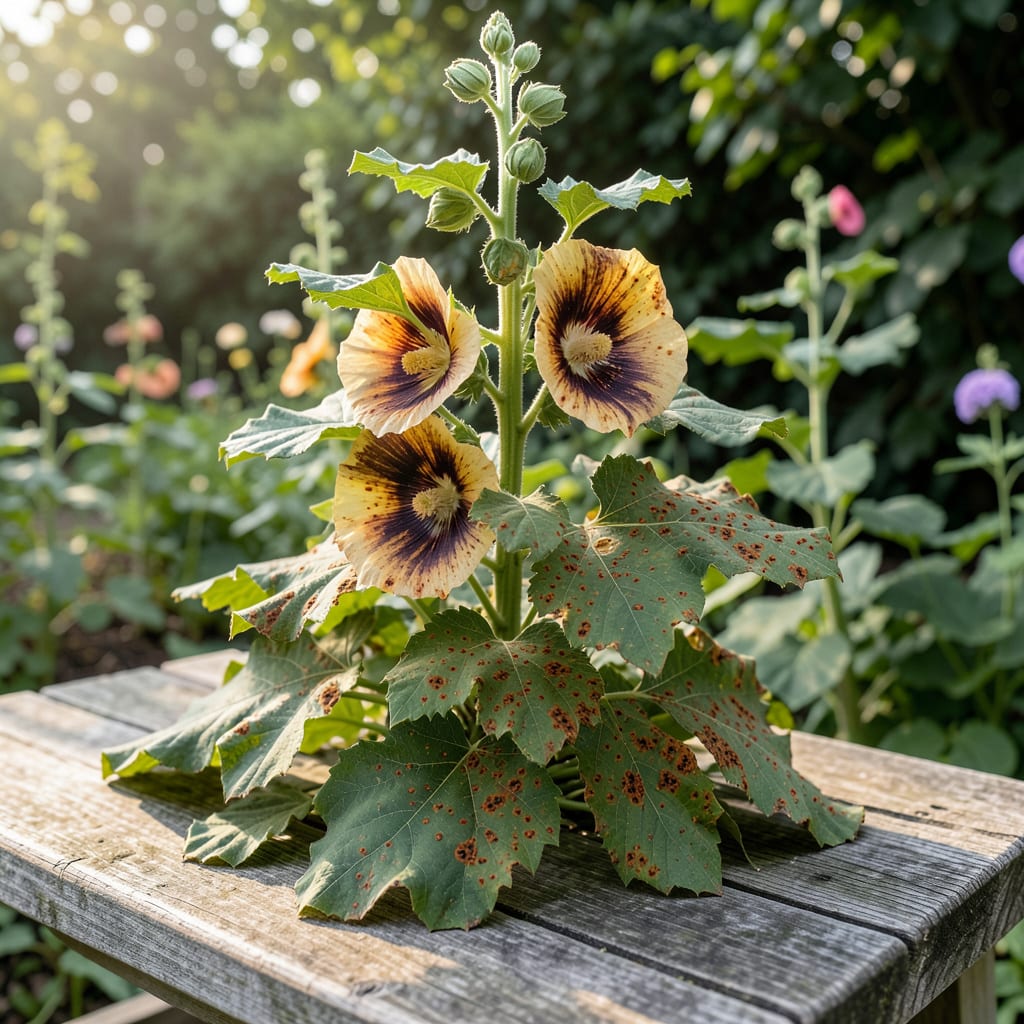
Orange spots on your hollyhock leaves aren’t just ugly—they’re a red flag. Rust disease spreads fast if left untreated, turning your tall, proud plants into spotted, struggling messes.
I learned the hard way that early action saves the season. Yellow-orange pustules on the undersides of leaves are the first warning. Left alone, they multiply, weaken stems, and can kill the plant by summer’s end.
Here’s the thing—rust thrives in wet, crowded conditions. Thin your plants, improve airflow, and water at the base. These simple changes can stop the problem before it starts.
With the right approach, you’ll keep your hollyhocks healthy and vibrant all season long. No more watching rust take over your garden favorites.
Hollyhock rust is a common fungal disease caused by Puccinia malvacearum, and it thrives under specific environmental conditions. Understanding why it happens is key to preventing its spread.
Rust spores require prolonged leaf wetness to germinate. Overhead watering, high humidity, or crowded plantings create the perfect damp, stagnant environment. Hollyhocks in poorly ventilated areas or shaded spots are especially vulnerable.
The fungus flourishes in moderate to warm temperatures (60–75°F / 15–24°C). Warmth accelerates spore production, while cool, wet springs or mild summers provide ideal conditions for infection to take hold.
Some hollyhock cultivars lack natural resistance to rust. Older or heirloom varieties, in particular, are more prone to infection. Planting non-resistant types in the same area year after year can lead to soil-borne spore buildup.
Rust spores can survive winter on plant debris or infected stems left in the garden. When spring arrives, these spores reactivate and spread to new growth, reinfecting plants. Failing to remove and destroy affected material perpetuates the cycle.
Tackling rust on hollyhock plants starts with quick action and consistent care. Below are targeted solutions for each cause, paired with prevention tips to keep your plants thriving. 🌿
If you spot rust-colored spots on leaves, act fast:
Prevention tip: 💡 Space plants 2–3 feet apart for better airflow, reducing humidity where fungi thrive.
Overhead watering and soggy soil create perfect conditions for rust. Fix it by:
Prevention tip: ⏰ Water early in the day so foliage dries quickly in the sun.
Dense growth traps moisture and invites rust. Combat this by:
Prevention tip: ✨ Avoid planting hollyhocks in crowded garden beds or against walls.
If rust persists despite fungicides, the fungus may have built resistance. Try:
Prevention tip: 🎯 Rotate fungicides (e.g., alternate sulfur and copper) to prevent resistance.
Orange spots are the first sign of rust fungus. These pustules appear on leaf undersides and spread quickly in damp conditions. Act fast—remove affected leaves to prevent further damage.
Yes, rust spores travel easily through wind, water, or garden tools. Isolate infected plants immediately and avoid overhead watering to limit spread. Clean tools with rubbing alcohol after pruning.
Remove all plant debris in fall, as spores overwinter on dead leaves. Rotate planting locations and choose rust-resistant varieties. Proper spacing improves airflow, reducing future risk.
