
Beautiful Plants For Your Interior
Beautiful Plants For Your Interior
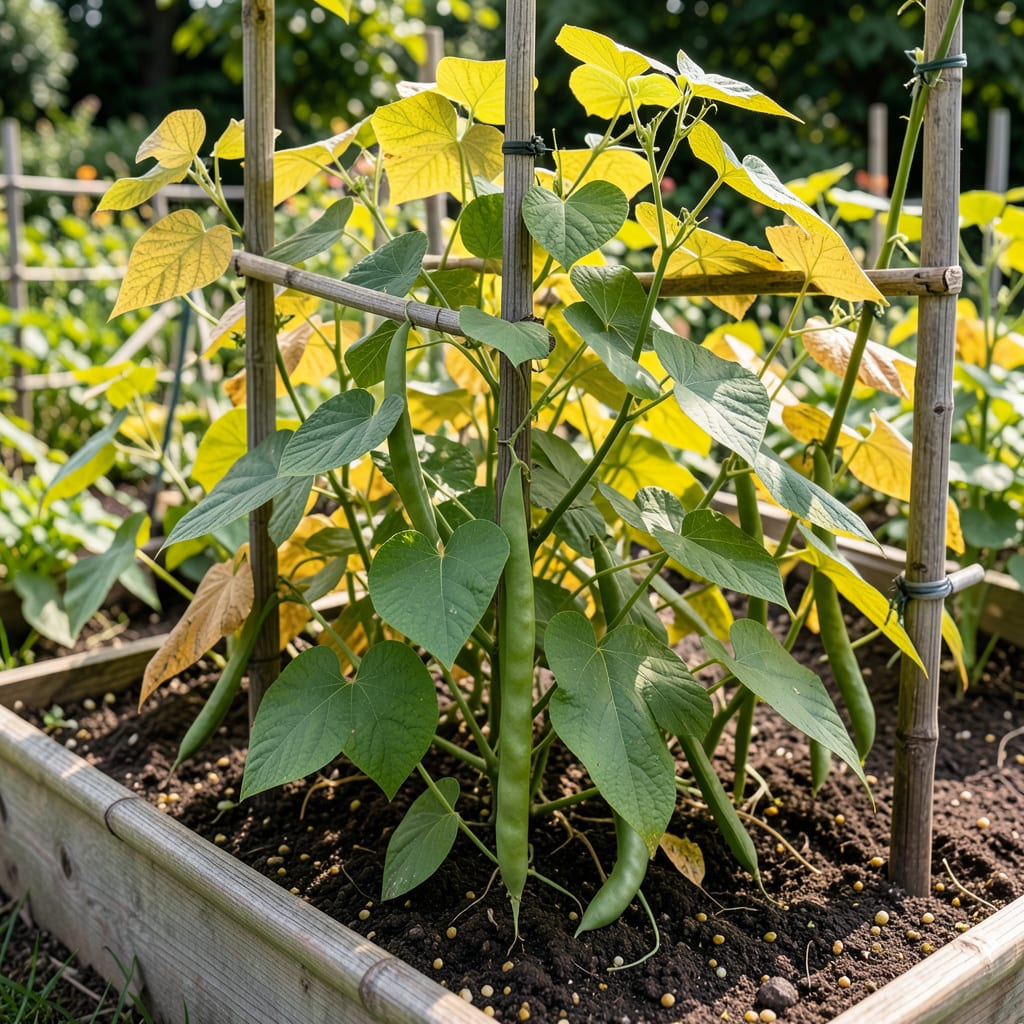
Yellow leaves on runner beans aren’t a death sentence. I’ve nursed plants back from the brink with simple fixes after spotting this exact issue in my garden last summer.
Most cases come down to 3 common culprits: too much water, not enough nutrients, or sneaky pests. The good news? Each has a straightforward solution that works in under a week.
📚 In This Guide
Here’s my straightforward approach to diagnosing and correcting the problem with minimal effort.
Yellow leaves often signal overwatering or poor drainage. Stick your finger 1-2 inches into the soil near the base of the plant. If it feels soggy or waterlogged, you’re likely drowning the roots. Runner beans prefer consistently moist but not waterlogged soil.
If the soil stays wet for days after watering, improve drainage by adding compost or perlite to the top 2-3 inches of soil. Ensure your containers or garden beds have adequate drainage holes. A simple fix like this can revive plants within 1-2 weeks.
Nitrogen deficiency is a common culprit for yellowing leaves, especially on older foliage first. If the lower leaves turn uniformly yellow while upper leaves stay green, your plants likely need a nitrogen boost. Use a balanced, water-soluble fertilizer and apply according to package instructions.
Magnesium deficiency shows as yellowing between the veins of older leaves. If this is the case, dissolve 1 tablespoon of Epsom salt in a gallon of water and spray on the leaves. You’ll see improvement in 5-7 days if this was the issue.
Examine the undersides of leaves for tiny pests like aphids or spider mites, which can cause yellowing by sucking plant sap. A strong blast of water can dislodge aphids, or use insecticidal soap for severe infestations. Repeat treatment every 4-5 days until pests are gone.
Fungal diseases like rust or powdery mildew can also turn leaves yellow. Remove and destroy infected leaves immediately to prevent spread. Improve air circulation around plants by spacing them 6-8 inches apart and watering at the base rather than overhead.
Runner beans need full sun (at least 6-8 hours of direct sunlight daily) to thrive. If plants are in shade, leaves may yellow from lack of photosynthesis. Relocate container-grown plants to a sunnier spot or trim back nearby plants casting shade.
If moving plants isn’t an option, consider supplementing with a grow light for 12-14 hours daily. Within 2 weeks, you should notice greener, healthier foliage as the plant adjusts to better light conditions.
Inconsistent watering—either too much or too little—can stress plants and lead to yellow leaves. Runner beans prefer soil that stays evenly moist. Water deeply when the top 1 inch of soil feels dry, providing about 1-2 inches of water per week, depending on rainfall and temperature.
Avoid wetting the leaves, especially in the evening, as this can promote fungal growth. Early morning watering allows foliage to dry quickly in the sun. Adjust your schedule based on weather—hot, dry spells may require watering every 2-3 days.
Small adjustments make a big difference when diagnosing yellow leaves on these plants.
Soil Check: In Step 1, when testing soil moisture, push your finger the full 1-2 inches deep—surface dryness can be misleading. If the soil stays soggy, adding compost or perlite to the top 2-3 inches will improve drainage faster than you’d expect.
Nutrient Timing: For magnesium deficiency in Step 2, that 1 tablespoon of Epsom salt per gallon ratio is precise. I’ve seen plants bounce back within 5-7 days when applied correctly, but don’t overdo it—more isn’t better here.
Pest Persistence: Step 3’s advice to repeat insecticidal soap every 4-5 days is key. A single treatment often misses new hatchlings, and consistency breaks the pest life cycle. Alongside this, spacing plants 6-8 inches apart prevents many issues before they start.
Light Consistency: Runner beans truly need that 6-8 hours of direct sunlight daily mentioned in Step 4. If using a grow light as suggested, stick to 12-14 hours daily—any less and you won’t see the 2-week improvement the method promises.
Yellow leaves often signal overwatering, nutrient deficiencies (like nitrogen or magnesium), or poor drainage. Check soil moisture and fertility first.
Yes! Prune affected leaves, improve drainage, and adjust watering. If it’s a nutrient issue, use a balanced fertilizer or compost to revive the plant.
Older leaves may yellow and drop as part of the plant’s life cycle, especially in late summer or fall. This is normal if new growth remains green.
A balanced, nitrogen-rich fertilizer (like 10-10-10) works well. For organic options, try compost or fish emulsion to restore soil nutrients.
Ensure proper spacing, water consistently (but avoid soggy soil), and mulch to retain moisture. Regularly test soil pH and nutrient levels.
