|
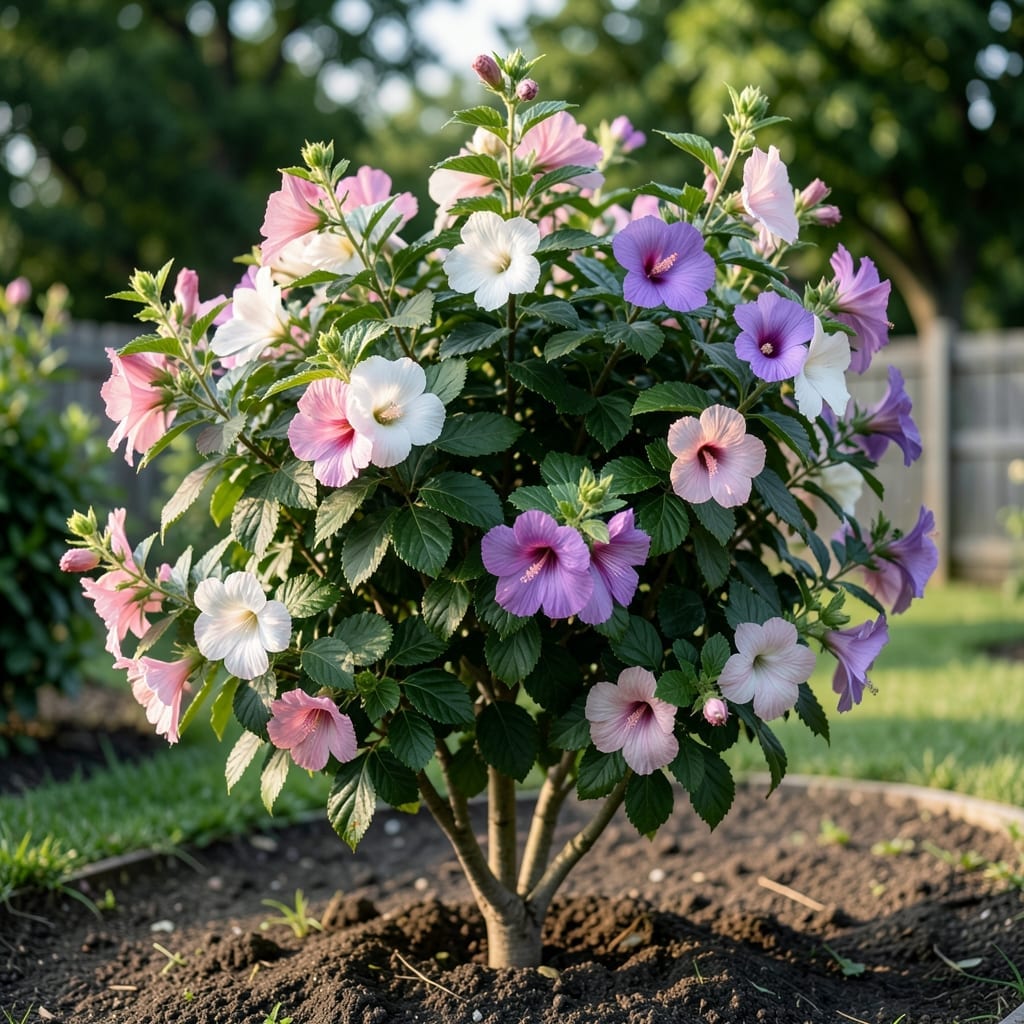
The plant’s mature size (typically 8-12 feet tall) means it can serve as a stunning focal point in your landscape. Its trumpet-shaped flowers come in shades of pink, white, purple, or blue, attracting pollinators.
For the best results, plant your Rose of Sharon in spring or fall. This gives the roots time to establish before the heat of summer or the first frost. In my experience, spring planting often leads to blooms in the first year.
If you’re in a region with hot summers, your plant might appreciate some afternoon shade to prevent heat stress. This can actually help extend the blooming period by keeping the plant healthier longer.
Watch for bud formation as the first sign that blooms are coming. Once you see colored buds, you can expect flowers to open within 7-10 days. The blooms typically last for a single day, but new ones open daily during peak season.
To get the most from your Rose of Sharon, I suggest planting it where you can enjoy its daily flower show. A spot near a patio or walkway lets you appreciate the blooms up close as they change throughout the season.
🌸
How to Extend or Maximize Your Rose of Sharon Blooming Period
To enjoy Rose of Sharon blooms longer, I focus on consistent care and optimal conditions. These shrubs thrive with proper watering, balanced fertilizer, and strategic pruning. With the right approach, you can extend their vibrant display well into fall.
I’ve found that deadheading spent blooms encourages new flowers. Also, morning watering prevents fungal issues. A sunny location with well-draining soil sets the stage for success.
🌸 5 Tips to Maximize Blooms
1
Water deeply weekly in dry spells
2
Feed with 10-10-10 fertilizer monthly
3
Prune after flowering to shape
4
Ensure 6+ hours of sun daily
5
Mulch to retain moisture
I always mulch around the base to retain moisture and suppress weeds. This keeps the root zone cool and reduces stress. A 2-3 inch layer of organic mulch works wonders for my shrubs.
For longer bloom periods, I avoid heavy pruning in spring. Instead, I lightly shape the plant after its first flush of flowers. This encourages new growth and more blooms later in the season.
In my experience, Rose of Sharon responds well to regular feeding. I use a balanced fertilizer every 4-6 weeks during the growing season. This keeps the plant healthy and flowering abundantly.
Finally, I monitor for pests like aphids or spider mites, which can stress the plant. A strong spray of water or neem oil keeps them in check. With these steps, my Rose of Sharon blooms from July to September every year.
☀️
★★★★★4.7(4 reviews)
|