
Beautiful Plants For Your Interior
Beautiful Plants For Your Interior
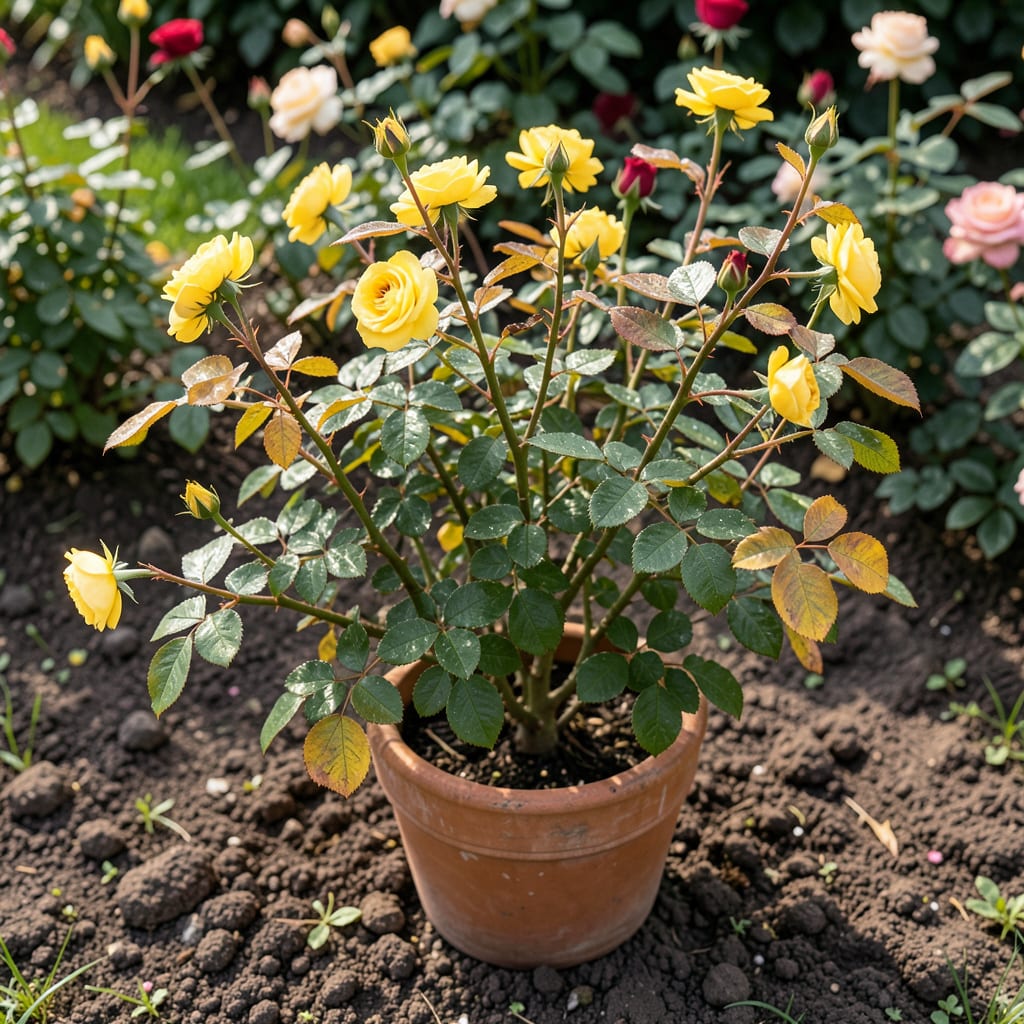
Yellow leaves on your rose bush aren’t just unsightly—they’re a cry for help. I’ve seen this happen mid-season when everything seemed fine, then suddenly the greens turn to gold for all the wrong reasons.
Usually it’s one of four culprits: too much water, not enough nutrients, pesky insects, or a fungal party crashing in your soil. Each leaves its own calling card—spots, patterns, or leaf drop—that tells you exactly what’s going wrong.
Here’s the thing—most fixes are simple once you know the cause. A little pruning, a soil test, or a natural spray can turn those yellow flags back to vibrant green in 2-3 weeks.
Better yet, a few preventative habits keep it from happening again. No chemicals, no guesswork—just healthy roses that bloom like they mean it.
Yellowing leaves on rose bushes, or chlorosis, are often a sign of underlying stress. The discoloration occurs when chlorophyll— the green pigment essential for photosynthesis—breaks down or fails to form properly. Below are the most common scientific causes, each with distinct patterns and triggers.
Roses require a balanced diet of nitrogen, iron, magnesium, and zinc. A lack of nitrogen typically causes uniform yellowing starting in older leaves. Iron deficiency, common in alkaline soils (pH > 7), leads to interveinal chlorosis—yellowing between leaf veins while veins stay green. Magnesium deficiency shows as yellow patches between veins on older leaves, often with brown spots.
Excess water suffocates roots, reducing oxygen uptake and nutrient absorption. This triggers root rot (often caused by Phytophthora or Pythium fungi), which manifests as yellowing leaves, wilting, and blackened stems. Poorly draining soil exacerbates the issue, creating anaerobic conditions that stunt root function.
Black spot (Diplocarpon rosae) and powdery mildew (Podosphaera pannosa) are common culprits. Black spot causes yellow halos around dark spots on leaves, while powdery mildew coats leaves in white powder, leading to yellowing and distortion. Bacterial leaf spot (Pseudomonas syringae) creates water-soaked yellow spots that turn brown.
Sap-sucking pests like aphids, spider mites, and thrips drain plant fluids, causing stippling, curling, and yellowing. Spider mites, in particular, thrive in hot, dry conditions and leave fine webbing on the undersides of leaves. Their feeding disrupts chlorophyll production, leading to a mottled yellow appearance.
Extreme heat, cold snaps, or sudden temperature swings can trigger physiological stress, leading to yellowing. Too much direct sunlight may scorch leaves, while insufficient light weakens photosynthesis. Additionally, herbicide drift (e.g., glyphosate) or air pollution (like ozone) can cause systemic yellowing and leaf drop.
Once you’ve identified the cause, these targeted fixes will help restore your rose bush’s vibrant green foliage. Act quickly to prevent further stress or damage.
Overwatering causes uniform yellowing with soggy soil and blackened stems. Nutrient issues show patterns: iron deficiency leaves veins green while the rest yellows. Check soil moisture first!
Often not—the damaged leaves usually stay yellow. But new growth should be green within 2-3 weeks if you’ve fixed the underlying problem. Remove severely yellowed leaves to redirect energy.
Inspect the pattern: whole-leaf yellowing suggests overwatering or nitrogen. Yellow between veins points to iron. Spots or webbing? Likely pests or disease. A soil test kit gives precise nutrient answers.
