
Beautiful Plants For Your Interior
Beautiful Plants For Your Interior
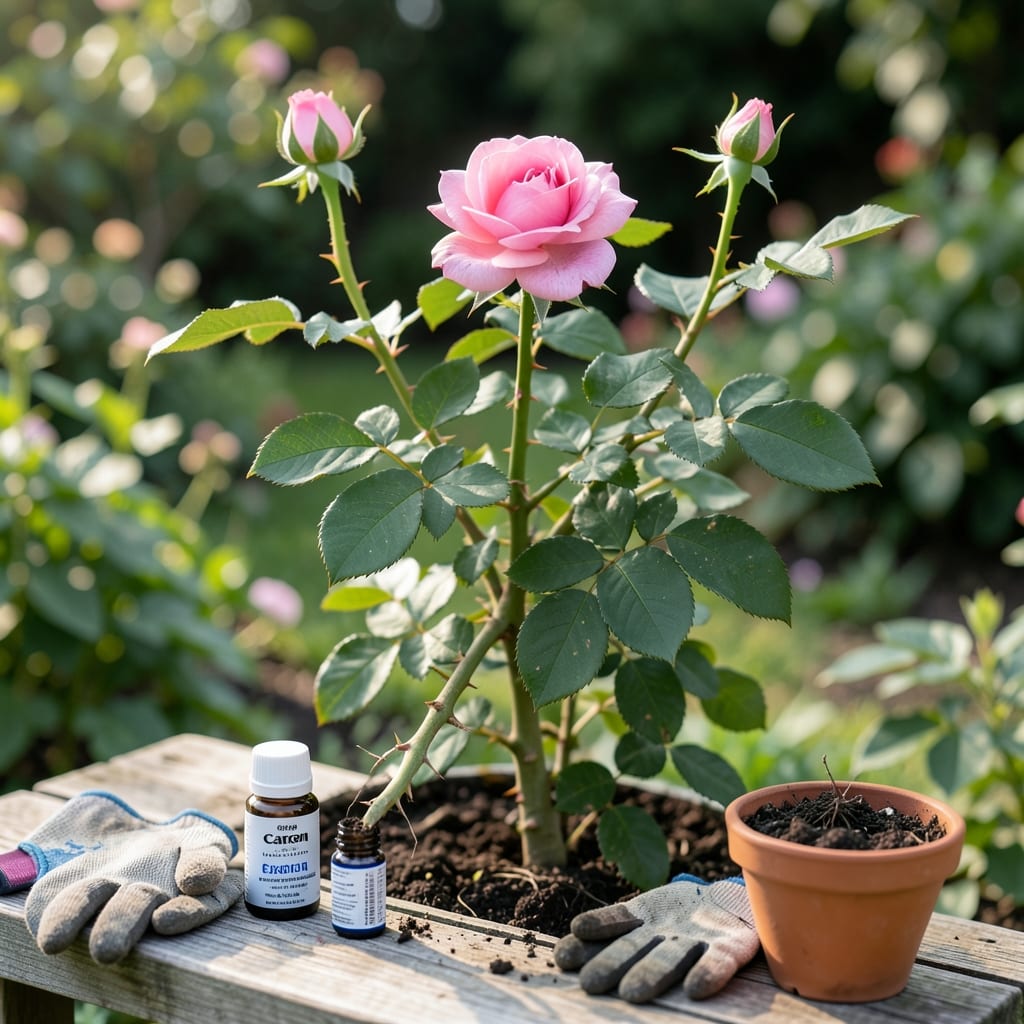
I turned one rose stem into a dozen thriving bushes last year. Rooting cuttings is the simplest way to clone your favorite plants without spending a dime.
You only need a sharp knife, a spare pot, and 4-6 weeks of patience. The new plants establish faster than store-bought ones and bloom just as well.
📚 In This Guide
Here’s the method I rely on to propagate healthy roses with minimal effort and maximum success.
Choose a healthy stem from the current season’s growth, ideally 6-8 inches long with 4-5 nodes (the small bumps where leaves emerge). I look for stems that are firm but not woody, about the thickness of a pencil. Using clean, sharp pruners, cut just below a node at a 45-degree angle.
Remove all but the top 2-3 leaves to reduce moisture loss while still allowing enough foliage for photosynthesis. Strip any thorns or flowers from the lower portion. This focuses the plant’s energy on root development rather than blooming.
Dip the cut end of the stem in rooting hormone powder or gel to encourage root growth. Tap off any excess—too much can actually inhibit rooting. I’ve found this step dramatically improves success rates, especially with finicky rose varieties.
Fill a small pot with a well-draining rooting medium such as perlite, vermiculite, or a mix of half peat moss and half perlite. Moisten the medium lightly before planting. A 4-inch pot works well for a single cutting, giving roots room to develop without holding excessive moisture.
Insert the cutting into the medium about 2-3 inches deep, with at least 2 nodes below the surface. Firm the medium gently around the stem to ensure good contact. The nodes are where roots will emerge, so proper placement is crucial.
Cover the pot with a clear plastic bag or place it in a propagation box to maintain high humidity. I use a clear plastic bottle with the bottom cut off as a makeshift humidity dome. Place the cutting in bright, indirect light—direct sun will cook the cutting in its plastic enclosure.
Check the cutting daily for moisture levels and signs of growth. Mist the foliage and medium if it starts to dry out. You should see new growth within 3-6 weeks, which indicates successful rooting. I’ve learned that patience is key—some varieties take longer than others to establish.
Once roots are 1-2 inches long (you can check by gently tugging on the cutting—resistance means roots are forming), gradually acclimate the cutting to lower humidity by removing the cover for longer periods each day. This hardening-off process prevents shock when you eventually transplant.
When the cutting has developed a strong root system and new leaf growth, it’s ready for transplanting. Choose a location with 6+ hours of sunlight daily. Dig a hole slightly larger than the root ball and amend the soil with compost for added nutrients.
Remove the cutting from its pot carefully to avoid damaging the new roots. Place it in the hole at the same depth it was growing in the pot, then backfill with soil and water thoroughly. I always mulch around new rose plants to conserve moisture and suppress weeds during their first growing season.
Small details make the difference between a cutting that thrives and one that struggles.
Cutting Selection: For Step 1, always choose stems that are currently growing—not old, woody stems. The pencil-thickness guideline is crucial because thinner stems lack energy reserves, while thicker ones may resist rooting. Confession: I skipped this step for years and wondered why my success rate was so low.
Node Placement: In Step 3, ensure at least 2 nodes are buried in the medium. These are your future roots’ origin points. Planting too shallow means weak root systems, while too deep can cause stem rot. I use a ruler to measure the exact 2-3 inch depth mentioned in the instructions.
Humidity Control: The plastic cover or bottle trick from Step 3 works, but don’t seal it completely—leave a small gap for airflow. Too much condensation can lead to mold. Mist the cutting and medium daily, but don’t soak it. The balance between moisture and air circulation is delicate.
Patience Test: Those 3-6 weeks in Step 4 will test your resolve. Resist the urge to dig up the cutting to check roots—this disturbs the fragile new growth. Instead, watch for new leaf development as your success indicator. Some of my most vigorous roses took the full 6 weeks to show signs of life.
Yes! While soil is preferred, you can root a rose cutting in water. Use a clean jar, change the water every few days, and place it in bright, indirect light. However, success rates are often higher with soil or a rooting medium.
Typically, rose cuttings take 4-8 weeks to root. Factors like temperature, humidity, and rose variety can affect the timeline. Be patient and keep the medium consistently moist.
The ideal time is late spring to early summer when the plant is actively growing. Avoid extreme heat or cold, as these conditions can stress the cutting and reduce success rates.
Common issues include improper cutting selection (use semi-hardwood), lack of humidity, or inconsistent moisture. Ensure your cutting has at least 2-3 leaf nodes and is kept in a warm, shaded spot.
Yes! Both have mild antifungal properties. Dip the cut end in cinnamon powder or honey before planting. While not as strong as commercial hormones, they can help boost rooting success.