
Beautiful Plants For Your Interior
Beautiful Plants For Your Interior
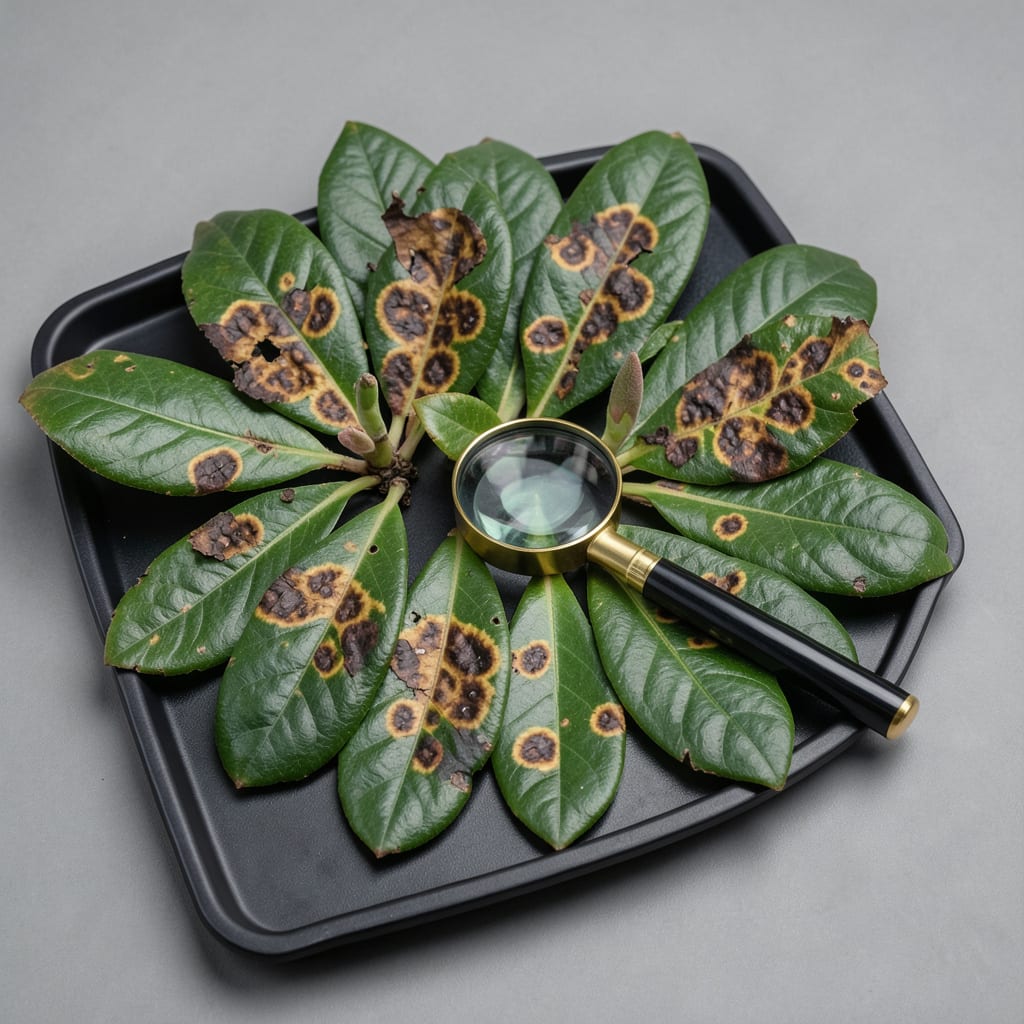
Brown spots on your rhododendron leaves mean trouble. I’ve battled leaf spot for years, and early detection saves plants every time.
These diseases spread fast in wet, crowded conditions. You’ll notice circular spots with darker edges, often starting on lower leaves first. The key is catching them before they multiply and defoliate your shrubs.
Organic fixes work if you act quickly. Remove infected leaves, improve air flow, and apply copper-based sprays. Prevention beats treatment—space plants properly and clean up fallen debris every season.
With the right approach, your rhododendrons will bounce back with vibrant green foliage. Here’s how to spot, stop, and prevent leaf spot for good.
Leaf spot diseases in rhododendrons don’t appear out of nowhere—they’re often triggered by a mix of environmental stressors, fungal or bacterial invaders, and cultural missteps. Here’s why your plant’s leaves may be developing those unsightly spots.
The most common culprits are Pestaloia, Septoria, and Phyllosticta fungi. These thrive in wet, humid conditions, especially when leaves stay damp for extended periods. Overhead watering, poor air circulation, or crowded plantings create the perfect breeding ground. Fungal spores spread via wind, rain, or contaminated tools, infecting leaves through tiny wounds or stomata.
Pseudomonas and Xanthomonas bacteria can also cause leaf spots, often resulting in water-soaked, angular lesions with yellow halos. These bacteria enter through natural openings or injuries, multiplying rapidly in warm, wet weather. Unlike fungal spots, bacterial lesions may ooze or appear greasy.
Weakened rhododendrons are more susceptible to infections. Drought stress, nutrient deficiencies (especially magnesium or iron), or improper pH (rhododendrons need acidic soil, 4.5–5.5) can compromise a plant’s defenses. Even excessive shade or poor drainage can stress the plant, making it an easy target for pathogens.
Over-fertilizing (especially with high-nitrogen blends) promotes lush, soft growth that’s more prone to disease. Similarly, failing to remove fallen leaves allows pathogens to overwinter in debris. Using unsterilized pruning tools can also transfer spores or bacteria between plants.
Tackling leaf spot on your rhododendrons starts with identifying the cause and applying targeted fixes. Below are practical solutions for common culprits, paired with prevention tips to keep your plants thriving. 🌿
If you spot circular brown or black lesions with fuzzy edges, a fungus is likely to blame. Prune infected leaves immediately and dispose of them in the trash (not compost). Apply a copper-based fungicide or neem oil spray every 7–10 days until the issue clears. Prevention tip: 💡 Improve air circulation by spacing plants properly and watering at the base to avoid wetting foliage.
Wet leaves create a playground for spores. Switch to drip irrigation or a soaker hose to deliver water directly to the roots. Water early in the morning so any splashes dry quickly. Prevention tip: ✨ Mulch around the base to retain moisture and reduce splash-back from soil.
Fallen leaves and plant debris harbor pathogens. Rake and remove all litter from beneath your rhododendrons weekly. Disinfect your tools with rubbing alcohol after pruning to avoid spreading disease. Prevention tip: 🎯 Apply a 2–3 inch layer of organic mulch (like pine bark) to suppress spores in the soil.
Stressed plants are more vulnerable. Test your soil’s pH—rhododendrons prefer acidic conditions (4.5–6.0). Amend with sulfur or peat moss if needed. Feed with a balanced organic fertilizer in spring to strengthen defenses. Prevention tip: 🌡️ Avoid high-nitrogen fertilizers, which can promote lush but weak growth.
Fungal spots are usually circular with dark edges, while bacterial spots often appear water-soaked with yellow halos. Fungal spots may develop fuzzy growth in humid conditions.
Yes, pruning infected leaves immediately helps contain the disease. Always dispose of them in the trash, not compost, to prevent spores from spreading.
Neem oil or baking soda solutions can work for mild cases. Mix 1 tablespoon baking soda with 1 gallon of water and a drop of dish soap, then spray weekly.
Inspect leaves weekly during wet seasons. Focus on lower leaves first, as they’re most vulnerable to splashing water and soil-borne pathogens.
