
Beautiful Plants For Your Interior
Beautiful Plants For Your Interior
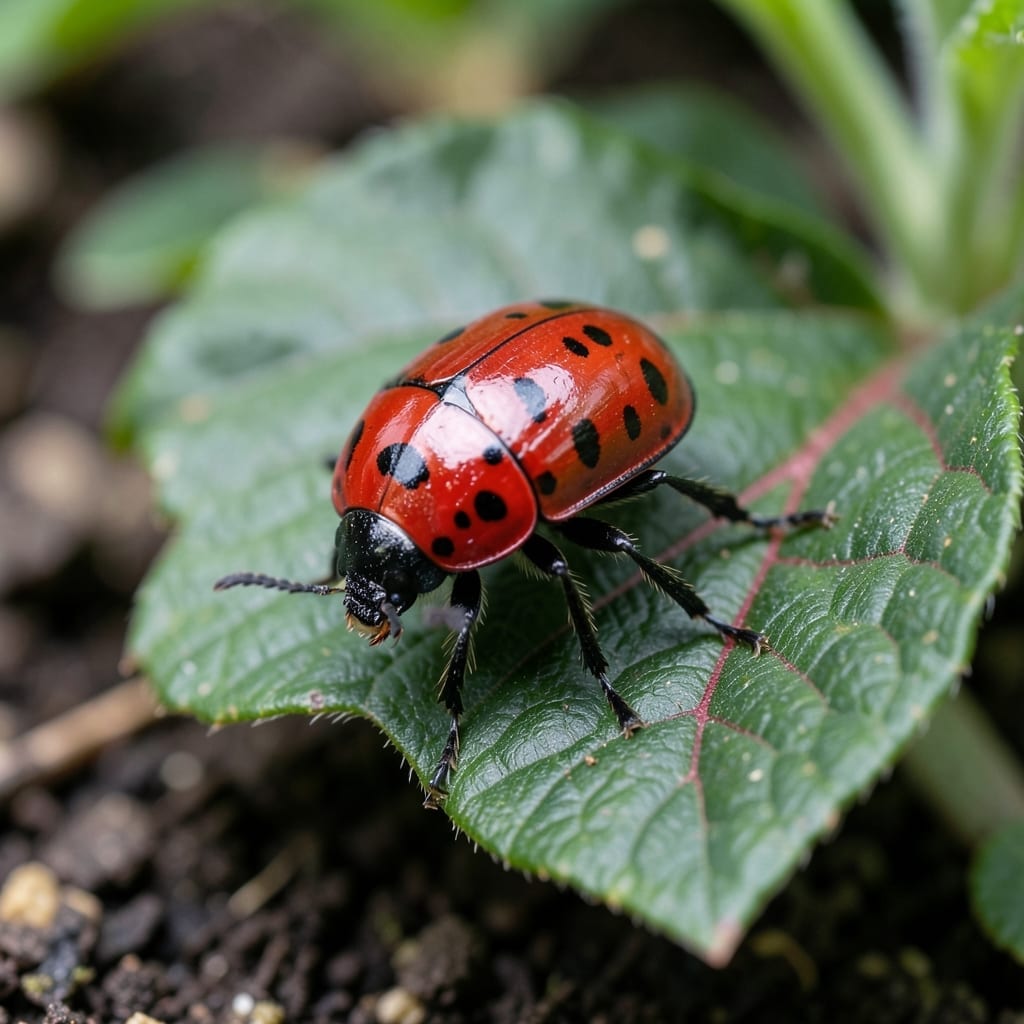
I first spotted the red beetle with black spots decimating my milkweed last summer. These bright invaders aren’t just eye-catching—they multiply fast and can skeletonize leaves in 48 hours.
Here’s the thing—most gardeners mistake them for beneficial ladybugs at first glance. But their flattened bodies and distinct spot pattern give them away. Left unchecked, they’ll move from ornamental plants to your veggies.
Natural removal works best if you start early. Hand-picking at dawn when they’re sluggish stops the spread. A bucket of soapy water finishes the job without chemicals.
Prevention is simpler than you think. Encouraging native predators like birds and parasitic wasps keeps their numbers in check long-term.
The distinctive black spots on a red beetle are rarely random—they’re usually tied to biology, environment, or behavior. Below are the most common causes, explained with science-backed clarity.
Many red beetles, like the Coccinellidae (ladybugs) or Meloidae (blister beetles), use aposematism—a survival strategy where bright colors signal toxicity to predators. The black spots break up their outline, making them harder to target. This is an evolutionary adaptation, not a defect.
Extreme heat, humidity, or UV exposure can trigger melanin production in a beetle’s exoskeleton, darkening patches into spots. For example, beetles in arid regions may develop more pronounced markings to regulate body temperature through thermal melanism.
Pathogens like Beauveria bassiana (a fungal parasite) or bacterial infections can cause localized discoloration. These spots often appear irregular and may spread if untreated. Infected beetles may also show lethargy or erratic movement.
Rare genetic variations, such as pigment gene mutations, can lead to abnormal spot patterns. These are typically harmless but may affect mating success if the beetle’s appearance deviates too far from its species’ norm.
Identifying the cause helps determine whether the spots are natural or a sign of distress. If you’re dealing with an infestation, address environmental factors first—like reducing moisture or removing infected individuals.
If you’ve spotted a red beetle with black spots in your garden, don’t panic! Here’s how to tackle the issue effectively with natural, practical solutions.
For small infestations, manually remove the beetles early in the morning when they’re less active. Drop them into a bucket of soapy water or relocate them far from your plants. Prevention tip: Inspect plants daily to catch them early.
Mix 1 tbsp neem oil with 1 tsp dish soap and 1 quart of water. Spray directly on beetles and affected foliage. Reapply every 3–4 days or after rain. Prevention tip: Apply neem oil preventatively to deter future pests.
Encourage natural predators like ladybugs, lacewings, or parasitic wasps by planting companion flowers (e.g., marigolds, yarrow). These insects feed on beetle larvae and adults. Prevention tip: Avoid broad-spectrum pesticides that harm beneficial bugs.
Sprinkle food-grade DE around plants (focus on soil and undersides of leaves). The powder dehydrates beetles. Reapply after rain. Prevention tip: Use DE as a barrier in garden beds before pests appear.
Plant garlic, onions, or catnip near vulnerable crops—these repel beetles with their strong scents. Prevention tip: Rotate companion plants yearly to disrupt pest cycles.
Pro tip 💡: Combine methods for best results! For example, handpick adults while using neem oil to target eggs and larvae.
Yes, many red beetles with black spots can damage plants by eating leaves and stems. Some species, like the milkweed beetle, can skeletonize foliage in just 48 hours if left unchecked.
Look for flattened bodies and a more elongated shape. Ladybugs are round, while these beetles often have a distinct oval form with more pronounced spot patterns.
Birds, parasitic wasps, and other beneficial insects can keep populations in check. Encourage them by avoiding pesticides and planting native flowers.
For small infestations, yes. Do it at dawn when they’re sluggish. Drop them into soapy water or relocate them far from your garden.