
Beautiful Plants For Your Interior
Beautiful Plants For Your Interior
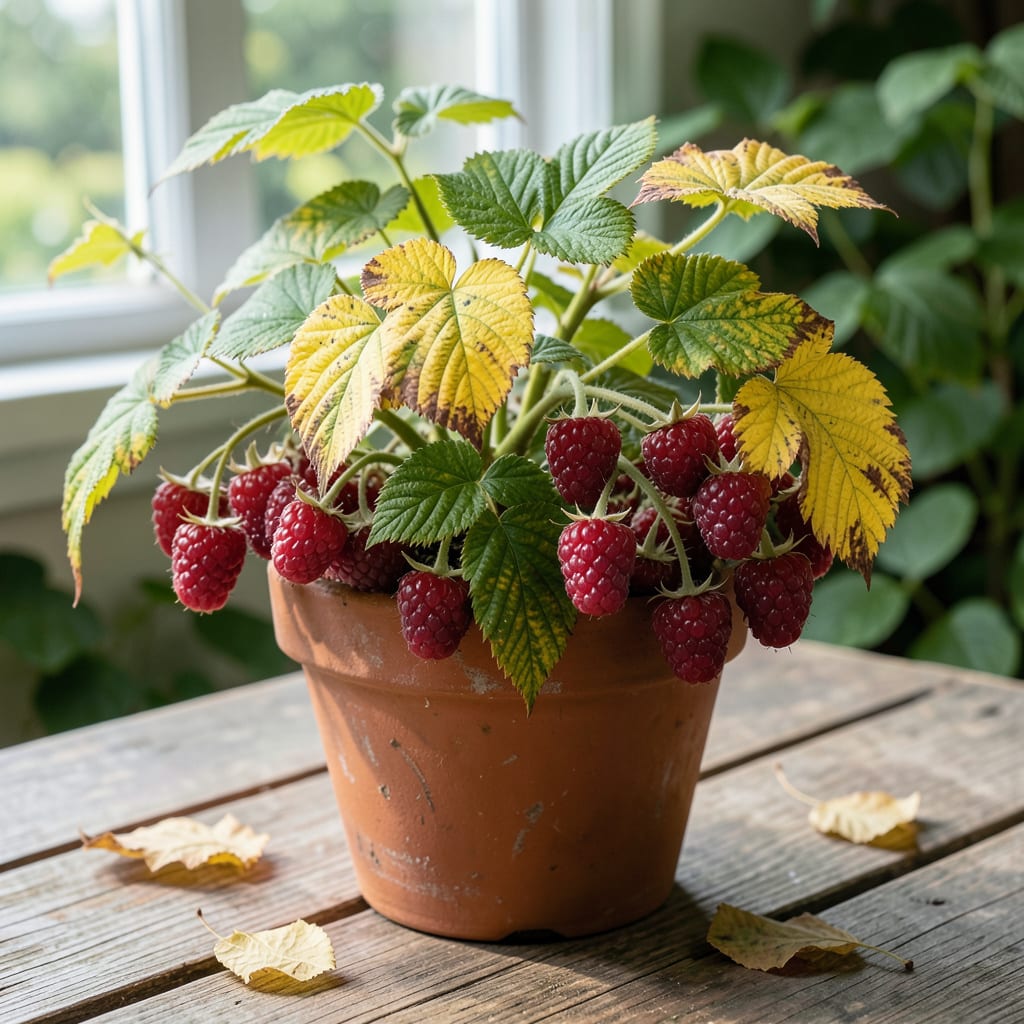
Yellow leaves on raspberry canes always signal trouble. I’ve learned the hard way that ignoring early signs turns a small problem into a full-blown crisis.
Most cases trace back to 3 common culprits: fungal infections, nutrient deficiencies, or pest damage. Each leaves a distinct pattern—spotted leaves, uniform yellowing, or stunted growth—that tells you exactly what you’re dealing with.
With the right diagnosis, you can often reverse the damage. I saved my entire patch last season by catching anthracnose early and switching to a copper-based spray before it spread.
Healthy canes start with observation. Check the undersides of leaves, note the pattern of discoloration, and act fast. Your berries next season depend on it.
Yellowing leaves on raspberry plants are often a sign of underlying issues. Here are the most common causes:
Nitrogen, iron, or magnesium shortages can turn leaves yellow. Nitrogen deficiency starts with lower leaves turning pale, while iron deficiency causes interveinal chlorosis (yellowing between veins). Test soil pH—raspberries thrive in 5.5–6.5; adjust with lime or sulfur if needed.
Soggy roots suffocate, blocking nutrient uptake. Symptoms include yellowing leaves with wilting. Ensure well-draining soil and water only when the top inch is dry. Raise beds if drainage is poor.
Verticillium wilt or Phytophthora root rot cause yellowing, often with brown streaks on canes. Remove infected plants immediately and rotate crops to prevent fungal spread.
Spider mites or aphids sap plant nutrients, leading to yellow, stippled leaves. Check leaf undersides for pests and spray with neem oil or insecticidal soap at first signs.
Extreme heat or cold can stress raspberries, triggering yellowing. Mulch to regulate soil temperature and provide shade cloth during heatwaves.
Tackling yellow leaves on your raspberry plants starts with identifying the root cause. Here’s how to address the most common issues and restore your canes to vibrant health.
If yellowing starts on older leaves, your raspberries may lack nitrogen. Work in a balanced 10-10-10 fertilizer or compost around the base. For iron or magnesium shortages (yellowing between veins), apply chelated iron or Epsom salts (1 tbsp per gallon of water) as a foliar spray. Prevention tip: 💡 Test soil yearly and amend with organic matter in early spring.
Soggy roots suffocate plants, turning leaves yellow. Let the top inch of soil dry between waterings. If drainage is poor, mix in sand or perlite or transplant to a raised bed. Prevention tip: ✨ Use drip irrigation to keep foliage dry and reduce fungal risks.
For anthracnose or verticillium wilt, remove infected canes immediately and burn or trash them (not compost!). Apply a copper fungicide or neem oil spray every 7–10 days during wet seasons. Prevention tip: 🎯 Space plants 3–4 feet apart for airflow and prune old canes after harvest.
Aphids and spider mites sap plant vigor, causing yellowing. Blast them off with water or use insecticidal soap. For raspberry crown borers, remove and destroy wilted canes. Prevention tip: 🌡️ Encourage ladybugs and lacewings with companion plants like marigolds.
Too much sun or wind can scorch leaves. Use shade cloth during peak heat or stake tall canes to prevent damage. Prevention tip: 🔥 Mulch with straw to retain moisture and regulate soil temperature.
Act fast at the first sign of yellowing, and your raspberries will reward you with lush, productive canes!
Diseases often cause spotted or irregular yellowing, while deficiencies create uniform patterns. Nitrogen deficiency starts on lower leaves, while iron deficiency shows yellowing between veins.
Stop watering immediately and let soil dry out. If drainage is poor, add perlite or move plants to raised beds. Avoid soggy soil to prevent root rot.
Yes, if caught early. Remove infected canes and apply copper fungicide or neem oil every 7–10 days. Improve airflow by spacing plants 3–4 feet apart.
