
Beautiful Plants For Your Interior
Beautiful Plants For Your Interior
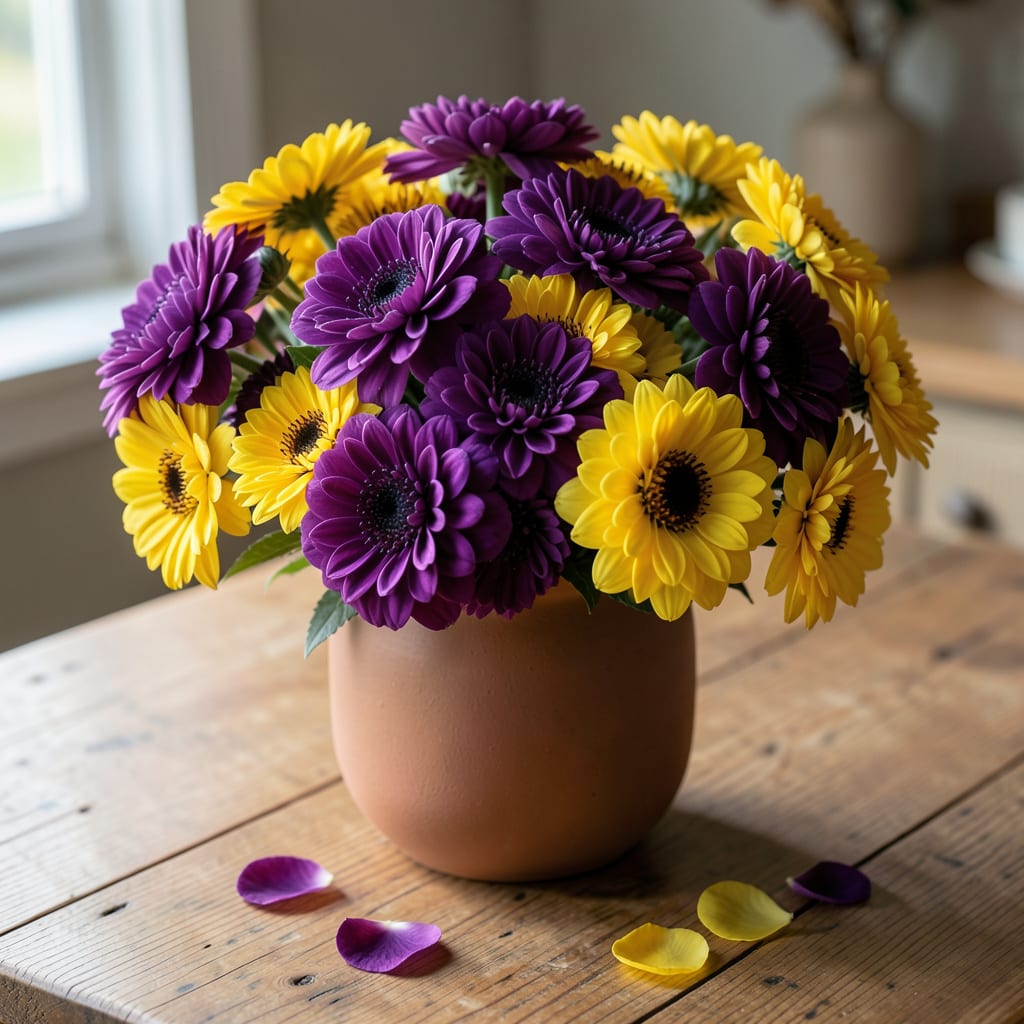
Last fall, I planted purple and yellow mums on a whim—now they’re the stars of my garden. These bicolor blooms bring a pop of color that lasts for weeks, even when other flowers fade.
The key is starting with healthy plants and giving them full sun. With minimal care, you’ll get bold, vibrant flowers that hold up in bouquets or garden beds. They’re foolproof for beginners and pair perfectly with ornaments or fall vegetables.
📚 In This Guide
Here’s my trusted method for coaxing those stunning bicolor blooms from your garden.
Select a spot with full sun—at least 6-8 hours of direct sunlight daily. Mums thrive in bright conditions, and insufficient light leads to weak stems and fewer flowers. Plant in early spring or late summer for the best results.
If you’re planting in containers, ensure they’re large enough to accommodate the mature size, typically 12-18 inches in diameter. This gives roots room to spread and supports healthy growth. Avoid shaded areas, as they’ll produce leggy, sparse plants.
Work the soil to a depth of 8-10 inches, loosening it and removing any weeds or debris. Mums prefer well-draining soil, so if your ground is heavy clay, amend it with compost or peat moss to improve drainage. This prevents root rot, which can kill plants quickly.
Dig a hole slightly larger than the root ball of your mum. Place the plant in the hole so the top of the root ball is level with the surrounding soil. Space plants 18-24 inches apart to allow for air circulation, which reduces the risk of disease.
Water the plants thoroughly after planting, ensuring the soil is evenly moist but not waterlogged. Mums prefer consistent moisture, so water deeply 2-3 times per week during dry spells. Overwatering can cause yellowing leaves and root issues.
Apply a 2-3 inch layer of mulch around the base of the plants to retain moisture and suppress weeds. Use organic mulch like straw or shredded bark, which breaks down over time and enriches the soil. Keep mulch a few inches away from the stems to prevent rot.
Pinch back the tips of the stems when the plants are 6-8 inches tall to encourage bushier growth. Use your fingers or pruning shears to remove the top 1-2 inches of each stem. This promotes branching and results in more flowers.
Deadhead spent blooms regularly by cutting the faded flowers back to the next set of leaves. This redirects the plant’s energy into producing new blooms rather than seeds. You’ll see fresh flowers appearing within 2-3 weeks after deadheading.
Feed your mums with a balanced, water-soluble fertilizer every 2-3 weeks during the growing season. Follow the package instructions for mixing and application rates. Over-fertilizing can lead to excessive leafy growth and fewer flowers.
Stop fertilizing once the buds begin to form, usually in late summer or early fall. This allows the plant to focus on producing its signature purple and yellow blooms rather than new foliage. You’ll know it’s working when you see buds forming tightly at the stem tips.
Took me a few seasons to figure these out, so here goes.
Sunlight Requirements: Those 6-8 hours of daily direct sunlight in Step 1 aren’t negotiable. I learned this the hard way after planting a batch in partial shade. The result? Leggy stems with sparse, pale blooms. If your garden has limited sun, consider containers you can move to follow the sunlight throughout the day.
Soil Preparation: When working the soil to 8-10 inches deep in Step 2, don’t skip the drainage test. Dig a small hole, fill it with water, and see how quickly it drains. If it takes more than an hour to empty, amend with compost or peat moss as recommended. This simple test saved me from losing an entire bed to root rot last summer.
Watering Wisdom: The 2-3 times per week deep watering in Step 3 works best when you check soil moisture first. Stick your finger 2 inches into the soil—if it’s dry at that depth, it’s time to water. I use this method and my mums have never looked better. Also, water in the morning to give foliage time to dry before evening.
Pruning Timing: For the pinching back in Step 4, wait until plants are exactly 6-8 inches tall. I made the mistake of pinching too early once, and the plants stayed stunted all season. When you do pinch, remove only the top 1-2 inches—any more and you risk delaying the blooming cycle.
Plant mums in early spring or fall for the best results. This gives them time to establish roots before extreme heat or cold.
Water deeply 1-2 times a week, ensure full sun to partial shade, and deadhead spent blooms to encourage more flowers. Fertilize lightly every few weeks.
Yes! Use a well-draining potting mix and a container with drainage holes. Keep soil moist and place in a sunny spot for best blooms.
Lack of sunlight, over-fertilizing, or planting too late in the season can delay blooms. Ensure 6+ hours of sunlight and avoid high-nitrogen fertilizers.
Consider asters, dahlias, or chrysanthemum cousins like Dendranthema for purple and yellow hues. These offer comparable vibrancy and hardiness.
