
Beautiful Plants For Your Interior
Beautiful Plants For Your Interior
I’ll be real with you: the first time I tried propagating jade plants from leaves, I expected magic overnight. What I got instead was a lesson in patience—and a countertop full of tiny, thriving baby plants by week six. There’s something strangely satisfying about watching a single leaf transform into a whole new plant. This […]
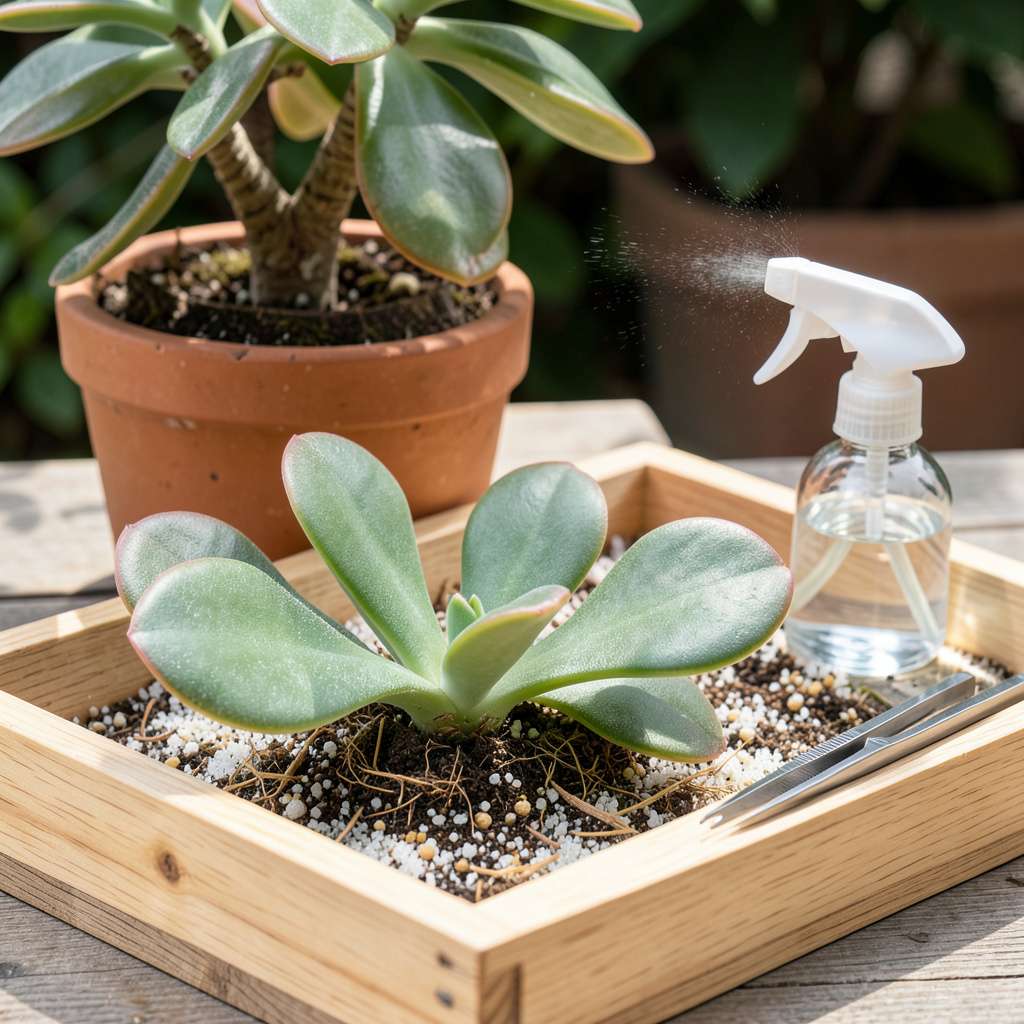
I’ll be real with you: the first time I tried propagating jade plants from leaves, I expected magic overnight. What I got instead was a lesson in patience—and a countertop full of tiny, thriving baby plants by week six. There’s something strangely satisfying about watching a single leaf transform into a whole new plant.
This method works because jade plants practically beg to be propagated. A healthy leaf contains all the genetic material needed to grow roots and eventually a full plant. No fancy equipment required—just a leaf, some soil, and the right technique. I’ve turned one parent plant into dozens using this exact process.
You’ll see the first signs of success when tiny pink roots emerge from the leaf base. Within 4-6 weeks, you’ll spot new growth where the leaf meets the soil. The best part? These new plants grow faster than seed-grown jades and maintain all the characteristics of the parent plant.
Perfect for beginners or anyone who’s ever killed a cutting. We’ve refined this method through more failed attempts than we’d like to admit—so you get to skip the trial-and-error phase and go straight to reliable results.
📚 In This Guide
You’ll be amazed how simple this process is—just a few careful steps and you’ll watch new roots form before your eyes.
Choose mature, plump leaves from an established jade plant. Look for leaves that are at least 2-3 inches long with no signs of damage or discoloration. I always pick from the middle of the stem where leaves are most vigorous, avoiding the very top where they might be too tender.
Gently twist the leaf from the stem with a slight rocking motion until it snaps cleanly. Don’t cut with scissors—you want the entire base intact where roots will emerge. A properly removed leaf will have a small “heel” where it attached to the stem.
Lay the leaves on a paper towel in a warm, dry location out of direct sunlight. This step is crucial—you’re waiting for the broken end to form a protective callus, which prevents rot when planted. It typically takes 2-5 days depending on humidity.
You’ll know they’re ready when the broken end looks dry and slightly hardened. Don’t rush this stage. I’ve lost more jade leaves to impatience than any other mistake—planting too soon invites bacterial infections that turn leaves to mush.
Use a well-draining cactus or succulent mix—regular potting soil holds too much moisture. Fill a shallow tray or small pots with the mix and dampen it lightly. The soil should feel barely moist to the touch, like a wrung-out sponge.
Lay the callused leaves on top of the soil without burying them. You can gently press the callused end into the soil just enough to anchor it, but don’t cover the leaf. Space them about 1 inch apart so new roots have room to spread.
Place the tray in bright, indirect light (an east-facing windowsill works perfectly). Avoid direct sun at this stage—it can scorch the vulnerable new growth. Mist the soil lightly every 3-4 days or when the top layer feels completely dry.
After about 2-3 weeks, you’ll notice tiny pink roots emerging from the callused end. This is your signal that propagation is working. Resist the urge to check daily—disturbing the leaves can break these delicate new roots.
Once roots are 1/2 inch long (usually after 4-6 weeks), begin misting more frequently to encourage leaf growth. You’ll see a tiny new plant emerging from the base of the original leaf. This is the baby jade plant forming!
When the new plant has 2-3 sets of leaves and roots are established, transplant it to its own small pot. Use the same well-draining mix and water sparingly at first. Your propagated jade will grow into a full plant in about 6-12 months with proper care.
After propagating hundreds of jade plants, we’ve learned these key insights that make all the difference between success and frustration.
Leaf Selection Secret: In Step 1, focus on leaves that feel firm and slightly thick—they contain more stored energy for root development. I always avoid leaves with any red or yellow edges, as these indicate stress that could transfer to your new plant. The 2-3 inch size mentioned isn’t arbitrary; smaller leaves often lack the energy reserves to sustain new growth.
Callusing Technique: During Step 2’s 2-5 day waiting period, place your leaves on a paper towel in a spot with good air circulation—a kitchen windowsill works well. Don’t use plastic containers or bags, as trapped moisture prevents proper callus formation. I check daily by gently touching the broken end; it should feel dry and slightly rough, like the skin of a grape.
Moisture Management: When misting in Step 4, use room temperature water and spray the soil surface rather than the leaves themselves. Jade leaves absorb moisture through their roots, not their surfaces. The “wrung-out sponge” moisture level mentioned is perfect—if you squeeze a handful of soil and water drips out, it’s too wet. I use a spray bottle with a fine mist setting for precise control.
Patience Strategy: During the 2-3 week waiting period for roots, set a calendar reminder to check only once a week. Daily checking increases the risk of disturbing the delicate new roots. I place my propagation tray somewhere I walk by daily but don’t handle it—this lets me monitor without interfering. The pink roots will be visible without moving the leaves when they’re ready.
Jade leaves typically start rooting in 2–4 weeks, but new growth (tiny baby plants) may take 4–8 weeks or longer. Patience is key—factors like humidity, light, and temperature affect speed. Keep the soil lightly moist (not soggy) and place in bright, indirect light for best results.
Yes! Place the calloused leaf (dried for 1–2 days) just above water in a shallow dish. Change water weekly to prevent rot. Note: Water propagation has a lower success rate than soil, and roots may be weaker when transferred. Soil is still the foolproof method.
Mushy or black leaves = overwatering or poor drainage. Remove affected leaves immediately to prevent spread. Use a fast-draining mix (cactus/succulent soil + perlite) and water only when soil is bone-dry. Let leaves callous fully before planting!
Spring or early summer ( growing season) is ideal—warmer temps and longer daylight boost success rates. Avoid winter; cool, dark conditions slow growth. If propagating indoors year-round, use a grow light to supplement natural light.
Nope! Jade plants root easily without hormone, but it can speed up the process slightly. If using, dip the calloused end lightly in powder before planting. Skip liquid hormones—they can cause rot. Plain soil or water works fine for most growers!
Propagating jade plants from leaves is a simple, rewarding way to grow your collection—no green thumb required! 🌱 With just a healthy leaf, patience, and the right conditions, you’ll watch tiny roots sprout and new plants thrive. Whether you’re expanding your garden or sharing with friends, this foolproof method makes it easy.
Now that you’ve got the know-how, why not start today? Grab a few plump leaves, follow the steps, and enjoy the satisfaction of nurturing life from a single leaf. Happy propagating! 🌿
